
Butterflying a chicken breast turns a thick, stubborn cut into an even, quick-cooking canvas that stays juicy from edge to center. Here we lay fresh orange slices right on top of the raw meat, so as the chicken roasts the citrus softens, releases its juice, and gently steams the surface while the sugars caramelize into a sticky glaze.
Paired with roasted asparagus on the same sheet pan, this is a genuinely low-effort dinner: one pan, a handful of pantry staples, and about 35 minutes in the oven. The orange does double duty as flavor and moisture, which means you can skip the brine and still get tender, never-dry chicken.
Serve it with rice, crusty bread, or a pile of couscous to catch the pan juices. It looks impressive enough for guests but is simple enough for a Tuesday.
Why You'll Love This Recipe
About the Ingredients
4 boneless, skinless chicken breasts (about 2 lb / 900 g total)
Look for breasts of similar size so they cook evenly; if yours are huge, buy three and slice them into cutlets. No chicken? Thick pork loin chops work with 5 extra minutes of cooking.
2 large navel oranges, 1 sliced into thin rounds and 1 juiced (about 1/3 cup / 80 ml juice)
Navel oranges are seedless and easy to slice thin; blood oranges give a stunning ruby color. If your oranges are very thick-skinned, trim the rind edges so the slices lie flat.
1 lb (450 g) fresh asparagus, woody ends snapped off
Choose spears about the thickness of a pencil so they roast in the same time as the chicken. Frozen asparagus will turn limp here, so use green beans if fresh asparagus is out of season.
2 tbsp olive oil
Regular (not extra-virgin) olive oil handles the oven heat well; avocado oil is a fine neutral swap. Skip butter here, since it burns at this temperature.
1 tbsp honey
Honey helps the orange slices caramelize; maple syrup is a 1:1 vegan substitute. Warm it briefly if it is too stiff to drizzle.
1 tbsp Dijon mustard
Dijon adds savory depth that keeps the glaze from tasting sweet; whole-grain mustard gives a rustic texture. Yellow mustard is sharper, so use half as much.
1 tsp smoked paprika
Smoked paprika gives a subtle campfire note; sweet paprika or a pinch of chili powder works if that is what you have. Check your jar's date, since old paprika goes flat.
3 garlic cloves, minced
Fresh garlic is best; 1 tsp garlic powder can stand in. Mince it finely so it doesn't burn on the pan's hot surface.
3/4 tsp fine sea salt, plus more for the asparagus
Fine sea salt dissolves into the glaze; kosher salt works but use a slightly heaping measure. Season the chicken a few minutes ahead so it absorbs the salt.
1/2 tsp freshly ground black pepper
Fresh-cracked pepper is far more aromatic than pre-ground. Add a pinch of red pepper flakes if you want a little heat.
2 tbsp chopped fresh parsley or cilantro, for serving
Flat-leaf parsley is mild and fresh; cilantro adds a brighter, more herbal punch. Basil or mint also work nicely with orange.
Tips & Tricks
Butterfly evenly for even cooking
If one side of the breast is thicker after butterflying, press it with your palm or give it a few gentle whacks with a rolling pin so the meat is an even 3/4 inch (2 cm) thick. Uneven thickness is the number one cause of dry edges and raw centers.
Don't crowd the pan
Leave space between the chicken pieces so the asparagus roasts rather than steams. If your pan is small, use two pans or roast the asparagus on a separate tray for the last 15 minutes.
- Watch the orange slices, not just the chicken: The thin edges of the citrus can scorch before the chicken is done. If they start to blacken, tent the pan loosely with foil for the final 10 minutes.
Pro Tips
Step-by-Step Instructions
1. Heat the oven and pan
Preheat the oven to 425°F (220°C) with a rack in the middle. Line a large rimmed sheet pan with parchment or lightly oil it so the glaze doesn't weld to the metal.
2. Butterfly the chicken
Place each breast flat on a cutting board, hold your palm on top, and slice horizontally through the middle with a long knife, stopping about 1/2 inch (1 cm) from the far edge so it opens like a book. Open it flat and press gently so each piece is an even 3/4 inch (2 cm) thick.
3. Mix the glaze
Whisk the orange juice, olive oil, honey, Dijon, smoked paprika, garlic, salt, and pepper in a small bowl until smooth and glossy. It should look like a thin, fragrant vinaigrette.
4. Season and coat the chicken
Pat the butterflied breasts dry with paper towels and place them on the sheet pan. Brush each one generously with about two-thirds of the glaze, coating both sides and using all of it on the chicken.
5. Layer on the oranges
Lay 2 to 3 thin orange rounds across the top of each breast, overlapping them slightly so the meat is mostly covered. Press them gently into the glaze so they stay put.
6. Roast the chicken
Roast at 425°F (220°C) for 18 minutes. The oranges should be softening and beginning to caramelize at the edges, and the chicken will be opaque on the outside but not yet done.
7. Add the asparagus
Toss the asparagus with the remaining oil and a pinch of salt, then arrange the spears around the chicken in a single layer. Return the pan to the oven and roast for 12 to 15 minutes more, until the asparagus is tender-crisp and lightly browned and the chicken reaches 162°F (72°C) on an instant-read thermometer.
8. Rest and serve
Let the pan rest for 5 minutes so the juices redistribute. Scatter with parsley and spoon the pan drippings over everything before serving.
Delicious Variations
Lemon-Herb Version
Swap the oranges for thin lemon slices and the smoked paprika for dried oregano; the result is a Greek-leaning, herby pan.
Spicy Orange-Chili
Add 1/2 tsp red pepper flakes and a teaspoon of sriracha to the glaze for a sweet-heat kick that pairs beautifully with the asparagus.
Citrus & Fennel
Replace the asparagus with thinly sliced fennel bulb, which caramelizes gorgeously and echoes the orange.
How to Store Orange-Glazed Butterflied Chicken Breasts with Roasted Asparagus
Refrigerator
Store leftovers in an airtight container for up to 3 days; keep the orange slices with the chicken so they stay moist.
Freezer
Freeze cooled chicken (remove the orange slices first) in a freezer bag for up to 2 months; the texture of the asparagus suffers, so freeze it separately or skip it.
Reheating
Reheat gently, covered, at 325°F (165°C) for 10 to 12 minutes or in the microwave at 50 percent power until just warm, to avoid drying out the lean meat.
Frequently Asked Questions
Q: How do you butterfly a chicken breast without cutting all the way through?
Lay the breast flat, hold it steady with your palm, and slice horizontally from the thick side toward the thin side, stopping about half an inch from the edge so the two halves stay hinged. Open it like a book and press it flat. A sharp, long knife makes this far easier and safer than a short paring knife.
Q: Can I put orange slices on chicken before baking?
Yes, and it is a great way to keep lean chicken moist. The slices shield the surface from direct heat and release juice as they soften, so lay them on after brushing with glaze and roast at 425°F (220°C). Watch the thin edges near the end and tent with foil if they start to scorch.
Q: How long does butterflied chicken breast take to cook at 425°F?
About 30 to 33 minutes total at 425°F (220°C) for a 3/4-inch-thick butterflied breast. Start checking at 28 minutes and rely on an instant-read thermometer: pull it at 162°F (72°C) and let it rest to reach 165°F (74°C).
Q: Do you need to flip the chicken when roasting with orange slices on top?
No, leave it alone. Flipping would dislodge the orange slices and interrupt the caramelizing glaze. The even thickness from butterflying means the heat reaches the center without flipping.
Q: What can I serve with orange-glazed chicken and asparagus?
Serve it with rice, couscous, quinoa, or crusty bread to soak up the pan juices. A simple green salad or mashed potatoes also round it out nicely, and a dry white wine like Sauvignon Blanc pairs well with the citrus.
Give this one-pan orange chicken a try tonight and let the citrus do the heavy lifting. If you make it, snap a photo and tell me how your family liked it in the comments below.
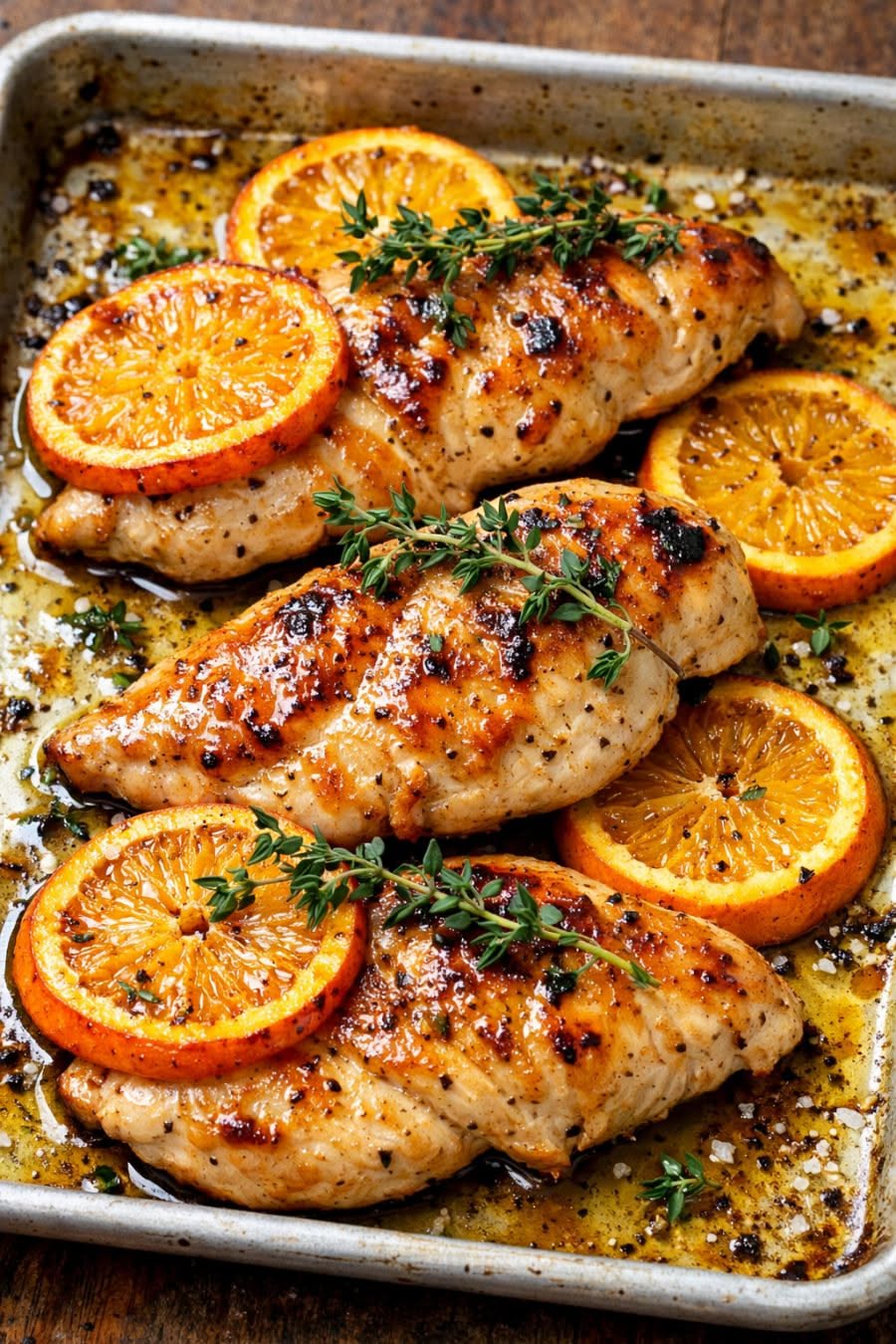
Orange-Glazed Butterflied Chicken Breasts with Roasted Asparagus
Orange-Glazed Butterflied Chicken Breasts roast with fresh orange slices and asparagus for a bright, juicy one-pan dinner ready in under an hour.
🧂 Ingredients
- 4 boneless, skinless chicken breasts (about 2 lb / 900 g total)
- 2 large navel oranges, 1 sliced into thin rounds and 1 juiced (about 1/3 cup / 80 ml juice)
- 1 lb (450 g) fresh asparagus, woody ends snapped off
- 2 tbsp olive oil
- 1 tbsp honey
- 1 tbsp Dijon mustard
- 1 tsp smoked paprika
- 3 garlic cloves, minced
- 3/4 tsp fine sea salt, plus more for the asparagus
- 1/2 tsp freshly ground black pepper
- 2 tbsp chopped fresh parsley or cilantro, for serving
📋 Instructions
- 1Heat the oven and pan — Preheat the oven to 425°F (220°C) with a rack in the middle. Line a large rimmed sheet pan with parchment or lightly oil it so the glaze doesn't weld to the metal.
- 2Butterfly the chicken — Place each breast flat on a cutting board, hold your palm on top, and slice horizontally through the middle with a long knife, stopping about 1/2 inch (1 cm) from the far edge so it opens like a book. Open it flat and press gently so each piece is an even 3/4 inch (2 cm) thick.
- 3Mix the glaze — Whisk the orange juice, olive oil, honey, Dijon, smoked paprika, garlic, salt, and pepper in a small bowl until smooth and glossy. It should look like a thin, fragrant vinaigrette.
- 4Season and coat the chicken — Pat the butterflied breasts dry with paper towels and place them on the sheet pan. Brush each one generously with about two-thirds of the glaze, coating both sides and using all of it on the chicken.
- 5Layer on the oranges — Lay 2 to 3 thin orange rounds across the top of each breast, overlapping them slightly so the meat is mostly covered. Press them gently into the glaze so they stay put.
- 6Roast the chicken — Roast at 425°F (220°C) for 18 minutes. The oranges should be softening and beginning to caramelize at the edges, and the chicken will be opaque on the outside but not yet done.
- 7Add the asparagus — Toss the asparagus with the remaining oil and a pinch of salt, then arrange the spears around the chicken in a single layer. Return the pan to the oven and roast for 12 to 15 minutes more, until the asparagus is tender-crisp and lightly browned and the chicken reaches 162°F (72°C) on an instant-read thermometer.
- 8Rest and serve — Let the pan rest for 5 minutes so the juices redistribute. Scatter with parsley and spoon the pan drippings over everything before serving.