Nestora
Crispy Italian Breaded Chicken Cutlets – Best 30-Minute
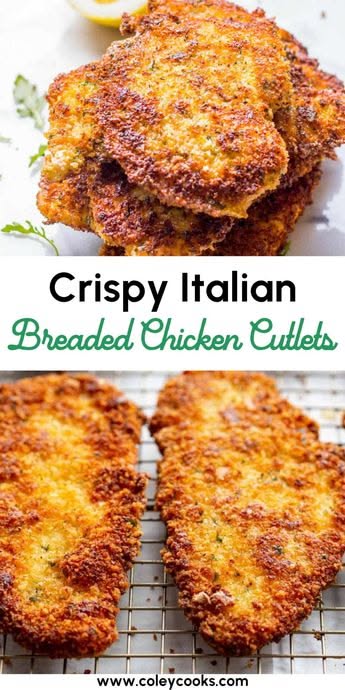
If you have ever bitten into a breaded cutlet that looked gorgeous but tasted like dry cardboard, this recipe is the fix. Thin-pounded chicken, a three-step Parmesan-and-herb breading, and a hot skillet of oil are all it takes to get that shattering golden crust you find in good Italian-American delis and trattorias.
The secret is not a secret ingredient - it is technique. Pound the chicken to an even quarter inch so it cooks through before the crust burns, let the breading rest so it grips the meat, and keep the oil at a steady 350F (175C). Do those three things and you get cutlets that stay crisp even after a squeeze of lemon.
Serve them simply with lemon wedges, pile them into a sandwich with mozzarella, or layer them under marinara and cheese for a fast chicken parm. Either way, this is the version I make on repeat.
Why You'll Love This Recipe
About the Ingredients
2 large boneless skinless chicken breasts (about 1.5 lb / 680g total), sliced horizontally into 6 cutlets
Look for breasts of even thickness so they pound evenly; if they are huge, buy 3 smaller ones instead. You can swap in thin-sliced chicken cutlets from the butcher counter to skip the slicing.
1 cup (125g) all-purpose flour
Flour is the glue that makes the egg stick; a gluten-free 1:1 blend works fine here. Wondra or cake flour also gives an extra-fine first coat.
3 large eggs, beaten with 1 tablespoon water
The water thins the egg so it coats evenly without pooling. Use 4 eggs if yours are small or if you are breading extra cutlets.
1 3/4 cups (105g) panko breadcrumbs
Panko's big flakes are what make the crust shatter; regular dry breadcrumbs will work but give a denser, finer crust. Crush them lightly if you want a tighter coating.
3/4 cup (75g) finely grated Parmesan cheese
Buy a wedge and grate it yourself - pre-shredded cheese is coated in starch and clumps. Pecorino Romano gives a sharper, saltier result.
1 teaspoon garlic powder
Granulated garlic blends more evenly than garlic salt, which can make the crust too salty. Onion powder is a good swap if you are out.
1 teaspoon dried oregano
Crush it between your palms first to wake up the oils. Dried basil or a pinch of fennel seed also works nicely.
1/2 teaspoon kosher salt plus more for finishing
Kosher salt is easier to pinch and less salty by volume than table salt. Use half the amount if you only have fine table salt.
1/2 teaspoon freshly ground black pepper
Fresh-cracked pepper actually tastes different from the pre-ground stuff. A pinch of cayenne adds a subtle background heat.
1 cup (240ml) neutral oil, such as canola or vegetable, for frying
You need about 1/2 inch of oil in the pan, not a deep fry. Olive oil works but smokes sooner, so blend it half and half with canola.
1 lemon, cut into wedges, for serving
Acid cuts through the fried crust; a squeeze is not optional in my kitchen. Serve with flaky salt too.
Tips & Tricks
Pound to an Even Quarter Inch
Uneven cutlets are the number one cause of burnt crust and raw centers - use a meat mallet or a heavy pan and check with your fingers.
Rest the Breading 10 Minutes
Letting the coated cutlets sit before frying hydrates the crumbs so they grip the chicken instead of sliding off in the oil.
Watch the Oil Temperature
Keep it at 350F (175C); too hot and the crust darkens before the chicken cooks, too cool and the breading drinks oil and turns greasy.
Pro Tips
Step-by-Step Instructions
1. Pound the chicken
Slice each breast horizontally into 3 thin cutlets, then pound each between two sheets of plastic wrap to an even 1/4 inch (6mm). Even thickness is what lets the chicken cook through in the same time it takes the crust to turn golden.
2. Set up the dredging station
Put the flour in one shallow dish, the beaten eggs in a second, and combine the panko, Parmesan, garlic powder, oregano, salt, and pepper in a third. Line a sheet pan with parchment for the breaded cutlets.
3. Dredge in flour
Coat each cutlet in flour and shake off the excess - a thin, even dusting is what the egg clings to. Too much flour makes a pasty layer under the crust.
4. Dip in egg
Drag each floured cutlet through the egg, letting the excess drip back into the dish. You want a full coat with no dry patches, because dry spots mean bare chicken later.
5. Press on the crumbs
Lay the cutlet in the panko mixture and press firmly on both sides so the crumbs adhere. Set it on the parchment and repeat with the rest.
6. Rest the breading
Let the breaded cutlets sit at room temperature for 10 minutes while you heat the oil. This short rest helps the coating fuse to the chicken so it will not slide off in the pan.
7. Heat the oil to 350F (175C)
Pour 1/2 inch of oil into a large heavy skillet and heat over medium-high until a panko crumb dropped in sizzles immediately and bubbles steadily around the edges. Clip on a thermometer if you have one.
8. Fry in batches
Fry 2 to 3 cutlets at a time for 3 to 4 minutes per side, until deep golden brown and the edges are bubbling. The internal temperature should read 165F (74C) at the thickest point.
9. Drain and season
Transfer to a wire rack set over a sheet pan and sprinkle immediately with a little kosher salt. Rest 2 minutes, then serve with lemon wedges while the crust is at its crispiest.
Delicious Variations
Chicken Parmesan
Top each fried cutlet with warm marinara and mozzarella, then broil 2 to 3 minutes until the cheese bubbles and blisters.
Lemon-Herb Cutlets
Add the zest of one lemon and 1 tablespoon of chopped parsley to the panko mixture for a brighter, more summery crust.
Spicy Calabrian Style
Stir 1 teaspoon of Calabrian chili paste into the egg and add a pinch of cayenne to the crumbs for a gentle, warm heat.
How to Store Crispy Italian Breaded Chicken Cutlets
Refrigerator
Store cooled cutlets in an airtight container in the refrigerator for up to 3 days, with parchment between layers so the crust does not stick.
Freezer
Freeze fried, fully cooled cutlets on a sheet pan for 1 hour, then wrap individually and freeze for up to 2 months.
Reheating
Reheat on a wire rack in a 375F (190C) oven for 8 to 10 minutes, or in an air fryer at 350F (175C) for 4 to 5 minutes - never the microwave, which steams the crust soft.
Frequently Asked Questions
Q: Why does my breading fall off chicken cutlets?
The breading usually falls off because the chicken was too wet, the flour layer was too thick, or the cutlets went straight into the oil without resting. Pat the chicken dry, shake off excess flour, and let the breaded cutlets rest 10 minutes before frying.
Q: What is the best oil for frying breaded chicken cutlets?
Canola, vegetable, or peanut oil are the best choices because they have a high smoke point and a neutral flavor. Olive oil works but smokes around 375F (190C), so keep the heat steady at 350F (175C) and never let it go past 360F (182C).
Q: How do I know when breaded chicken cutlets are done?
Breaded cutlets are done when the crust is deep golden brown and an instant-read thermometer inserted into the thickest part reads 165F (74C). At 1/4 inch thick that usually takes 3 to 4 minutes per side over medium-high heat.
Q: Can I bake these instead of frying them?
Yes - arrange the breaded cutlets on an oiled wire rack over a sheet pan and bake at 425F (220C) for 12 to 15 minutes, flipping once. They will be crisp but slightly drier than fried, so brush the tops with a little oil before baking.
Q: How do I keep breaded chicken cutlets crispy for later?
Cool them completely on a wire rack, then store uncovered in the refrigerator if you will eat them within a few hours, and reheat in a 375F (190C) oven or air fryer. Never stack them warm or seal them hot, because trapped steam is what turns the crust soggy.
Make these crispy Italian breaded chicken cutlets this week and let the golden crust do the talking - then come back and tell me whether your family fought over the last one.
Crispy Italian Breaded Chicken Cutlets
These Crispy Italian Breaded Chicken Cutlets deliver a golden, crunchy Parmesan crust with juicy chicken inside - ready in about 50 minutes total.
🧂 Ingredients
- 2 large boneless skinless chicken breasts (about 1.5 lb / 680g total), sliced horizontally into 6 cutlets
- 1 cup (125g) all-purpose flour
- 3 large eggs, beaten with 1 tablespoon water
- 1 3/4 cups (105g) panko breadcrumbs
- 3/4 cup (75g) finely grated Parmesan cheese
- 1 teaspoon garlic powder
- 1 teaspoon dried oregano
- 1/2 teaspoon kosher salt plus more for finishing
- 1/2 teaspoon freshly ground black pepper
- 1 cup (240ml) neutral oil, such as canola or vegetable, for frying
- 1 lemon, cut into wedges, for serving
📋 Instructions
- 1Pound the chicken — Slice each breast horizontally into 3 thin cutlets, then pound each between two sheets of plastic wrap to an even 1/4 inch (6mm). Even thickness is what lets the chicken cook through in the same time it takes the crust to turn golden.
- 2Set up the dredging station — Put the flour in one shallow dish, the beaten eggs in a second, and combine the panko, Parmesan, garlic powder, oregano, salt, and pepper in a third. Line a sheet pan with parchment for the breaded cutlets.
- 3Dredge in flour — Coat each cutlet in flour and shake off the excess - a thin, even dusting is what the egg clings to. Too much flour makes a pasty layer under the crust.
- 4Dip in egg — Drag each floured cutlet through the egg, letting the excess drip back into the dish. You want a full coat with no dry patches, because dry spots mean bare chicken later.
- 5Press on the crumbs — Lay the cutlet in the panko mixture and press firmly on both sides so the crumbs adhere. Set it on the parchment and repeat with the rest.
- 6Rest the breading — Let the breaded cutlets sit at room temperature for 10 minutes while you heat the oil. This short rest helps the coating fuse to the chicken so it will not slide off in the pan.
- 7Heat the oil to 350F (175C) — Pour 1/2 inch of oil into a large heavy skillet and heat over medium-high until a panko crumb dropped in sizzles immediately and bubbles steadily around the edges. Clip on a thermometer if you have one.
- 8Fry in batches — Fry 2 to 3 cutlets at a time for 3 to 4 minutes per side, until deep golden brown and the edges are bubbling. The internal temperature should read 165F (74C) at the thickest point.
- 9Drain and season — Transfer to a wire rack set over a sheet pan and sprinkle immediately with a little kosher salt. Rest 2 minutes, then serve with lemon wedges while the crust is at its crispiest.