Nestora
Complete Chicken Cuts Guide – Best Butcher’s Breakdown
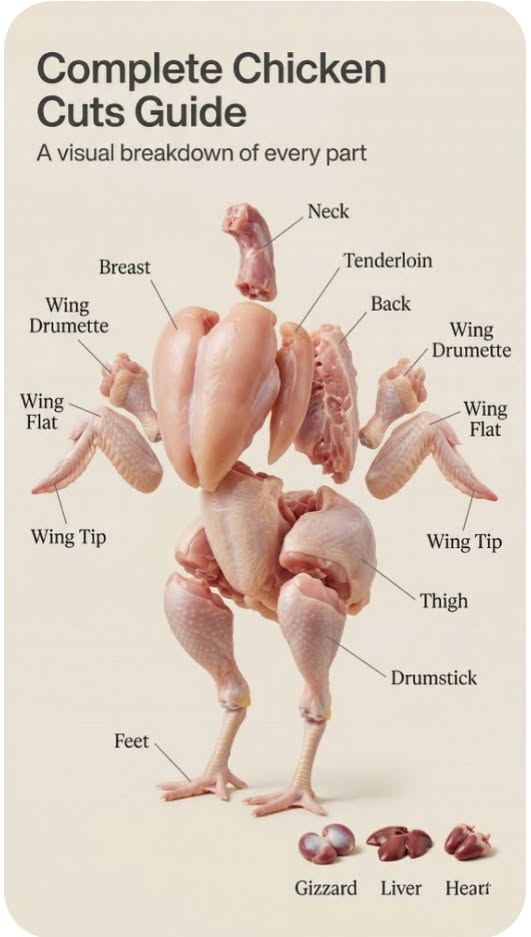
Walk into any butcher counter and the labels start flying: split breasts, airliners, tenderloins, drumsticks, thighs, backs. This Complete Chicken Cuts Guide turns that vocabulary into a working map of the bird, showing you where each cut sits, what it costs, and exactly how it wants to be cooked.
Chicken is the most forgiving protein in the kitchen once you match the cut to the method. Lean breast meat wants quick, high heat and a watchful eye on the thermometer; dark thigh and leg meat rewards longer, slower cooking where the collagen melts into something silky. Wings and backs are flavor engines that deserve a pot or a hot oven, not the trash.
Below you'll find a full breakdown of eight cuts with weights, cooking temperatures in Fahrenheit and Celsius, and doneness cues you can see and touch. Use it as a shopping cheat sheet and a roasting reference you'll come back to every week.
Why You'll Love This Recipe
About the Ingredients
1 whole chicken, 4 to 4.5 lb (1.8 to 2 kg), cut into 8 pieces
Ask the butcher to cut it into 8 pieces at no extra charge, or use kitchen shears along the joints. A 4 lb bird yields roughly 2.5 lb of edible meat, enough for 6 generous servings.
2 split chicken breasts, bone-in, skin-on, about 1.5 lb (680 g) total
Bone-in breasts stay juicier than boneless and cost about a third less per pound. If you only find boneless, reduce the oven time by 8 to 10 minutes and check early.
6 bone-in, skin-on chicken thighs, about 1.75 lb (800 g)
Thighs are the most forgiving cut on the bird thanks to their fat marbling. Look for thighs with intact skin and no torn edges, which render crisper.
4 whole chicken legs (drumstick and thigh attached), about 2 lb (900 g)
Whole legs are ideal for braises and sheet-pan dinners because they hold together. Ask for the leg-thigh joint left intact rather than separated.
8 chicken wings, about 1.5 lb (680 g), split into flats and drumettes
Save the wing tips in a freezer bag for stock. Fresh wings from the refrigerated case beat frozen for skin crispness, though frozen works if fully thawed overnight.
2 chicken backs plus 1 neck, about 1 lb (450 g) total
These are the stock makers; simmer them 90 minutes for a rich broth. If your bird came without a back, ask the butcher for backs, which are often free or a dollar a pound.
2 tbsp (30 ml) olive oil
Olive oil browns skin beautifully at 425F. Avocado oil or melted ghee are excellent high-heat swaps if you want a higher smoke point.
2 tsp (12 g) kosher salt, plus more to taste
Kosher salt dissolves and seasons more evenly than table salt. If using fine sea salt, start with 1 1/2 tsp since it packs denser per spoon.
1 tsp (2 g) freshly ground black pepper
Fresh-cracked pepper blooms in the oven heat. Pre-ground pepper loses its punch after a few months, so grind to order if you can.
Tips & Tricks
Dry-Brine Overnight
Salt all cuts and rest them uncovered in the fridge 12 to 24 hours; the surface dries and the skin crisps dramatically better.
Use a Thermometer, Not the Clock
Breast is done at 165F (74C) and thighs at 175F (79C); pull each cut as it hits its number.
Let It Rest
Rest every cut 5 to 10 minutes before carving so juices redistribute instead of flooding the board.
Cut at the Joints
Slide your knife through the soft cartilage between joints rather than sawing through bone to keep pieces clean.
Pro Tips
Step-by-Step Instructions
1. Break Down the Bird
Cut the whole chicken into 8 pieces by slicing through the joints: remove the legs, separate thighs from drumsticks if you like, then cut the wings away and split the breasts. Keep backs and neck in a separate bowl for stock.
2. Dry-Brine Everything
Pat all cuts bone-dry with paper towels, then season evenly with the kosher salt and pepper on all sides, including under the skin. Arrange on a wire rack over a sheet pan and refrigerate uncovered at least 1 hour, ideally overnight.
3. Heat the Oven
Preheat the oven to 425F (220C) with a rack in the upper-middle position. A fully preheated oven is what gives skin its first blast of browning.
4. Roast the Dark Meat
Toss thighs and whole legs with 1 tbsp olive oil and place skin-side up on a sheet pan. Roast 35 to 40 minutes until the skin is deep golden brown and a thermometer in the thickest part reads 175F (79C).
5. Roast the Breast
Rub split breasts with the remaining 1 tbsp oil and set them on a second pan. Add them to the oven after the dark meat has cooked 10 minutes, then roast 25 to 30 minutes until the internal temperature hits 165F (74C) and juices run clear.
6. Crisp the Wings
Toss wings with a pinch of salt and roast at 425F (220C) for 30 to 35 minutes, flipping once at the halfway mark, until the skin is blistered and crackling and the meat pulls back from the bone.
7. Simmer the Stock Cuts
Cover backs and neck with 8 cups (2 L) cold water, bring to a bare simmer at 190F (88C), and cook 90 minutes, skimming foam. Strain and cool; you'll have about 6 cups of stock.
8. Rest and Carve
Rest every roasted cut 5 to 10 minutes on a board. Carve breast across the grain into 1/2 inch (1.25 cm) slices and serve legs and thighs whole so everyone gets crackling skin.
Delicious Variations
Buttermilk Brine Version
Soak breasts and thighs 4 hours in buttermilk, salt, and hot sauce, then roast at 400F (205C) for a tangier, tenderer result.
Smoky Sheet-Pan Build
Toss thighs and drumsticks with smoked paprika and cumin, roast at 425F (220C) for 40 minutes, and finish with lime.
Poached-and-Chilled Cuts
Gently poach breasts at 180F (82C) for 18 minutes, chill, and slice for salads and sandwiches.
How to Store Complete Chicken Cuts Guide
Refrigerator
Store cooked chicken in an airtight container up to 4 days; keep dark and white meat in separate containers so juices don't sog the breast.
Freezer
Freeze cooked, cooled cuts in portion bags up to 3 months; press out air and label with the cut and date.
Reheating
Reheat dark meat covered at 350F (175C) for 12 to 15 minutes; reheat breast gently at 300F (150C) for 8 to 10 minutes or it dries out.
Frequently Asked Questions
Q: What are the eight cuts of a chicken?
The standard eight-piece cut is two breasts, two thighs, two drumsticks, and two wings, with backs and neck reserved for stock. Some butchers split the breasts in half crosswise, giving you ten pieces.
Q: Which chicken cut is healthiest?
Skinless chicken breast is the leanest cut at roughly 165 calories and 3.6 g fat per 4 oz cooked. Thighs are higher in fat but also richer in iron and zinc, so both fit a healthy diet.
Q: Is it better to cook chicken at 350F or 425F?
Use 425F (220C) for skin-on pieces you want crispy and 350F (175C) for larger bone-in roasts that need even cooking. High heat browns the surface before the interior overcooks.
Q: How do I know when chicken is done without a thermometer?
Pierce the thickest part and the juices should run completely clear, with no pink tinge, and the meat should pull easily from the bone. A thermometer is still the only reliable test at 165F (74C) for breast and 175F (79C) for thigh.
Q: Can I use the same cooking time for boneless and bone-in cuts?
No, bone-in cuts take roughly 30 to 40 percent longer than boneless of the same weight. Bone conducts heat slowly, so a bone-in breast needs about 30 minutes at 425F (220C) versus 18 to 20 minutes boneless.
Print this guide, tape it inside a cabinet door, and shop the butcher counter like you own it. Start with one whole bird broken into eight pieces this week and you'll never guess at a chicken label again.
Complete Chicken Cuts Guide
Complete Chicken Cuts Guide breaks down every part of the bird so you buy, cook, and carve each cut with confidence and zero waste.
🧂 Ingredients
- 1 whole chicken, 4 to 4.5 lb (1.8 to 2 kg), cut into 8 pieces
- 2 split chicken breasts, bone-in, skin-on, about 1.5 lb (680 g) total
- 6 bone-in, skin-on chicken thighs, about 1.75 lb (800 g)
- 4 whole chicken legs (drumstick and thigh attached), about 2 lb (900 g)
- 8 chicken wings, about 1.5 lb (680 g), split into flats and drumettes
- 2 chicken backs plus 1 neck, about 1 lb (450 g) total
- 2 tbsp (30 ml) olive oil
- 2 tsp (12 g) kosher salt, plus more to taste
- 1 tsp (2 g) freshly ground black pepper
📋 Instructions
- 1Break Down the Bird — Cut the whole chicken into 8 pieces by slicing through the joints: remove the legs, separate thighs from drumsticks if you like, then cut the wings away and split the breasts. Keep backs and neck in a separate bowl for stock.
- 2Dry-Brine Everything — Pat all cuts bone-dry with paper towels, then season evenly with the kosher salt and pepper on all sides, including under the skin. Arrange on a wire rack over a sheet pan and refrigerate uncovered at least 1 hour, ideally overnight.
- 3Heat the Oven — Preheat the oven to 425F (220C) with a rack in the upper-middle position. A fully preheated oven is what gives skin its first blast of browning.
- 4Roast the Dark Meat — Toss thighs and whole legs with 1 tbsp olive oil and place skin-side up on a sheet pan. Roast 35 to 40 minutes until the skin is deep golden brown and a thermometer in the thickest part reads 175F (79C).
- 5Roast the Breast — Rub split breasts with the remaining 1 tbsp oil and set them on a second pan. Add them to the oven after the dark meat has cooked 10 minutes, then roast 25 to 30 minutes until the internal temperature hits 165F (74C) and juices run clear.
- 6Crisp the Wings — Toss wings with a pinch of salt and roast at 425F (220C) for 30 to 35 minutes, flipping once at the halfway mark, until the skin is blistered and crackling and the meat pulls back from the bone.
- 7Simmer the Stock Cuts — Cover backs and neck with 8 cups (2 L) cold water, bring to a bare simmer at 190F (88C), and cook 90 minutes, skimming foam. Strain and cool; you'll have about 6 cups of stock.
- 8Rest and Carve — Rest every roasted cut 5 to 10 minutes on a board. Carve breast across the grain into 1/2 inch (1.25 cm) slices and serve legs and thighs whole so everyone gets crackling skin.