Nestora
Elegant Frenched Chicken Leg with Creamy Domino Dauphinoise
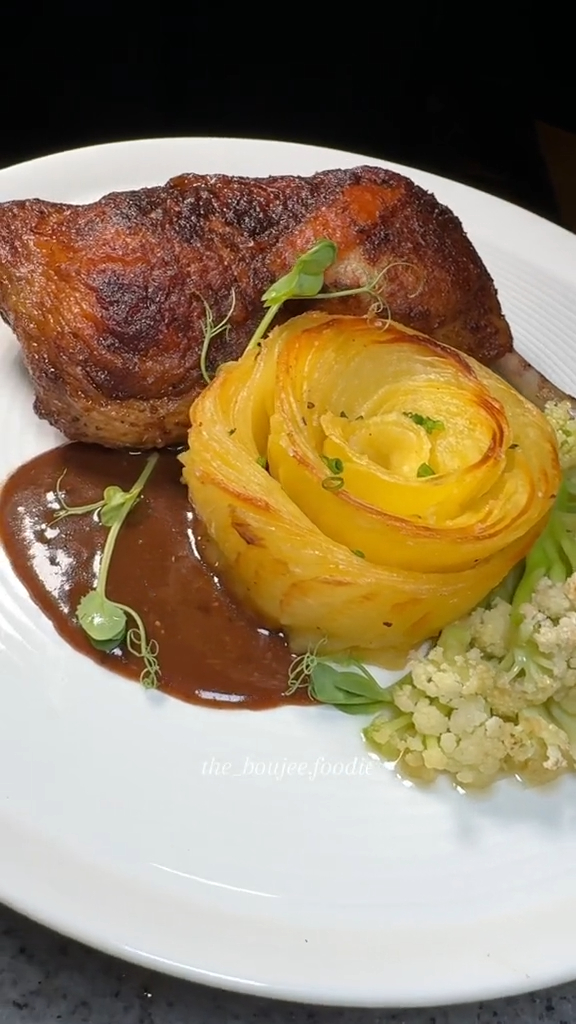
Frenched chicken legs look like they came from a restaurant kitchen, but the technique is simple: scrape the meat and cartilage away from the bone end so you get a clean handle and a compact, even-cooking roast. Paired with domino dauphinoise, where thinly sliced potatoes stand upright like fallen tiles in cream and garlic, the whole tray bakes into something genuinely impressive.
The secret is timing. The potatoes get a head start in hot cream so they soften and absorb the garlic and thyme, then the chicken roasts on top so every drop of savory jus soaks down into the layers. You finish with a blast of heat for crackling skin and bubbling, golden edges.
This serves 6 generously with a green salad, or 4 very hungry people with leftovers. It is a Sunday-dinner centerpiece that costs far less than a whole roast and looks twice as elegant.
Why You'll Love This Recipe
About the Ingredients
6 whole chicken legs (about 3 lb / 1.4 kg), frenched
Ask your butcher to french the legs, or do it yourself by cutting the tendon at the bone end and scraping downward with a small knife. If whole legs are unavailable, use 6 bone-in skin-on thighs and reduce the initial roast by 8 minutes.
2 1/2 tsp fine sea salt, divided
Fine sea salt dissolves faster than kosher flakes for the dry brine. If using Diamond Crystal kosher, use 1 tbsp total instead, since it is less dense.
1 tsp freshly ground black pepper
Fresh-cracked pepper blooms in the oven; pre-ground loses its bite. A coffee grinder reserved for spices works if you have no pepper mill.
2 1/2 lb (1.1 kg) Yukon Gold potatoes, peeled
Yukon Golds hold their shape and turn creamy without going gluey. Russets work but absorb more cream, so add 1/4 cup extra and expect a softer set.
1 1/2 cups (360 ml) heavy cream
Use 36-40% fat cream for a stable, silky gratin. Half-and-half will curdle at this oven temperature, so avoid it here.
3/4 cup (180 ml) whole milk
Whole milk tempers the richness without thinning the sauce. For a lighter version, swap in 2% milk but add 1 tsp flour to help the set.
4 garlic cloves, finely grated
Grate on a Microplane so the garlic melts into the cream instead of burning in pockets. Jarred garlic is too wet and acidic; use fresh.
4 sprigs fresh thyme, plus 1 tsp leaves for garnish
Thyme stands up to long baking; rosemary would overpower the cream. Dried thyme works in a pinch at 1/2 tsp.
2 tbsp unsalted butter, softened
Butter keeps the potatoes from sticking and adds a nutty edge. Brush the dish with olive oil instead if you are avoiding dairy fat.
1 tbsp olive oil
Regular (not extra-virgin) olive oil handles the high heat better. Avocado oil is a neutral-flavored substitute.
1/4 tsp freshly grated nutmeg
A whisper of nutmeg rounds out cream sauces; grate whole nutmeg on a fine rasp for the best aroma. Skip it if you only have pre-ground, which tastes dusty.
1 tbsp chopped fresh parsley, for serving
Flat-leaf parsley adds a clean, bright finish. Tarragon or chives are elegant swaps if you want an anise or onion note.
Tips & Tricks
Warm the cream before pouring
cold cream slows the initial bake and can leave the center watery. Heat it with the garlic and thyme until steaming, not boiling.
Do not crowd the potatoes
stand them upright in a single overlapping layer so hot cream circulates and the edges brown instead of steaming.
- Dry the skin thoroughly and salt it 30 minutes ahead: moisture is the number one enemy of crispy chicken skin, and the salt pulls it to the surface where you can pat it away.
- Slice potatoes to an even 1/8 inch (3 mm): uneven slices mean some turn to mush while others stay crunchy. A mandoline takes 4 minutes and guarantees the shingled look.
Pro Tips
Step-by-Step Instructions
1. Dry-brine the chicken
Pat the chicken legs completely dry with paper towels, then rub all over with 2 tsp of the salt and the black pepper. Set skin-side up on a rack at room temperature for 30 minutes while you prepare the potatoes, or refrigerate up to 4 hours uncovered.
2. Heat the oven and cream
Preheat the oven to 375F (190C). In a small saucepan over medium-low heat, warm the cream, milk, grated garlic, thyme sprigs, nutmeg, and remaining 1/2 tsp salt until steaming but not boiling, about 4 minutes. Remove from heat and let the thyme steep.
3. Slice the potatoes
Peel the potatoes and slice them 1/8 inch (3 mm) thick on a mandoline or with a sharp knife. Keep the slices in a bowl of cold water as you go so they do not discolor, then drain and pat very dry.
4. Butter the baking dish
Rub a 9x13-inch (23x33 cm) baking dish all over with the softened butter, getting into the corners. This prevents sticking and gives the edges a golden, buttery crust.
5. Shingle the dominoes
Arrange the potato slices upright in overlapping rows, like dominoes leaning on each other, packing them snugly. Pour the warm cream mixture evenly over the top, discarding the thyme sprigs, and press gently so the liquid settles between the slices.
6. Par-bake the potatoes
Cover the dish tightly with foil and bake at 375F (190C) for 35 minutes, until a knife slides into the center with no resistance and the cream is bubbling at the edges. This head start is what keeps the potatoes creamy instead of raw.
7. Add the chicken
Uncover the dish and nestle the chicken legs on top, skin-side up, drizzle with the olive oil, and roast uncovered at 375F (190C) for 30 minutes, until the skin is deep golden and the thickest part of the thigh reads 165F (74C).
8. Crisp and finish
Raise the heat to 425F (220C) or switch on the broiler and cook 5 to 7 minutes more, until the skin is crackling and the potatoes are browned and bubbling, and the thigh reaches 175F (79C). Watch closely, as the broiler can scorch in seconds.
9. Rest and serve
Rest the tray 5 minutes so the juices redistribute. Scatter with fresh thyme leaves and chopped parsley, then serve straight from the dish with a sharply dressed green salad to cut the richness.
Delicious Variations
Herb-Forward Version
Swap thyme for 2 tsp chopped rosemary and add the zest of 1 lemon to the cream for a brighter, Mediterranean profile.
Mushroom Domino
Layer 8 oz (225g) thinly sliced cremini mushrooms between the potato rows before pouring the cream for an earthy, meaty depth.
Parmesan Crust
Sprinkle 1/3 cup (30g) finely grated Parmesan over the potatoes in the last 10 minutes for a savory, crackly top.
How to Store Elegant Frenched Chicken Leg with Creamy Domino Dauphinoise
Refrigerator
Store leftovers in an airtight container in the refrigerator for up to 3 days; keep the chicken separate from the potatoes if possible so the skin does not soften.
Freezer
Freeze the dauphinoise alone for up to 2 months in a foil-lined dish; the chicken does not freeze well once roasted because the skin loses its crispness.
Reheating
Reheat potatoes covered with foil at 350F (175C) for 15 minutes, then uncover for 5 minutes; reheat chicken skin-side up on a rack at 400F (205C) for 8 to 10 minutes to re-crisp.
Frequently Asked Questions
Q: What does frenched mean on a chicken leg?
Frenched means the meat, fat, and cartilage have been scraped away from the end of the bone, leaving a clean white handle. It is purely a presentation technique, but it also helps the leg cook more evenly and gives you a neat bone to pick up.
Q: Can I make this dauphinoise ahead of time?
Yes, you can assemble the potato layer up to 24 hours ahead, cover, and refrigerate before baking. Add 10 minutes to the covered par-bake time since the dish starts cold, and do not add the chicken until the potatoes have had their head start.
Q: How do I know when the chicken leg is done?
The chicken is done when an instant-read thermometer inserted into the thickest part of the thigh, away from the bone, reads 175F (79C). At that point the juices run clear and the leg feels loose at the joint when you wiggle it.
Q: Why are my potatoes still crunchy in the middle?
Crunchy centers usually mean the slices were too thick or the dish was crowded, so the cream could not penetrate. Slice to 1/8 inch, shingle them in a single snug layer, and keep the foil on for the full 35-minute par-bake.
Q: What can I use instead of heavy cream?
Crème fraîche thinned with a splash of milk is the closest substitute and gives a tangy edge. Do not use sour cream, which splits at high heat, and avoid fat-free half-and-half entirely.
If you make this elegant frenched chicken leg with creamy domino dauphinoise, snap a photo of that golden skin and bubbling cream and tag me, because this is one to show off. Save the recipe for your next dinner party and let the oven do the impressing.
Elegant Frenched Chicken Leg with Creamy Domino Dauphinoise
Elegant Frenched Chicken Leg with Creamy Domino Dauphinoise delivers crispy golden skin over silky layered potatoes for a showstopping dinner.
🧂 Ingredients
- 6 whole chicken legs (about 3 lb / 1.4 kg), frenched
- 2 1/2 tsp fine sea salt, divided
- 1 tsp freshly ground black pepper
- 2 1/2 lb (1.1 kg) Yukon Gold potatoes, peeled
- 1 1/2 cups (360 ml) heavy cream
- 3/4 cup (180 ml) whole milk
- 4 garlic cloves, finely grated
- 4 sprigs fresh thyme, plus 1 tsp leaves for garnish
- 2 tbsp unsalted butter, softened
- 1 tbsp olive oil
- 1/4 tsp freshly grated nutmeg
- 1 tbsp chopped fresh parsley, for serving
📋 Instructions
- 1Dry-brine the chicken — Pat the chicken legs completely dry with paper towels, then rub all over with 2 tsp of the salt and the black pepper. Set skin-side up on a rack at room temperature for 30 minutes while you prepare the potatoes, or refrigerate up to 4 hours uncovered.
- 2Heat the oven and cream — Preheat the oven to 375F (190C). In a small saucepan over medium-low heat, warm the cream, milk, grated garlic, thyme sprigs, nutmeg, and remaining 1/2 tsp salt until steaming but not boiling, about 4 minutes. Remove from heat and let the thyme steep.
- 3Slice the potatoes — Peel the potatoes and slice them 1/8 inch (3 mm) thick on a mandoline or with a sharp knife. Keep the slices in a bowl of cold water as you go so they do not discolor, then drain and pat very dry.
- 4Butter the baking dish — Rub a 9x13-inch (23x33 cm) baking dish all over with the softened butter, getting into the corners. This prevents sticking and gives the edges a golden, buttery crust.
- 5Shingle the dominoes — Arrange the potato slices upright in overlapping rows, like dominoes leaning on each other, packing them snugly. Pour the warm cream mixture evenly over the top, discarding the thyme sprigs, and press gently so the liquid settles between the slices.
- 6Par-bake the potatoes — Cover the dish tightly with foil and bake at 375F (190C) for 35 minutes, until a knife slides into the center with no resistance and the cream is bubbling at the edges. This head start is what keeps the potatoes creamy instead of raw.
- 7Add the chicken — Uncover the dish and nestle the chicken legs on top, skin-side up, drizzle with the olive oil, and roast uncovered at 375F (190C) for 30 minutes, until the skin is deep golden and the thickest part of the thigh reads 165F (74C).
- 8Crisp and finish — Raise the heat to 425F (220C) or switch on the broiler and cook 5 to 7 minutes more, until the skin is crackling and the potatoes are browned and bubbling, and the thigh reaches 175F (79C). Watch closely, as the broiler can scorch in seconds.
- 9Rest and serve — Rest the tray 5 minutes so the juices redistribute. Scatter with fresh thyme leaves and chopped parsley, then serve straight from the dish with a sharply dressed green salad to cut the richness.