Nestora
Creamy Garlic Chicken Fettuccine – Best 50-Minute Comfort
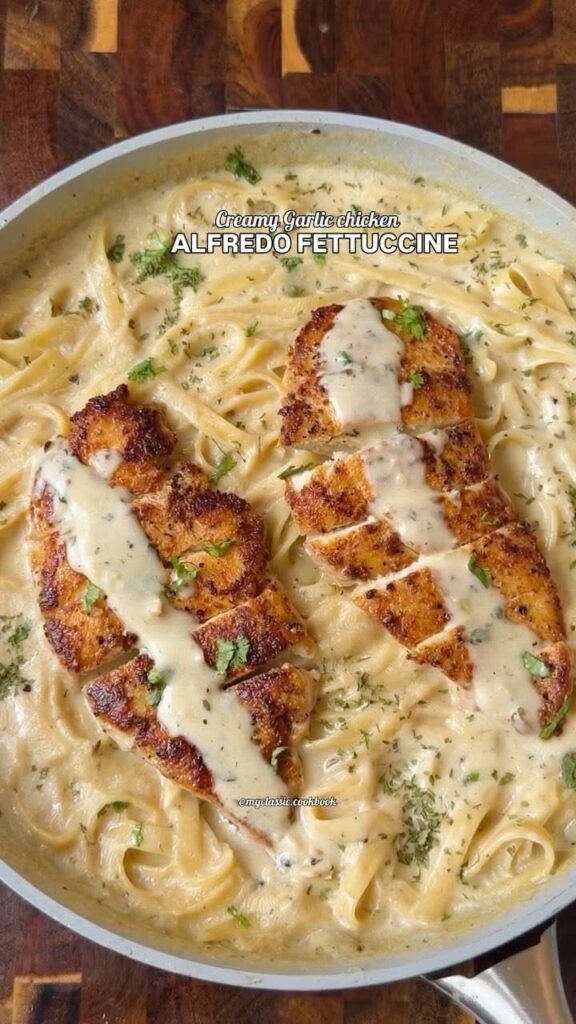
There is a very specific kind of happiness that comes from twirling a fork through fettuccine coated in a sauce that is thick enough to hold on and garlicky enough to make you reach for the next bite before you have finished the first. This Creamy Garlic Chicken Fettuccine is that dish. Golden, pan-seared chicken cutlets get sliced and folded back into a velvety Parmesan cream sauce built right in the same skillet, so every bit of browned flavor ends up on your plate instead of in the sink.
The trick here is balance. Too much cream and the sauce turns heavy and one-note; too little garlic and it tastes like plain Alfredo with chicken dropped in. We use a generous amount of fresh garlic bloomed gently in butter and olive oil, a splash of dry white wine to lift the richness, and a measured amount of freshly grated Parmesan to thicken the sauce naturally as it simmers. The pasta water does the rest, emulsifying everything into a glossy, clingy coating.
It comes together in one large skillet plus a pasta pot in under an hour, and it reheats beautifully with a splash of milk the next day. Serve it with a crisp green salad and torn garlic bread, and you have a weeknight dinner that tastes like a restaurant plate but costs a fraction of one.
Why You'll Love This Recipe
About the Ingredients
12 oz (340 g) dried fettuccine
Dried fettuccine holds its bite better than fresh here because the sauce is heavy; if using fresh pasta, cook it 2 to 3 minutes less and reduce the pasta water to 1/2 cup. De Cecco and Barilla both make reliable bronze-die fettuccine.
1 1/2 lb (680 g) boneless, skinless chicken breasts, sliced horizontally into 4 thin cutlets
Thin cutlets cook through in the time it takes to brown, so they stay juicy; you can swap in boneless thighs and add 2 minutes per side. Look for chicken that is pale pink and springs back when pressed.
1 1/4 tsp kosher salt, divided, plus more for the pasta water
Kosher salt dissolves and seasons more evenly than table salt; if using fine table salt, cut the amount by about a third. Salt the pasta water until it tastes like mild seawater.
1/2 tsp freshly ground black pepper, plus more to finish
Fresh-cracked pepper is brighter and more floral than pre-ground; a peppercorn blend adds a little extra warmth. Grind just before using for the best aroma.
2 Tbsp olive oil
Regular (not extra-virgin) olive oil has a higher smoke point for searing; avocado oil works as a neutral substitute. Extra-virgin is fine, but keep the heat moderate.
2 Tbsp unsalted butter
Butter brings the nutty richness that makes the sauce taste finished; salted butter works if you reduce the added salt by 1/4 tsp. European-style butter has a noticeably better flavor here.
6 garlic cloves, finely minced (about 2 Tbsp)
Fresh garlic is essential; jarred minced garlic tastes flat and slightly metallic. Mince it finely so it blooms quickly without burning, and use it within a week of buying.
1/3 cup (80 ml) dry white wine, such as Pinot Grigio or Sauvignon Blanc
The wine deglazes the pan and adds acidity that cuts the cream; substitute 1/3 cup low-sodium chicken broth plus 1 tsp lemon juice if you prefer no alcohol. Avoid oaky Chardonnay, which turns bitter when reduced.
1 1/4 cups (300 ml) heavy cream
Heavy cream (at least 36% fat) is what makes the sauce stable; half-and-half will work but needs 5 extra minutes of simmering and may break. Do not use milk alone.
1 1/4 cups (125 g) freshly grated Parmesan, plus more to serve
Grate Parmesan from a wedge on a Microplane so it melts smoothly; pre-shredded cheese contains anti-caking starch that makes sauce grainy. Pecorino Romano is a sharper substitute, so use 1 cup.
1/4 cup chopped fresh flat-leaf parsley, plus more for garnish
Parsley adds a fresh, grassy finish that keeps the dish from tasting heavy; basil or chives are good swaps. Flat-leaf parsley has more flavor than curly.
Tips & Tricks
Do Not Boil the Cream
Keep the sauce at a gentle simmer (small bubbles at the edge only) after adding the cream. A hard boil can cause the fat to separate and the sauce to look oily and curdled.
Grate the Parmesan Yourself
Pre-shredded cheese is coated in starch that clumps instead of melting. A Microplane or the finest side of a box grater gives you a sauce that is smooth and glossy.
Reserve More Pasta Water Than You Think
Scoop out 1 1/2 cups before draining. The starchy water is what loosens and emulsifies the sauce, and you cannot get it back once the pot is drained.
Watch the Garlic
Minced garlic goes from fragrant to bitter in about 30 seconds. Add it to the pan off the heat if the butter is very hot, and stir constantly for 30 to 45 seconds.
Pro Tips
Step-by-Step Instructions
1. Boil the pasta water
Bring a large pot of water to a rolling boil over high heat, about 8 to 10 minutes, and salt it generously (about 1 Tbsp kosher salt). The water should taste seasoned, because this is the only chance to season the pasta itself.
2. Season and sear the chicken
Pat the 4 cutlets dry and season both sides with 3/4 tsp salt and 1/4 tsp pepper. Heat 2 Tbsp olive oil in a large 12-inch skillet over medium-high heat (375°F / 190°C) until it shimmers, about 2 minutes. Add the chicken and cook undisturbed for 4 to 5 minutes per side until deeply golden brown and the internal temperature reads 165°F (74°C), about 9 to 10 minutes total. Transfer to a cutting board and rest 5 minutes.
3. Cook the fettuccine
Add the fettuccine to the boiling water and cook 1 minute shy of the package directions, about 10 to 11 minutes, until al dente with a slight bite at the center. Scoop out 1 1/2 cups pasta water and set aside, then drain.
4. Bloom the garlic
Lower the skillet heat to medium (300°F / 150°C) and add the butter. Once it foams and smells nutty, about 1 minute, add the garlic and cook, stirring constantly, for 30 to 45 seconds until fragrant and pale gold, not brown. If the garlic darkens, wipe the pan and start again.
5. Deglaze with wine
Pour in the white wine and scrape up the browned bits with a wooden spoon. Simmer for 2 to 3 minutes until the liquid reduces by about half and no longer smells sharply of alcohol; you should see a thin, syrupy glaze at the edges.
6. Build the cream sauce
Reduce the heat to medium-low (275°F / 135°C) and pour in the heavy cream. Simmer gently for 4 to 5 minutes, stirring occasionally, until it thickens enough to coat the back of a spoon. Do not let it come to a hard boil.
7. Melt in the Parmesan
Pull the pan off the heat and whisk in the Parmesan one handful at a time, along with the remaining 1/2 tsp salt and 1/4 tsp pepper, until the sauce is smooth and glossy, about 1 minute. If it looks tight, whisk in pasta water 1 Tbsp at a time.
8. Toss pasta and chicken
Slice the rested chicken against the grain into 1/2-inch strips. Add the drained fettuccine to the sauce with 1/4 cup pasta water and toss over low heat for 1 to 2 minutes until every strand is coated and the sauce clings. Fold in the chicken and parsley, adding more pasta water if needed.
9. Serve hot
Divide among warm bowls, top with extra Parmesan, parsley, and cracked pepper, and serve immediately. The sauce tightens as it cools, so a splash of pasta water loosens leftovers.
Delicious Variations
Sun-Dried Tomato and Spinach
Stir in 1/3 cup chopped oil-packed sun-dried tomatoes with the garlic and 3 cups baby spinach at the end, letting it wilt for 1 minute.
Lemon-Herb Chicken
Add the zest of 1 lemon and 1 tsp chopped thyme to the sauce, and finish with a squeeze of lemon juice for a brighter, spring-like version.
Spicy Cajun Cream
Season the chicken with 1 1/2 tsp Cajun seasoning instead of salt and pepper, and add 1/4 tsp red pepper flakes with the garlic for a smoky, spicy kick.
How to Store Creamy Garlic Chicken Fettuccine
Refrigerator
Store in an airtight container in the refrigerator for up to 3 days. Keep the chicken and pasta together; the sauce will thicken considerably when cold.
Freezer
Freezing is not recommended because the cream sauce can separate and the pasta turns mushy. If you must, freeze the sauce and chicken alone for up to 1 month and cook fresh pasta to serve.
Reheating
Reheat gently in a covered skillet over low heat (about 250°F / 120°C) with 2 to 3 Tbsp milk or pasta water, stirring until the sauce loosens and turns glossy, about 4 to 5 minutes. Avoid the microwave on high, which can make the cream grainy.
Frequently Asked Questions
Q: Can I use half-and-half instead of heavy cream?
Yes, but simmer it 5 minutes longer to thicken and keep the heat low, since half-and-half has less fat and is more likely to break. Add the Parmesan off the heat as usual, and expect a slightly thinner sauce.
If you make this Creamy Garlic Chicken Fettuccine, I would love to hear how it turned out. Leave a comment with the swaps you tried, rate the recipe, and snap a photo of that glossy sauce for your next pasta night.
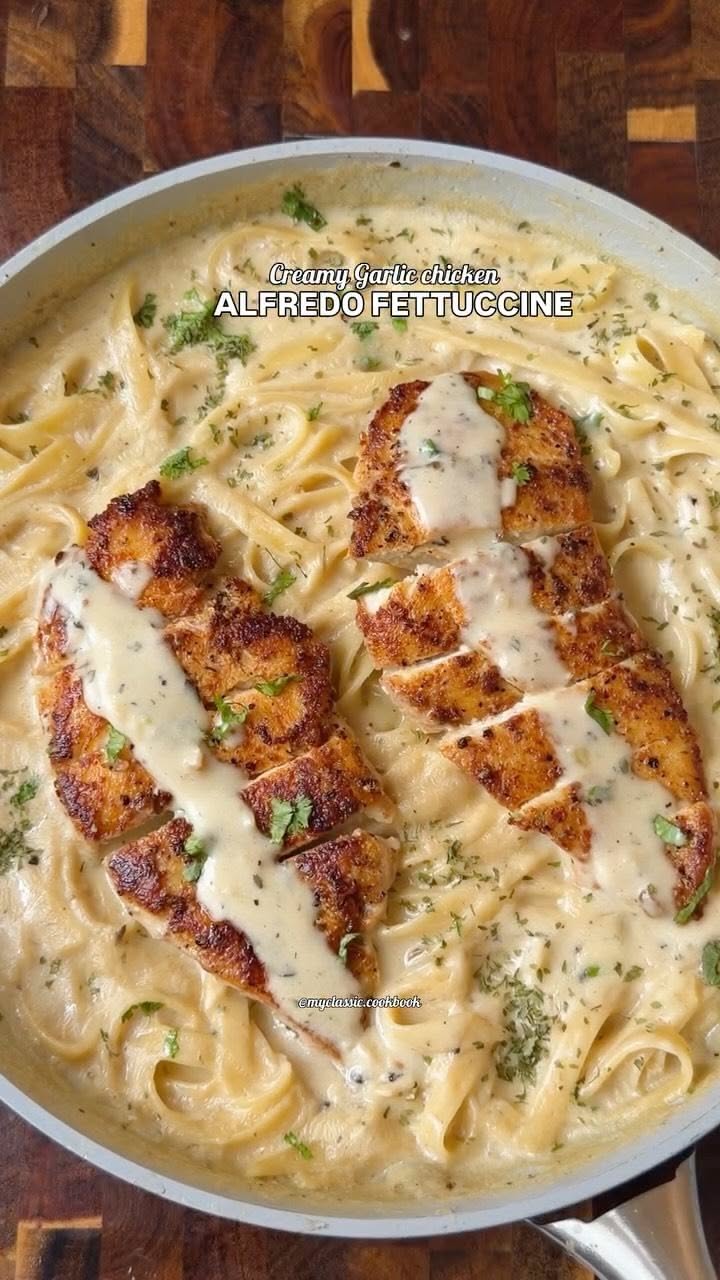
Creamy Garlic Chicken Fettuccine
Creamy Garlic Chicken Fettuccine is a rich, cheesy one-pan comfort pasta with golden seared chicken and a silky garlic Parmesan sauce that clings to every strand.
🧂 Ingredients
- 12 oz (340 g) dried fettuccine
- 1 1/2 lb (680 g) boneless, skinless chicken breasts, sliced horizontally into 4 thin cutlets
- 1 1/4 tsp kosher salt, divided, plus more for the pasta water
- 1/2 tsp freshly ground black pepper, plus more to finish
- 2 Tbsp olive oil
- 2 Tbsp unsalted butter
- 6 garlic cloves, finely minced (about 2 Tbsp)
- 1/3 cup (80 ml) dry white wine, such as Pinot Grigio or Sauvignon Blanc
- 1 1/4 cups (300 ml) heavy cream
- 1 1/4 cups (125 g) freshly grated Parmesan, plus more to serve
- 1/4 cup chopped fresh flat-leaf parsley, plus more for garnish
📋 Instructions
- 1Boil the pasta water — Bring a large pot of water to a rolling boil over high heat, about 8 to 10 minutes, and salt it generously (about 1 Tbsp kosher salt). The water should taste seasoned, because this is the only chance to season the pasta itself.
- 2Season and sear the chicken — Pat the 4 cutlets dry and season both sides with 3/4 tsp salt and 1/4 tsp pepper. Heat 2 Tbsp olive oil in a large 12-inch skillet over medium-high heat (375°F / 190°C) until it shimmers, about 2 minutes. Add the chicken and cook undisturbed for 4 to 5 minutes per side until deeply golden brown and the internal temperature reads 165°F (74°C), about 9 to 10 minutes total. Transfer to a cutting board and rest 5 minutes.
- 3Cook the fettuccine — Add the fettuccine to the boiling water and cook 1 minute shy of the package directions, about 10 to 11 minutes, until al dente with a slight bite at the center. Scoop out 1 1/2 cups pasta water and set aside, then drain.
- 4Bloom the garlic — Lower the skillet heat to medium (300°F / 150°C) and add the butter. Once it foams and smells nutty, about 1 minute, add the garlic and cook, stirring constantly, for 30 to 45 seconds until fragrant and pale gold, not brown. If the garlic darkens, wipe the pan and start again.
- 5Deglaze with wine — Pour in the white wine and scrape up the browned bits with a wooden spoon. Simmer for 2 to 3 minutes until the liquid reduces by about half and no longer smells sharply of alcohol; you should see a thin, syrupy glaze at the edges.
- 6Build the cream sauce — Reduce the heat to medium-low (275°F / 135°C) and pour in the heavy cream. Simmer gently for 4 to 5 minutes, stirring occasionally, until it thickens enough to coat the back of a spoon. Do not let it come to a hard boil.
- 7Melt in the Parmesan — Pull the pan off the heat and whisk in the Parmesan one handful at a time, along with the remaining 1/2 tsp salt and 1/4 tsp pepper, until the sauce is smooth and glossy, about 1 minute. If it looks tight, whisk in pasta water 1 Tbsp at a time.
- 8Toss pasta and chicken — Slice the rested chicken against the grain into 1/2-inch strips. Add the drained fettuccine to the sauce with 1/4 cup pasta water and toss over low heat for 1 to 2 minutes until every strand is coated and the sauce clings. Fold in the chicken and parsley, adding more pasta water if needed.
- 9Serve hot — Divide among warm bowls, top with extra Parmesan, parsley, and cracked pepper, and serve immediately. The sauce tightens as it cools, so a splash of pasta water loosens leftovers.