Nestora
Creamy Chicken Casserole a la Normande – Easy 4-Step Dinner
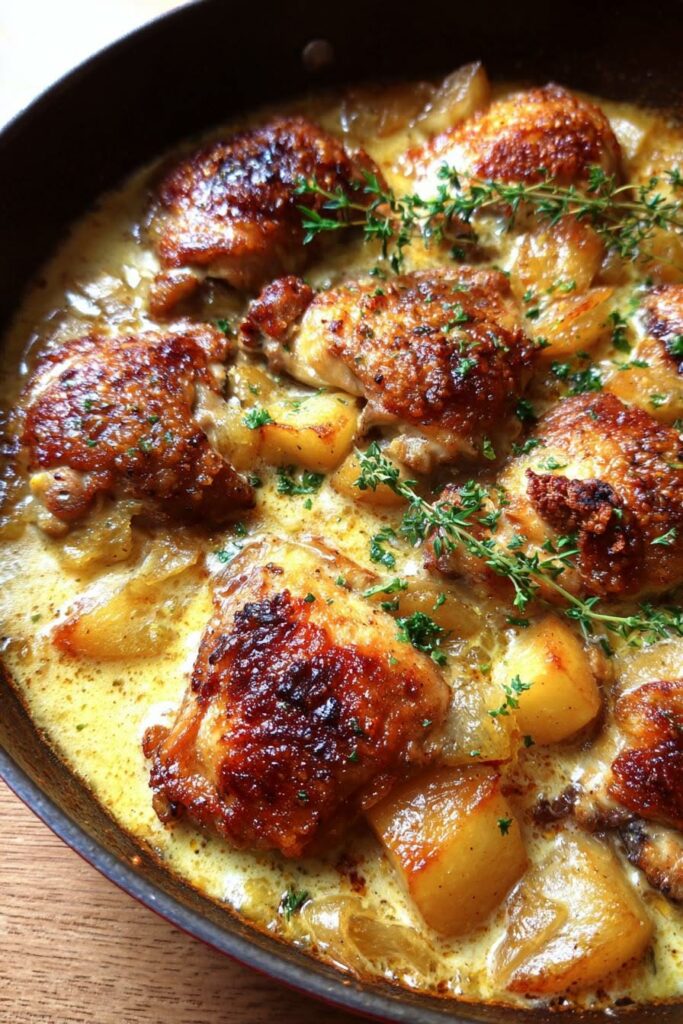
Normande cooking comes from the apple orchards of Normandy, where cream, butter and cider are treated as kitchen essentials rather than luxuries. This casserole borrows that logic: golden-seared chicken thighs simmered with sweet-tart apples, a splash of dry cider and a generous pour of cream until the sauce turns velvety and the whole tray smells like a Sunday in the French countryside.
The genius of the dish is that everything happens in one pan in four short steps, so the chicken browns in the same fat that later sweetens the apples and thickens the sauce. You get crisp skin, tender fruit and a sauce that clings to every spoonful without a single flour roux to fuss over.
Serve it with crusty bread, steamed green beans or buttery mashed potatoes. The sauce is the point, so put something on the table that can soak it up.
Why You'll Love This Recipe
About the Ingredients
6 bone-in, skin-on chicken thighs (about 2.5 lb / 1.1 kg)
Bone-in thighs stay juicy through the oven time; if you only have boneless, use 1.75 lb and cut the bake to 18 minutes. Ask the butcher for thighs of even size so they cook at the same rate.
1 1/2 tsp fine sea salt, plus more to taste
Fine sea salt dissolves evenly into the sauce; kosher salt works if you use 2 tsp. Avoid table salt with iodine here, as it can taste metallic against the cider.
1/2 tsp freshly ground black pepper
Fresh-cracked pepper blooms in the hot pan; pre-ground works in a pinch but add it after searing so it does not burn.
2 tbsp unsalted butter
Butter gives the classic Norman flavor; swap in olive oil if you need dairy-free, though the sauce will be less rounded. Look for butter with at least 82% fat for better browning.
2 medium tart apples, such as Granny Smith or Braeburn, cored and cut into 8 wedges each
Tart, firm apples hold their shape; Fuji turns to mush. Leave the skins on for color and texture, and buy apples that feel heavy for their size.
1 large shallot, thinly sliced (about 1/3 cup)
Shallots are milder than onion and melt into the sauce; a small yellow onion works if you rinse it briefly to tame the bite.
1 tbsp all-purpose flour
Flour lightly binds the pan juices so the cream does not split; use a gluten-free 1:1 blend if needed, and whisk it into the fat before adding liquid.
1/2 cup (120 ml) dry hard cider or dry white wine
Dry cider is the authentic Norman choice; Sauvignon Blanc or Pinot Grigio are good stand-ins. Never use sweet cider, which makes the sauce cloying.
3/4 cup (180 ml) low-sodium chicken broth
Broth keeps the sauce from being too rich; use homemade or a good-quality carton. Vegetable broth works for a lighter version.
3/4 cup (180 ml) heavy cream
Heavy cream (36% fat) will not curdle at a simmer; half-and-half can split, so add it off the heat if you substitute.
1 tbsp Dijon mustard
Dijon adds tang and helps emulsify the sauce; whole-grain mustard gives a rustic texture and a sharper pop.
2 tsp fresh thyme leaves, plus sprigs for garnish
Thyme loves apples and cream; dried thyme works at 3/4 tsp. Strip the leaves by running your fingers backward down the stem.
Tips & Tricks
Add the cream off the boil
whisk it in and then keep the sauce at a bare simmer, or the fat can separate and leave a grainy texture.
Taste for acid at the end
a squeeze of lemon or a splash more cider rescues a sauce that tastes flat after the cream goes in.
- Dry the chicken skin well and do not crowd the pan: moisture is the enemy of browning, so pat the thighs dry and sear in batches if needed.
Pro Tips
Step-by-Step Instructions
1. Season and Sear the Chicken
Pat the thighs dry, season both sides with the salt and pepper, and sear skin-side down in a large ovenproof skillet over medium-high heat (about 400F / 205C pan surface) for 7 to 8 minutes until the skin is deep golden brown and releases easily. Flip and cook 3 minutes more, then transfer to a plate; the chicken will finish in the oven.
2. Soften the Apples and Shallots
Lower the heat to medium, melt the butter in the same pan, and cook the apples and shallot for 5 to 6 minutes, stirring occasionally, until the apples are lightly golden at the edges and the shallot is translucent and soft.
3. Build the Creamy Sauce
Sprinkle the flour over the apples, stir for 30 seconds, then pour in the cider and broth, scraping up the browned bits. Stir in the Dijon and thyme, bring to a gentle simmer for 2 minutes until slightly reduced, then whisk in the cream off the heat and return the chicken skin-side up.
4. Bake Until Bubbling
Transfer the skillet to a 375F (190C) oven and bake for 22 to 25 minutes, until the sauce bubbles at the edges and an instant-read thermometer in the thickest part of a thigh reads 175F (79C). Rest 5 minutes, scatter with thyme sprigs, and serve straight from the pan.
Delicious Variations
Mushroom Normande
Add 8 oz (225 g) sliced cremini mushrooms with the apples for an earthy, deeper sauce.
Cider and Bacon
Render 4 slices of diced bacon first and use the fat to sear the chicken, then crumble the bacon over the top before baking.
White Wine and Tarragon
Swap the cider for dry white wine and the thyme for 2 tsp chopped tarragon for a brighter, anise-scented version.
How to Store Creamy French Style Chicken Casserole a la Normande in Just 4 Steps
Refrigerator
Store in an airtight container for up to 3 days; keep the chicken submerged in sauce so it does not dry out.
Freezer
Freeze the sauce and apples for up to 2 months in a sealed container; cream sauces can separate, so reheat gently and whisk. Cooked chicken freezes well separately for up to 2 months.
Reheating
Reheat covered in a 325F (165C) oven for 15 to 20 minutes, or gently on the stovetop over low heat, adding a splash of broth if the sauce thickens too much.
Frequently Asked Questions
Q: What is chicken a la Normande?
Chicken a la Normande is a French dish from Normandy that pairs chicken with apples, cider and cream. The name refers to the region's signature ingredients, and the result is a rich, slightly sweet sauce with a tangy edge from the cider and mustard.
Q: Can I use boneless chicken breasts instead of thighs?
Yes, but reduce the oven time to about 15 to 18 minutes so the breasts do not dry out. Sear them for 3 minutes per side first, and pull them at 165F (74C) internal temperature.
Q: Can I make this chicken casserole ahead of time?
Yes, you can assemble it up to 24 hours ahead, cover and refrigerate, then bake before serving. Add 5 to 8 minutes to the bake time since the dish starts cold, and stir a splash of broth into the sauce if it has thickened in the fridge.
Q: Why did my cream sauce curdle?
The cream most likely boiled too hard or was added to a pan that was too hot. Whisk cream in off the heat, keep the sauce at a bare simmer, and use heavy cream rather than half-and-half to avoid splitting.
Q: What should I serve with chicken a la Normande?
Serve it with crusty bread, mashed potatoes, rice or steamed green beans to soak up the cider-cream sauce. A crisp green salad with a sharp vinaigrette balances the richness nicely.
If you make this creamy chicken casserole a la Normande, snap a photo of that golden skin and bubbling sauce and tag me, then leave a comment telling me whether you went classic cider or wine.
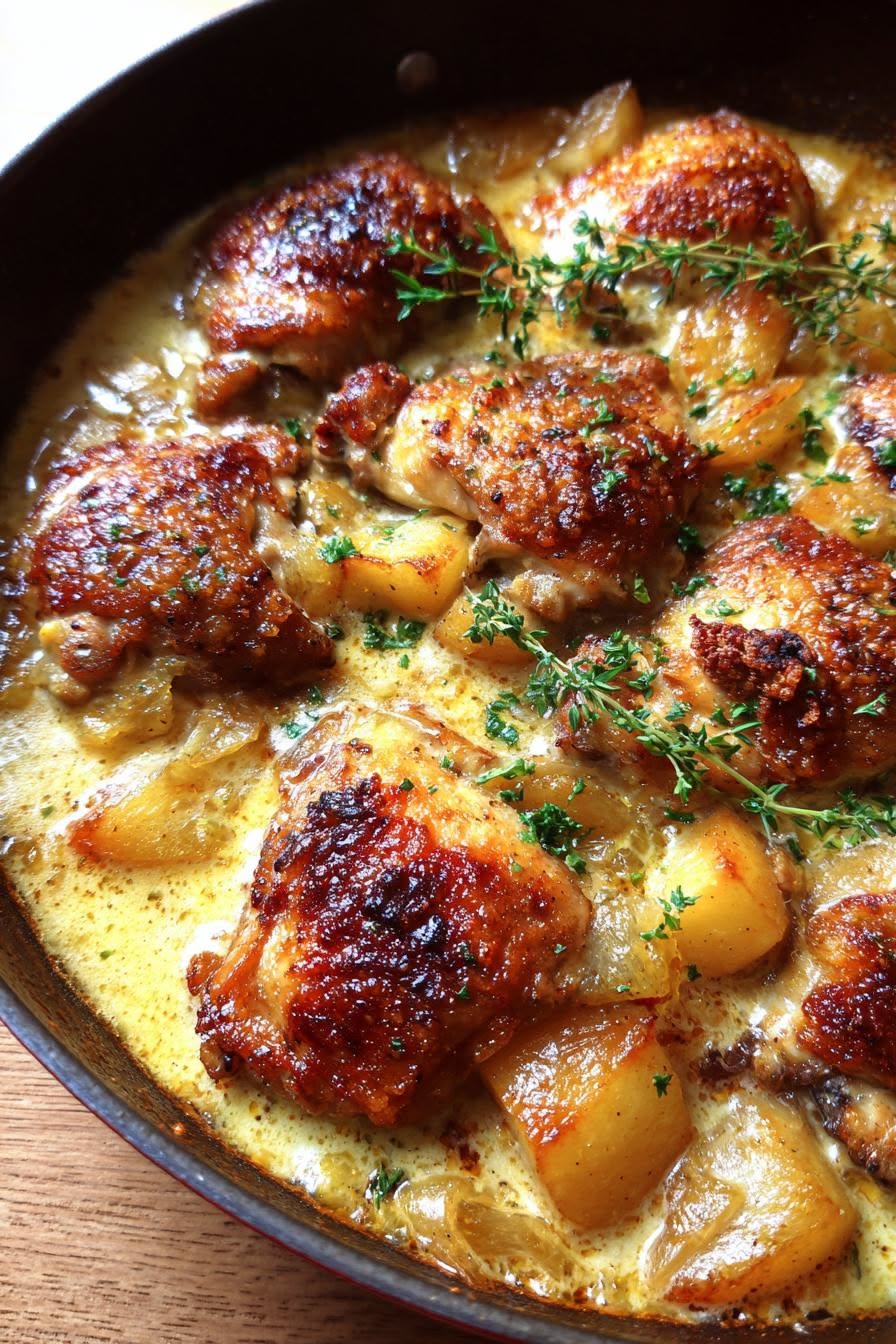
Creamy French Style Chicken Casserole a la Normande in Just 4 Steps
This creamy French-style chicken casserole a la Normande bakes juicy chicken with apples, cider and cream into one golden, comforting dinner.
🧂 Ingredients
- 6 bone-in, skin-on chicken thighs (about 2.5 lb / 1.1 kg)
- 1 1/2 tsp fine sea salt, plus more to taste
- 1/2 tsp freshly ground black pepper
- 2 tbsp unsalted butter
- 2 medium tart apples, such as Granny Smith or Braeburn, cored and cut into 8 wedges each
- 1 large shallot, thinly sliced (about 1/3 cup)
- 1 tbsp all-purpose flour
- 1/2 cup (120 ml) dry hard cider or dry white wine
- 3/4 cup (180 ml) low-sodium chicken broth
- 3/4 cup (180 ml) heavy cream
- 1 tbsp Dijon mustard
- 2 tsp fresh thyme leaves, plus sprigs for garnish
📋 Instructions
- 1Season and Sear the Chicken — Pat the thighs dry, season both sides with the salt and pepper, and sear skin-side down in a large ovenproof skillet over medium-high heat (about 400F / 205C pan surface) for 7 to 8 minutes until the skin is deep golden brown and releases easily. Flip and cook 3 minutes more, then transfer to a plate; the chicken will finish in the oven.
- 2Soften the Apples and Shallots — Lower the heat to medium, melt the butter in the same pan, and cook the apples and shallot for 5 to 6 minutes, stirring occasionally, until the apples are lightly golden at the edges and the shallot is translucent and soft.
- 3Build the Creamy Sauce — Sprinkle the flour over the apples, stir for 30 seconds, then pour in the cider and broth, scraping up the browned bits. Stir in the Dijon and thyme, bring to a gentle simmer for 2 minutes until slightly reduced, then whisk in the cream off the heat and return the chicken skin-side up.
- 4Bake Until Bubbling — Transfer the skillet to a 375F (190C) oven and bake for 22 to 25 minutes, until the sauce bubbles at the edges and an instant-read thermometer in the thickest part of a thigh reads 175F (79C). Rest 5 minutes, scatter with thyme sprigs, and serve straight from the pan.