Nestora
Korean Chicken Bao Buns – Crispy 50-Minute Dinner
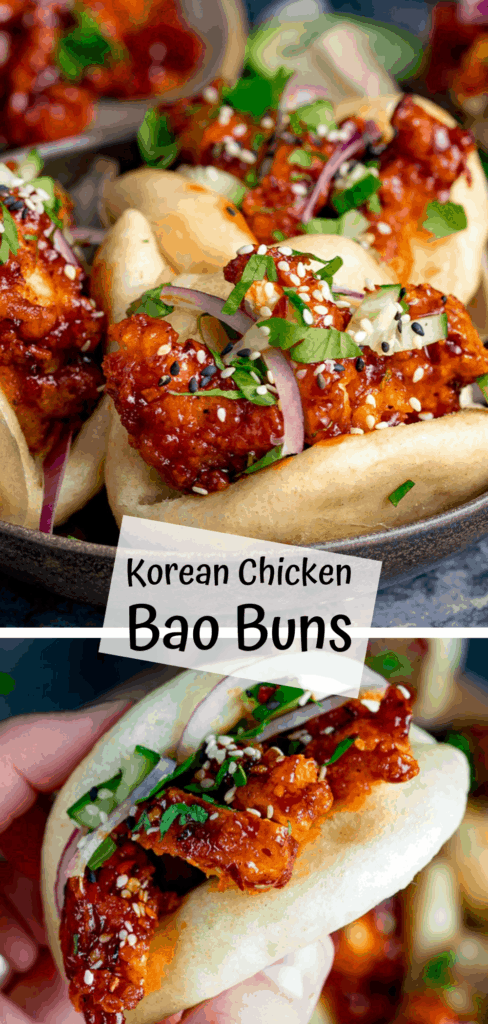
These Korean chicken bao buns take everything you love about Korean fried chicken night and fold it into a soft, pillowy steamed bun. The chicken is seared until deeply golden, then tossed in a glossy gochujang-honey glaze that clings to every piece, and the whole thing gets piled into a bowl with tangy quick-pickled red onions and a fistful of cilantro.
The trick is the red onion pickle: ten minutes in rice vinegar and sugar turns raw sharpness into a bright, crunchy contrast that cuts straight through the sweet-spicy glaze. Serve the buns right in the bowl with the chicken and toppings so everyone can build their own at the table, which also means less plating stress for you.
Using store-bought frozen bao buns keeps this a realistic weeknight project, but if you have a steamer and a little patience, the homemade version in the variations below is worth the extra effort.
Why You'll Love This Recipe
About the Ingredients
12 frozen bao buns (about 1.5 lb / 680g)
Look for plain frozen bao in the freezer aisle of Asian markets; if unavailable, substitute with 12 small slider buns or steamed flour tortillas.
1.5 lb (680g) boneless skinless chicken thighs, cut into 1-inch pieces
Thighs stay juicy under high heat; if you only have breasts, cut them the same size and pull them off the heat 2 minutes earlier to avoid drying out.
3 tbsp gochujang (Korean chili paste)
Check the label for wheat if you need gluten-free; milder gochujang brands exist, so taste yours first and adjust the honey up if it runs hot.
2 tbsp honey
Maple syrup works as a vegan swap with nearly identical stickiness and a slightly smokier finish.
2 tbsp soy sauce
Use tamari for a gluten-free bowl; low-sodium soy is best here since the glaze reduces and concentrates.
1 tbsp toasted sesame oil
Buy cold-pressed sesame oil for the strongest aroma; a little goes far, so don't free-pour.
1 medium red onion, very thinly sliced (about 1 cup / 120g)
A mandoline gets the slices paper-thin, which is key; if you don't have one, slice as fine as you can and give the pickle an extra 5 minutes.
3 tbsp rice vinegar
White wine vinegar is a fine substitute; avoid balsamic, which will turn the onions muddy brown.
1 tsp granulated sugar
Honey or agave can replace it, but stir until fully dissolved so the pickle liquid stays clear.
1 tbsp neutral oil (canola or grapeseed)
Needed for a hard sear; olive oil will smoke at this temperature, so save it for another dish.
1 cup (20g) fresh cilantro leaves, roughly chopped
Flat-leaf parsley is the closest swap for cilantro-averse eaters, though the flavor will be milder and less citrusy.
1 tbsp toasted sesame seeds, for garnish
Toast raw seeds in a dry pan over medium heat for 2 minutes until they smell nutty and pop; pre-toasted seeds lose aroma fast.
Tips & Tricks
Don't crowd the pan
Sear the chicken in two batches so it browns instead of steaming, which is the number one reason home stir-fries turn pale and soggy.
Glaze off the heat
Pull the pan from the burner before tossing in the gochujang mixture, because honey scorches in seconds over high heat and turns bitter.
Steam buns at the last minute
Bao dry out and wrinkle within minutes of leaving the steamer, so time them to finish right when the chicken does.
Pro Tips
Step-by-Step Instructions
1. Quick-pickle the onions
Toss the sliced red onion with the rice vinegar, sugar and a pinch of salt in a small bowl and set aside at room temperature for at least 10 minutes, stirring once halfway, until the onions turn translucent pink and soften slightly.
2. Mix the glaze
Whisk the gochujang, honey, soy sauce and sesame oil together in a small bowl until smooth and glossy; it should be thick enough to coat the back of a spoon.
3. Sear the chicken
Heat the neutral oil in a large skillet over medium-high heat (400F / 205C) until it shimmers. Add half the chicken in a single layer and cook 4 minutes per side, 8 minutes total, until deeply golden brown and the internal temperature reads 165F (74C); repeat with the second batch.
4. Glaze off the heat
Return all the chicken to the pan, remove it from the burner, and pour in the gochujang mixture, tossing for 30 seconds until every piece is coated and the glaze looks sticky and bubbling at the edges.
5. Steam the bao
While the chicken cooks, steam the frozen bao in a bamboo or metal steamer over simmering water for 8 to 10 minutes, until they are puffed, pillowy and spring back when pressed gently.
6. Build the bowls
Open each warm bao and tuck in two or three pieces of glazed chicken, then top with a tangle of pickled red onions and a generous pinch of cilantro.
7. Garnish and serve
Arrange the filled bao in shallow bowls, scatter sesame seeds over the top, and add a small dish of extra gochujang on the side for heat lovers.
Delicious Variations
Crispy Fried Version
Toss the chicken pieces in cornstarch before frying in 350F (175C) oil for 4 minutes, then glaze, for an extra-crunchy Korean fried chicken texture.
Vegetarian Mushroom Bao
Swap the chicken for 1 lb (450g) of torn king oyster mushrooms seared until browned, which soak up the glaze beautifully.
Lettuce Cup Style
Skip the bao entirely and spoon the glazed chicken into butter lettuce cups with the pickled onions for a lighter, low-carb bowl.
How to Store Korean Chicken Bao Buns with Red Onions and Cilantro
Refrigerator
Store the glazed chicken, pickled onions and steamed bao in separate airtight containers for up to 3 days; keep the cilantro and sesame seeds out until serving.
Freezer
Freeze the glazed chicken alone for up to 2 months in a sealed container, and freeze unsteamed bao straight from frozen in their original packaging for up to 3 months.
Reheating
Reheat the chicken in a skillet over medium heat (350F / 175C) for 3 to 4 minutes with a splash of water to loosen the glaze, and re-steam the bao for 5 minutes until soft again.
Frequently Asked Questions
Q: What are Korean bao buns made of?
Bao buns are steamed white wheat buns made from flour, water, yeast, sugar and a little oil, which gives them their soft, pillowy texture. Korean-style versions simply use those same buns as a vehicle for Korean fillings like gochujang-glazed chicken.
Q: Can I use chicken breast instead of thighs?
Yes, but reduce the sear time by about 2 minutes per side and pull the pieces at 165F (74C) to keep them from drying out. Thighs are more forgiving because their fat keeps them juicy under the sticky glaze.
Q: How do I make the bao buns without a steamer?
You can steam frozen bao in a metal colander set over a pot of simmering water with a lid on top, or microwave them covered with a damp paper towel for 60 to 90 seconds. Avoid the microwave for more than two buns at a time, since they harden unevenly.
Q: Is gochujang very spicy?
Gochujang is moderately spicy, roughly medium heat, though brands vary widely. Start with half the amount in the glaze, taste it, and add more if you want extra kick.
Q: How do I keep bao buns from getting soggy?
Fill them only at the table and avoid adding wet toppings like extra sauce directly against the bun. The pickled onions should be drained slightly before piling on, which keeps the bread from turning gummy.
Grab a pack of frozen bao and a jar of gochujang this week and build these sticky, bright bowls for dinner. If you make them, snap a photo of your bowl and let me know in the comments whether you went extra spicy or kept it mild.
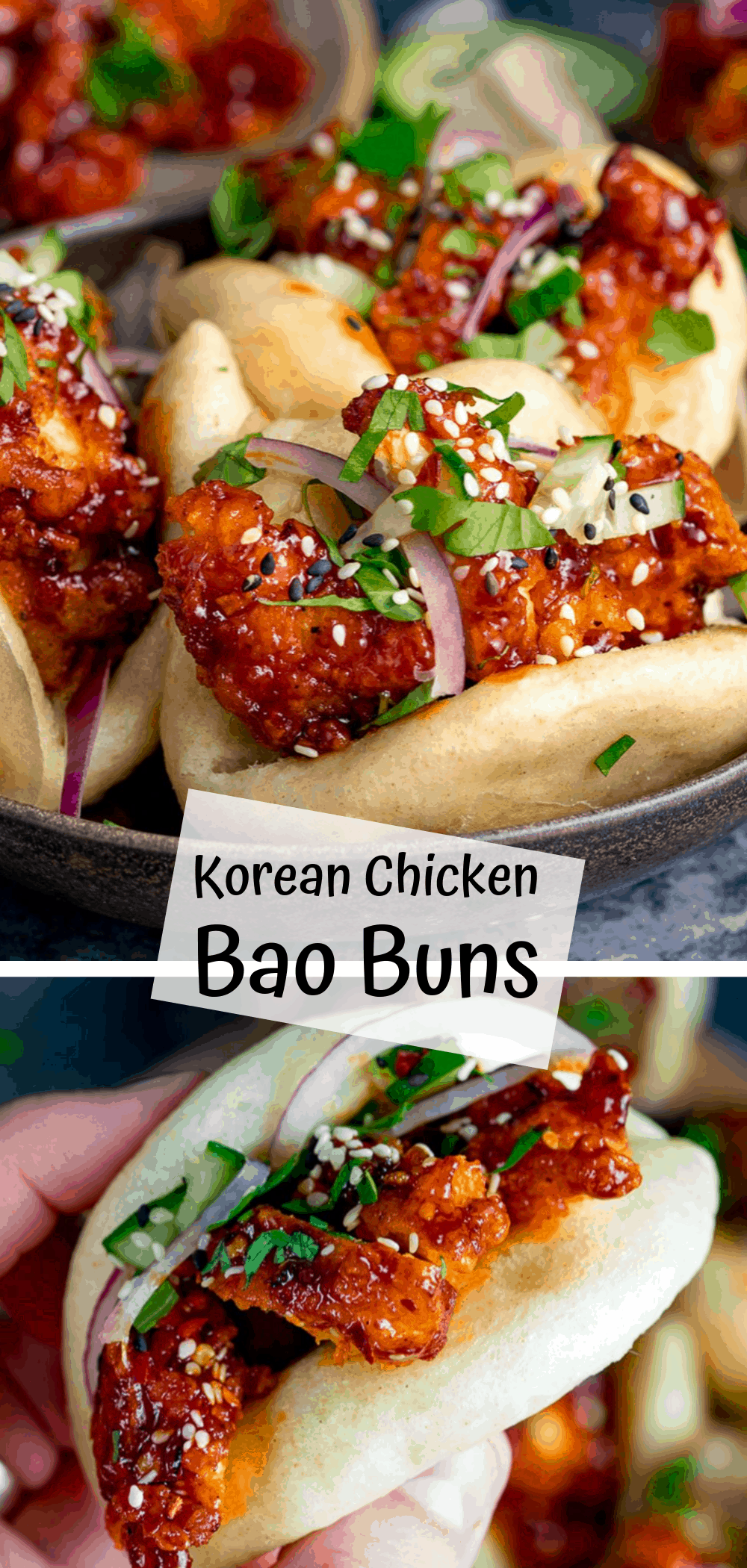
Korean Chicken Bao Buns with Red Onions and Cilantro
Korean chicken bao buns pile sticky gochujang-glazed chicken, quick-pickled red onions and fresh cilantro into fluffy steamed buns for a 50-minute dinner.
🧂 Ingredients
- 12 frozen bao buns (about 1.5 lb / 680g)
- 1.5 lb (680g) boneless skinless chicken thighs, cut into 1-inch pieces
- 3 tbsp gochujang (Korean chili paste)
- 2 tbsp honey
- 2 tbsp soy sauce
- 1 tbsp toasted sesame oil
- 1 medium red onion, very thinly sliced (about 1 cup / 120g)
- 3 tbsp rice vinegar
- 1 tsp granulated sugar
- 1 tbsp neutral oil (canola or grapeseed)
- 1 cup (20g) fresh cilantro leaves, roughly chopped
- 1 tbsp toasted sesame seeds, for garnish
📋 Instructions
- 1Quick-pickle the onions — Toss the sliced red onion with the rice vinegar, sugar and a pinch of salt in a small bowl and set aside at room temperature for at least 10 minutes, stirring once halfway, until the onions turn translucent pink and soften slightly.
- 2Mix the glaze — Whisk the gochujang, honey, soy sauce and sesame oil together in a small bowl until smooth and glossy; it should be thick enough to coat the back of a spoon.
- 3Sear the chicken — Heat the neutral oil in a large skillet over medium-high heat (400F / 205C) until it shimmers. Add half the chicken in a single layer and cook 4 minutes per side, 8 minutes total, until deeply golden brown and the internal temperature reads 165F (74C); repeat with the second batch.
- 4Glaze off the heat — Return all the chicken to the pan, remove it from the burner, and pour in the gochujang mixture, tossing for 30 seconds until every piece is coated and the glaze looks sticky and bubbling at the edges.
- 5Steam the bao — While the chicken cooks, steam the frozen bao in a bamboo or metal steamer over simmering water for 8 to 10 minutes, until they are puffed, pillowy and spring back when pressed gently.
- 6Build the bowls — Open each warm bao and tuck in two or three pieces of glazed chicken, then top with a tangle of pickled red onions and a generous pinch of cilantro.
- 7Garnish and serve — Arrange the filled bao in shallow bowls, scatter sesame seeds over the top, and add a small dish of extra gochujang on the side for heat lovers.