Nestora
Lemon Butter Chicken with Cauliflower Purée – Creamy
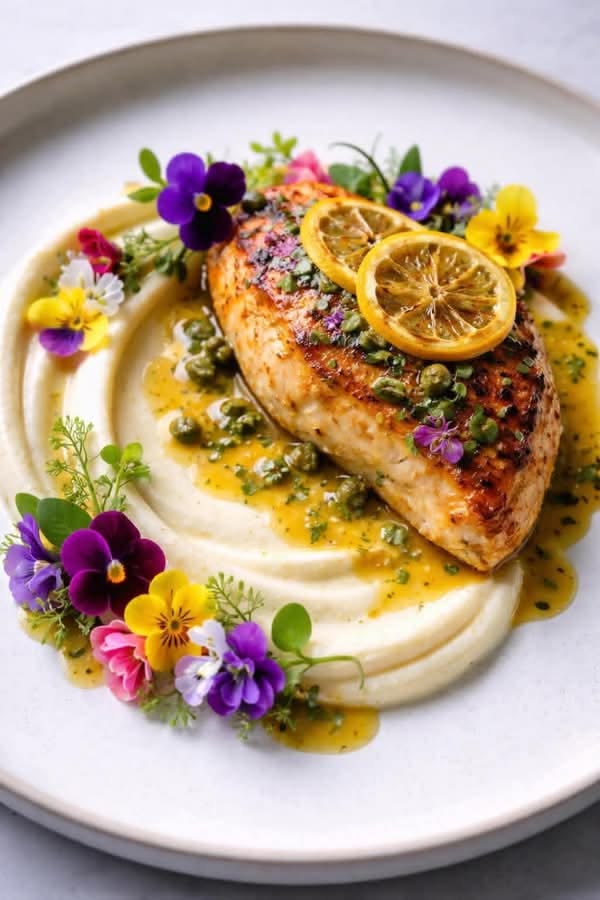
This Lemon Butter Chicken with Cauliflower Purée is the kind of dinner that looks restaurant-plated but comes together in one skillet and one pot on a weeknight. The chicken breasts get a quick flour dusting, a hard sear until deeply golden, then finish in a glossy pan sauce of butter, fresh lemon, garlic, and a splash of cream that clings to every bite.
Underneath, cauliflower florets steam until fork-tender and get blitzed with butter and a little Parmesan into a purée so smooth it passes for mashed potatoes. The whole plate stays bright and comforting at once, and it happens to be lower in carbs than the classic potato version.
If you have never made cauliflower purée, the trick is to cook it past al dente and drain it well so the texture stays velvety instead of watery. Pair it with the lemon butter sauce and you have a 6-serving dinner that reheats beautifully for lunches the next day.
Why You'll Love This Recipe
About the Ingredients
6 boneless, skinless chicken breasts (about 6 oz / 170 g each), pounded to 3/4-inch thickness
Even thickness is what guarantees the chicken cooks through without drying out. If breasts are huge, slice them horizontally into cutlets instead of pounding forever; thighs work too but need 3 to 4 extra minutes per side.
1/2 cup (65 g) all-purpose flour, for dredging
The flour gives the chicken a thin crust that browns and lightly thickens the pan sauce. For gluten-free, swap in cornstarch or a 1-to-1 gluten-free flour blend; rice flour browns a little faster, so watch the heat.
1 1/2 teaspoons kosher salt, plus more for the cauliflower
Kosher salt seasons more evenly than fine table salt and is easier to pinch. If using fine sea salt, start with 1 teaspoon and taste before adding more.
1 teaspoon freshly ground black pepper
Fresh-cracked pepper blooms in the hot butter and gives the sauce its backbone. Pre-ground pepper is fine in a pinch but use a little more, about 1 1/4 teaspoons.
3 tablespoons olive oil, for searing
Olive oil has a higher smoke point than butter, so it does the hard searing while butter comes in later for flavor. Avocado oil is an excellent neutral swap if you want an even cleaner taste.
5 tablespoons unsalted butter, divided
Dividing the butter lets you sear with some and finish the sauce with the rest for a fresher butter flavor. Salted butter works, but then cut the added salt in the sauce by half.
4 garlic cloves, finely minced
Fresh garlic is essential here because it goes in late and stays sweet rather than bitter. Jarred minced garlic is a shortcut but tastes flatter; add an extra clove if you use it.
1 cup (240 ml) low-sodium chicken broth
Low-sodium broth keeps the pan sauce from turning salty after the butter and Parmesan go in. Vegetable broth makes it vegetarian-friendly if you serve the sauce over the purée without chicken.
1/3 cup (80 ml) heavy cream
Cream rounds out the lemon and makes the sauce cling to the chicken. For a lighter version, use half-and-half and simmer 1 minute less so it does not break.
1 large lemon: 2 teaspoons zest plus 3 tablespoons fresh juice
Zest carries the lemon oil that juice alone cannot, so do not skip it. Roll the lemon firmly on the counter before juicing to get more juice out of it.
1 large head cauliflower (about 2 lb / 900 g), cut into florets
Fresh cauliflower gives the silkiest purée, but frozen florets work if you drain them very well. Look for tight, heavy heads with no brown spots for the sweetest flavor.
1/3 cup (30 g) finely grated Parmesan, plus 2 tablespoons butter for the purée
Parmesan adds savory depth that makes the purée taste rich without cream. Pecorino Romano is a sharper swap; use a little less because it is saltier.
Tips & Tricks
Do not crowd the pan
sear the chicken in two batches so the oil stays hot and the crust browns instead of steaming. Overcrowding is the number one reason chicken comes out pale and rubbery.
Cook the cauliflower past al dente
simmer until a knife slides in with zero resistance, about 12 to 15 minutes, or the purée will turn grainy in the blender.
Drain and dry the cauliflower well
let it sit in the colander for 2 minutes and press gently with a spoon, because trapped water makes the purée soupy.
Add lemon juice off the heat
boiling fresh lemon juice can taste bitter, so stir it in after the skillet comes off the burner.
Pro Tips
Step-by-Step Instructions
1. Prep and dry the chicken
Pat the chicken breasts completely dry with paper towels, then pound to an even 3/4-inch thickness. Season both sides with the kosher salt and black pepper, then dredge lightly in the flour, shaking off the excess.
2. Sear until golden
Heat 2 tablespoons olive oil in a large skillet over medium-high heat (375°F / 190°C) until it shimmers. Add half the chicken and cook 5 to 6 minutes per side, until deep golden brown and the internal temperature reads 165°F (74°C) at the thickest point. Transfer to a plate and repeat with the remaining oil and chicken.
3. Simmer the cauliflower
While the chicken cooks, bring a large pot of salted water to a boil. Add the cauliflower florets and simmer 12 to 15 minutes, until a knife slides through with no resistance. Drain well in a colander and let steam dry for 2 minutes.
4. Build the lemon butter sauce
Lower the skillet heat to medium and melt 2 tablespoons butter. Add the garlic and cook 30 seconds, until fragrant but not browned. Pour in the chicken broth, scraping up the browned bits, and simmer 3 to 4 minutes until reduced by about half and the edges bubble steadily.
5. Finish the sauce
Stir in the heavy cream, lemon zest, and remaining 2 tablespoons butter, whisking until the sauce is smooth and slightly thickened, about 2 minutes. Remove from the heat and stir in the lemon juice; taste and adjust salt.
6. Blitz the cauliflower purée
Transfer the drained cauliflower to a food processor with the 2 tablespoons butter and the Parmesan. Process 60 to 90 seconds, until completely smooth and glossy, scraping down the sides once. Season with salt and keep warm.
7. Return the chicken
Nestle the chicken back into the skillet with the sauce and any resting juices, spooning sauce over the top. Warm gently over low heat for 2 minutes, just until heated through, then scatter with parsley if you like.
8. Plate and serve
Spoon a generous mound of cauliflower purée onto each plate, top with a chicken breast, and ladle the lemon butter sauce over the top. Serve immediately while the sauce is glossy and hot.
Delicious Variations
Crispy Parmesan crust
press 1/4 cup grated Parmesan onto the floured chicken before searing for a crackly golden coating.
Caper and herb version
add 2 tablespoons drained capers and 1 teaspoon chopped thyme to the sauce for a briny, Mediterranean twist.
Creamy mushroom sauce
sauté 8 oz sliced cremini mushrooms in the pan drippings before adding the broth for an earthy, heartier finish.
How to Store Lemon Butter Chicken with Cauliflower Purée
Refrigerator
Store chicken and sauce in an airtight container for up to 3 days, and keep the cauliflower purée in a separate container for up to 3 days.
Freezer
Freeze the chicken and sauce together for up to 2 months; the purée freezes well too but may need a stir after thawing to smooth it out.
Reheating
Reheat chicken and sauce gently in a covered skillet over low heat with a splash of broth, about 5 minutes, and warm the purée in the microwave in 30-second bursts, stirring between.
Frequently Asked Questions
Q: Can I make cauliflower purée ahead of time?
Yes, you can make it up to 2 days ahead and reheat it gently with a splash of broth or butter. Keep it covered in the refrigerator and stir over low heat or microwave in short bursts so it stays smooth.
Q: Why is my cauliflower purée watery?
It is almost always because the cauliflower was not drained and dried well enough before blending. Let it sit in the colander for a couple of minutes and press gently, and avoid adding extra liquid until you see the texture.
Q: How do I know when the chicken is fully cooked?
Use an instant-read thermometer and look for 165°F (74°C) at the thickest part of the breast. The juices should run clear and the meat should feel firm but still springy when pressed.
Q: Can I use chicken thighs instead of breasts?
Yes, boneless skinless thighs work beautifully and stay juicy even if slightly overcooked. Sear them 6 to 7 minutes per side over medium-high heat until they reach 165°F (74°C).
Q: Is this lemon butter chicken low-carb or keto-friendly?
The cauliflower purée keeps it low-carb, but the flour dredge adds some carbohydrates. For a stricter keto version, skip the flour or use a fine almond flour coating and reduce the sear time slightly.
If you make this Lemon Butter Chicken with Cauliflower Purée, snap a photo and leave a comment below telling me how the sauce turned out. Save the recipe for your next busy weeknight, and share it with someone who needs a creamy dinner that still feels light.
Lemon Butter Chicken with Cauliflower Purée
Lemon Butter Chicken with Cauliflower Purée is a creamy, low-carb dinner with golden seared chicken in bright lemon butter sauce over silky cauliflower.
🧂 Ingredients
- 6 boneless, skinless chicken breasts (about 6 oz / 170 g each), pounded to 3/4-inch thickness
- 1/2 cup (65 g) all-purpose flour, for dredging
- 1 1/2 teaspoons kosher salt, plus more for the cauliflower
- 1 teaspoon freshly ground black pepper
- 3 tablespoons olive oil, for searing
- 5 tablespoons unsalted butter, divided
- 4 garlic cloves, finely minced
- 1 cup (240 ml) low-sodium chicken broth
- 1/3 cup (80 ml) heavy cream
- 1 large lemon: 2 teaspoons zest plus 3 tablespoons fresh juice
- 1 large head cauliflower (about 2 lb / 900 g), cut into florets
- 1/3 cup (30 g) finely grated Parmesan, plus 2 tablespoons butter for the purée
📋 Instructions
- 1Prep and dry the chicken — Pat the chicken breasts completely dry with paper towels, then pound to an even 3/4-inch thickness. Season both sides with the kosher salt and black pepper, then dredge lightly in the flour, shaking off the excess.
- 2Sear until golden — Heat 2 tablespoons olive oil in a large skillet over medium-high heat (375°F / 190°C) until it shimmers. Add half the chicken and cook 5 to 6 minutes per side, until deep golden brown and the internal temperature reads 165°F (74°C) at the thickest point. Transfer to a plate and repeat with the remaining oil and chicken.
- 3Simmer the cauliflower — While the chicken cooks, bring a large pot of salted water to a boil. Add the cauliflower florets and simmer 12 to 15 minutes, until a knife slides through with no resistance. Drain well in a colander and let steam dry for 2 minutes.
- 4Build the lemon butter sauce — Lower the skillet heat to medium and melt 2 tablespoons butter. Add the garlic and cook 30 seconds, until fragrant but not browned. Pour in the chicken broth, scraping up the browned bits, and simmer 3 to 4 minutes until reduced by about half and the edges bubble steadily.
- 5Finish the sauce — Stir in the heavy cream, lemon zest, and remaining 2 tablespoons butter, whisking until the sauce is smooth and slightly thickened, about 2 minutes. Remove from the heat and stir in the lemon juice; taste and adjust salt.
- 6Blitz the cauliflower purée — Transfer the drained cauliflower to a food processor with the 2 tablespoons butter and the Parmesan. Process 60 to 90 seconds, until completely smooth and glossy, scraping down the sides once. Season with salt and keep warm.
- 7Return the chicken — Nestle the chicken back into the skillet with the sauce and any resting juices, spooning sauce over the top. Warm gently over low heat for 2 minutes, just until heated through, then scatter with parsley if you like.
- 8Plate and serve — Spoon a generous mound of cauliflower purée onto each plate, top with a chicken breast, and ladle the lemon butter sauce over the top. Serve immediately while the sauce is glossy and hot.