WordPress Blog
Sliced Chicken with Tomatoes and Herbs – Easy 50-Minute
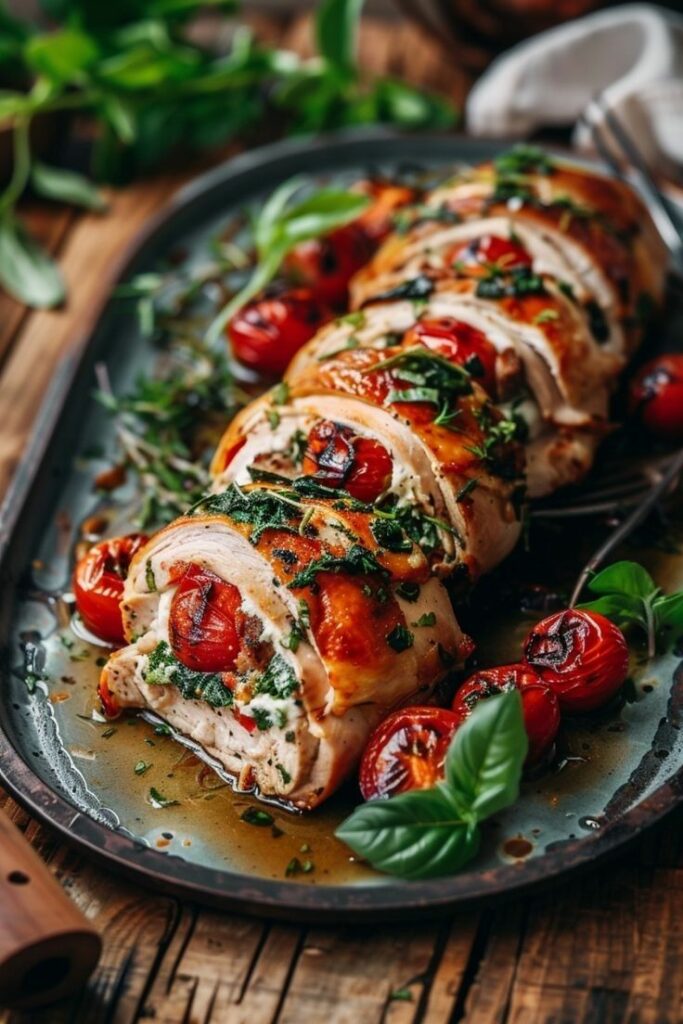
This sliced chicken with tomatoes and herbs on a plate is the kind of dinner that looks like you fussed but really just asks one skillet and about fifty minutes. Thin chicken cutlets get a hard sear for a golden crust, then rest while a quick pan sauce of blistered cherry tomatoes, garlic, and a fistful of fresh herbs comes together in the same pan.
The trick is slicing the chicken against the grain after a short rest, then fanning it over the tomatoes so every bite gets a little crust, a little juice, and a lot of herb. Cherry tomatoes are best here because they collapse into a jammy sauce without turning to water, but any ripe tomato will work if you seed it first.
Serve it straight from the cutting board or transfer it to a warm platter with crusty bread, rice, or a pile of buttery orzo to catch the sauce. It is weeknight-fast but pretty enough for company, and it reheats beautifully for lunches the next day.
Why You'll Love This Recipe
About the Ingredients
1.75 lb (800g) boneless, skinless chicken breasts, about 3 medium breasts
Look for breasts of even thickness so they cook at the same rate; if yours are thick, butterfly them. Boneless thighs work as a juicier substitute, but add 2 minutes per side.
1 1/2 tsp fine sea salt, divided
Fine sea salt dissolves faster than coarse kosher flakes; if using Diamond Crystal kosher, use about 2 tsp. Season the chicken 15 minutes ahead for better seasoning.
3/4 tsp freshly ground black pepper
Fresh-cracked pepper has far more aroma than pre-ground; a cheap pepper mill is worth it. White pepper is a milder swap if you dislike flecks.
3 tbsp olive oil, divided
Regular (not extra-virgin) olive oil handles the sear better; save the good extra-virgin for finishing. Avocado oil is a fine high-heat substitute.
2 pints (about 20 oz / 560g) cherry or grape tomatoes
Mixed-color cherry tomatoes make the plate pop; if they are very large, halve them so they collapse evenly. Out of season, canned whole tomatoes (drained) are the better buy.
4 garlic cloves, thinly sliced
Sliced garlic sweetens and toasts more gently than minced, which can burn. Jarred garlic is a last resort; it tastes flatter and browns unevenly.
1/2 tsp red pepper flakes
Adds gentle heat without overwhelming; Aleppo pepper is a fruitier, milder substitute. Skip it entirely if serving kids and pass it at the table.
1/3 cup (80ml) dry white wine or low-sodium chicken broth
Wine adds acidity and depth; broth is the alcohol-free swap and still deglazes well. Use something you would drink, not cooking wine.
1 tbsp fresh lemon juice, plus wedges for serving
Fresh lemon is essential here; bottled juice tastes flat. Lime works in a pinch but is more assertive, so use half the amount.
1/3 cup (15g) loosely packed fresh herbs: flat-leaf parsley, basil, and/or dill, roughly chopped
Tender herbs go in off the heat so they stay green and fragrant. Dried herbs are a poor substitute here; use 1 tsp only if you must.
2 tbsp cold unsalted butter
Swirling cold butter into the sauce makes it glossy and silky; omit for a dairy-free version and add an extra drizzle of olive oil instead.
Tips & Tricks
Do not crowd the pan
Sear the chicken in batches if needed, because overlapping cutlets steam instead of browning and you lose the golden crust.
Rest before slicing
Give the chicken 5 minutes off the heat so the juices redistribute; slicing immediately dumps them onto the board and dries the meat.
Watch the garlic
Add it only after the tomatoes have started to blister, and stir constantly, since sliced garlic goes from golden to bitter in under 30 seconds.
Pro Tips
Step-by-Step Instructions
1. Prep and season the chicken
Pat the breasts dry with paper towels, slice each horizontally into two cutlets, and pound to an even 1/2 inch (1.25cm). Season all over with 1 tsp of the salt and the pepper and let sit 15 minutes at room temperature.
2. Sear the first side
Heat 2 tbsp olive oil in a 12-inch (30cm) skillet over medium-high heat until it shimmers, about 2 minutes. Add the cutlets and cook undisturbed for 4 minutes at 375F to 400F (190C to 205C) until the undersides are deep golden brown and release easily.
3. Flip and finish cooking
Flip and cook 3 to 4 minutes more, until the chicken reaches 160F (71C) on an instant-read thermometer in the thickest part. Transfer to a cutting board and tent loosely with foil; it will rise to 165F (74C) as it rests.
4. Blister the tomatoes
Add the remaining 1 tbsp oil and the tomatoes to the skillet over medium-high heat. Cook 5 to 6 minutes at 375F (190C), shaking the pan occasionally, until the skins split and the tomatoes slump and bubble at the edges.
5. Build the sauce
Push the tomatoes to one side, add the garlic and red pepper flakes to the bare spot, and stir 30 seconds until fragrant, not browned. Pour in the wine and simmer 2 minutes at 350F (175C) until reduced by half, scraping up the browned bits.
6. Finish with butter and lemon
Reduce the heat to low, stir in the butter until melted and glossy, then add the lemon juice and half the herbs. Taste and adjust with the remaining 1/2 tsp salt; the sauce should be jammy and bright.
7. Slice and plate
Slice the rested chicken against the grain into 1/2-inch (1.25cm) strips. Spoon the tomatoes and sauce onto a warm plate, fan the chicken over the top, and scatter with the remaining herbs and lemon wedges.
Delicious Variations
Creamy Tomato-Herb Chicken
Stir 1/3 cup (80ml) heavy cream into the sauce with the butter for a richer, pink sauce that is lovely over pasta.
Mediterranean Sheet-Pan Style
Roast the chicken and tomatoes at 425F (220C) for 20 minutes on a sheet pan, then finish with feta, olives, and oregano.
Herb-Forward Chimichurri Version
Skip the pan sauce and spoon a punchy chimichurri of parsley, garlic, vinegar, and oil over the sliced chicken and blistered tomatoes.
How to Store Sliced Chicken with Tomatoes and Herbs on a Plate
Refrigerator
Store in an airtight container for up to 3 days; keep the chicken and sauce together so the meat stays moist.
Freezer
Freeze the chicken and sauce in a sealed container for up to 2 months; the tomatoes soften further, so thaw overnight in the refrigerator.
Reheating
Reheat gently in a covered skillet over medium-low heat at 300F (150C) for 5 to 6 minutes with a splash of broth, or microwave covered at 50 percent power until just warm to avoid toughening the chicken.
Frequently Asked Questions
Q: How do I keep sliced chicken breast from drying out?
Sear it to 160F (71C) and let it rest 5 minutes before slicing, because carryover heat brings it to a safe 165F (74C) while the juices settle. Thin, even cutlets and a hard sear also lock in moisture better than slow cooking.
Q: Can I make this sliced chicken with tomatoes and herbs ahead of time?
Yes, you can sear the chicken and make the tomato sauce up to 2 days ahead and store them separately in the refrigerator. Reheat gently together with a splash of broth, then add fresh herbs and lemon just before serving.
Q: What can I use instead of white wine in the pan sauce?
Low-sodium chicken broth plus an extra teaspoon of lemon juice is the closest match for dry white wine. You can also use a splash of apple cider vinegar mixed with broth for the same acidity.
Q: What should I serve with sliced chicken with tomatoes and herbs?
Crusty bread, buttered orzo, rice, or mashed potatoes all work well because they soak up the tomato-herb sauce. A simple green salad or roasted broccoli rounds out the plate nicely.
Q: Can I use regular tomatoes instead of cherry tomatoes?
Yes, use about 1.5 lb (680g) of ripe tomatoes, seeded and cut into 1-inch chunks, and cook them 2 to 3 minutes longer to evaporate the extra liquid. Cherry tomatoes are still best because they are firmer and less watery.
Give this sliced chicken with tomatoes and herbs a try tonight and let the one-pan sauce do the work. Snap a photo of your plate, tag me, and tell me which herb blend you used.
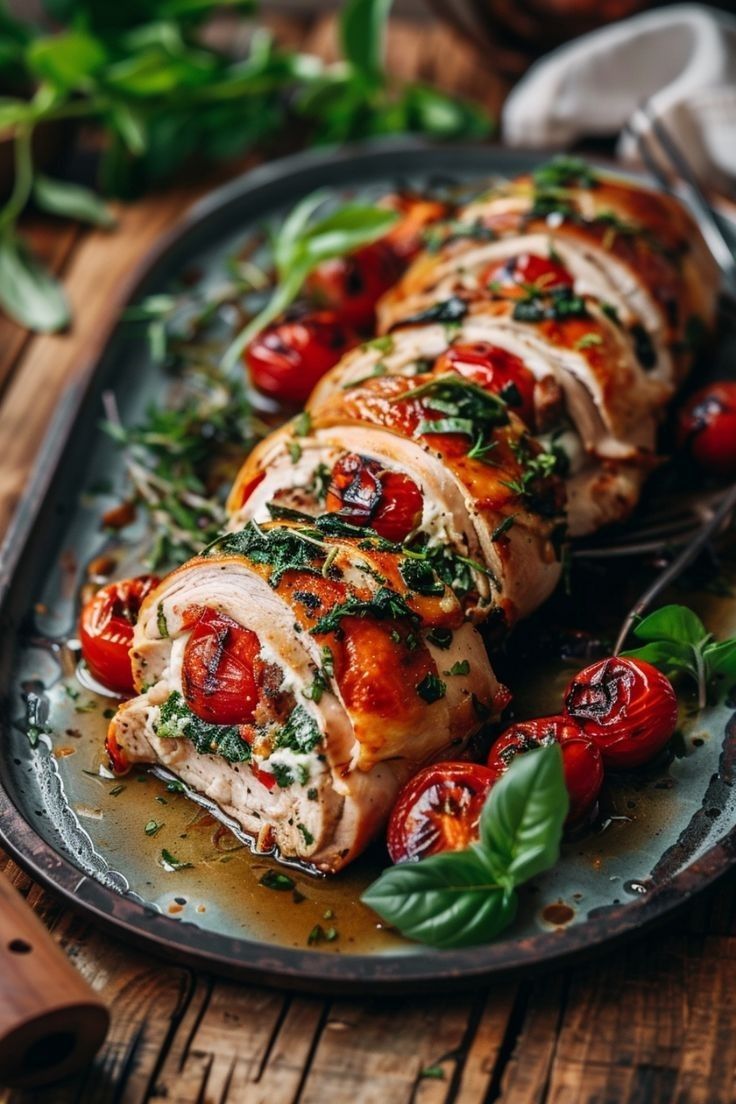
Sliced Chicken with Tomatoes and Herbs on a Plate
Sliced chicken with tomatoes and herbs on a plate: juicy seared cutlets in a garlicky tomato-herb pan sauce that comes together in one skillet.
🧂 Ingredients
- 1.75 lb (800g) boneless, skinless chicken breasts, about 3 medium breasts
- 1 1/2 tsp fine sea salt, divided
- 3/4 tsp freshly ground black pepper
- 3 tbsp olive oil, divided
- 2 pints (about 20 oz / 560g) cherry or grape tomatoes
- 4 garlic cloves, thinly sliced
- 1/2 tsp red pepper flakes
- 1/3 cup (80ml) dry white wine or low-sodium chicken broth
- 1 tbsp fresh lemon juice, plus wedges for serving
- 1/3 cup (15g) loosely packed fresh herbs: flat-leaf parsley, basil, and/or dill, roughly chopped
- 2 tbsp cold unsalted butter
📋 Instructions
- 1Prep and season the chicken — Pat the breasts dry with paper towels, slice each horizontally into two cutlets, and pound to an even 1/2 inch (1.25cm). Season all over with 1 tsp of the salt and the pepper and let sit 15 minutes at room temperature.
- 2Sear the first side — Heat 2 tbsp olive oil in a 12-inch (30cm) skillet over medium-high heat until it shimmers, about 2 minutes. Add the cutlets and cook undisturbed for 4 minutes at 375F to 400F (190C to 205C) until the undersides are deep golden brown and release easily.
- 3Flip and finish cooking — Flip and cook 3 to 4 minutes more, until the chicken reaches 160F (71C) on an instant-read thermometer in the thickest part. Transfer to a cutting board and tent loosely with foil; it will rise to 165F (74C) as it rests.
- 4Blister the tomatoes — Add the remaining 1 tbsp oil and the tomatoes to the skillet over medium-high heat. Cook 5 to 6 minutes at 375F (190C), shaking the pan occasionally, until the skins split and the tomatoes slump and bubble at the edges.
- 5Build the sauce — Push the tomatoes to one side, add the garlic and red pepper flakes to the bare spot, and stir 30 seconds until fragrant, not browned. Pour in the wine and simmer 2 minutes at 350F (175C) until reduced by half, scraping up the browned bits.
- 6Finish with butter and lemon — Reduce the heat to low, stir in the butter until melted and glossy, then add the lemon juice and half the herbs. Taste and adjust with the remaining 1/2 tsp salt; the sauce should be jammy and bright.
- 7Slice and plate — Slice the rested chicken against the grain into 1/2-inch (1.25cm) strips. Spoon the tomatoes and sauce onto a warm plate, fan the chicken over the top, and scatter with the remaining herbs and lemon wedges.