WordPress Blog
Fairygrunge Patchwork Cardigan Free Crochet Pattern
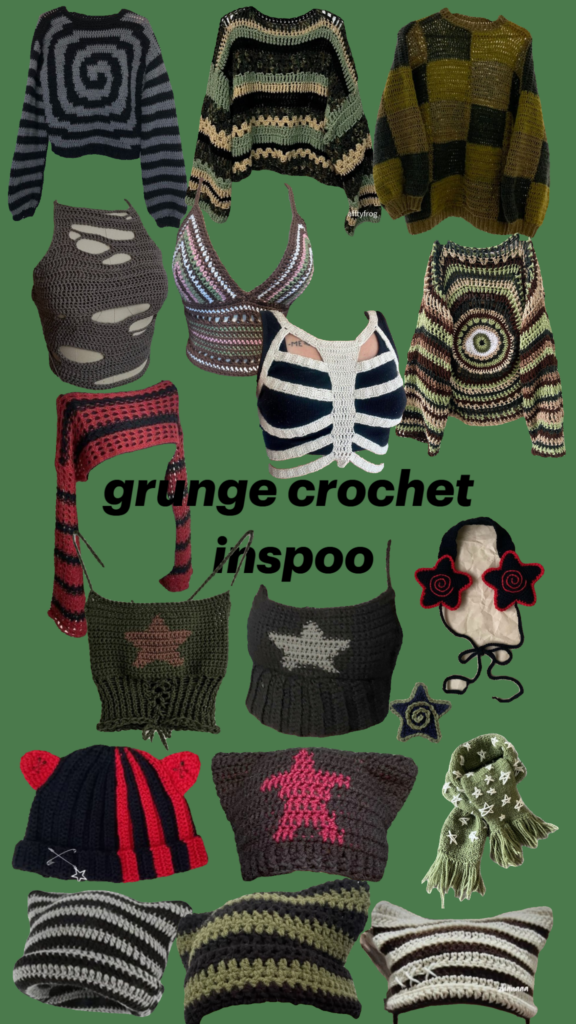
You will crochet a loose, boxy cardigan built from mixed granny squares and joined with visible seams. It needs beginner skills plus simple joining, and most crocheters finish it in about 12 to 16 hours of working time spread over a few evenings.
Fairygrunge Patchwork Cardigan
Free crochet pattern · US terms
- Yarn
- 4 - Medium (worsted) — suggested
- Hook
- 5.0 mm (H-8) — verify with a swatch
- Gauge
- One 4-round granny square measures 4 in x 4 in (10 cm x 10 cm) after light steaming. In hdc worked in back loops only, 14 sts x 12 rows = 4 in (10 cm). (calculated, not measured)
- Size
- approx. Approximately 24 in (61 cm) long from shoulder to hem, 44 in (112 cm) around the chest, and 19 in (48 cm) sleeve length from shoulder. Loose, boxy fit with about 6 to 8 in (15 to 20 cm) of positive ease.
- Level
- Confident beginner
- Time
- about 14 h (estimate)
Written and count-checked on paper, not yet physically tested. Make the gauge swatch and the checkpoint below before you commit all your yarn.
The cardigan is made from 24 granny squares in two sizes and three stitch patterns, arranged in a patchwork layout across the back, two fronts and two sleeves. Squares are joined with a simple slip stitch seam worked on the right side so the seam line stays visible, which gives the piece its worn, hand-made look.
A ribbed border in half double crochet worked in back loops only runs up both fronts and around the neck, and a matching band finishes the lower edge and cuffs. The fit is loose and boxy with dropped shoulders, so there is no armhole shaping to work out. It suits confident beginners who can make a granny square and count stitches.
Before You Start
Materials
Suggested materials. Any yarn of the same weight works if you match the gauge.
5.0 mm (H-8) crochet hook
Matches worsted weight for a firm, even square. A 4.5 mm (7) hook gives a tighter, smaller square if your gauge runs loose.
About 1,200 yd (1,100 m) worsted weight acrylic or acrylic-wool blend in 4 to 6 colors
Acrylic holds its shape and washes well for a garment worn often. A wool blend gives more drape if you prefer a softer hang.
Tapestry needle, blunt tip
Needed for the visible seams and for weaving in many ends. A blunt tip slides through stitches without splitting the yarn.
Stitch markers, 4 to 6
Useful for holding corner chain spaces and for marking the armhole position during joining.
Tape measure
You will measure squares and the body several times. Fabric tape is easier on a garment.
Yarn needed (estimate): estimated about 1,200 yd (1,100 m) total, roughly 6 skeins of 200 yd (183 m) in assorted colors
Gauge and Size
Gauge: One 4-round granny square measures 4 in x 4 in (10 cm x 10 cm) after light steaming. In hdc worked in back loops only, 14 sts x 12 rows = 4 in (10 cm).. This gauge is calculated from the yarn and hook above, not measured on a finished sample. Make a 4 in (10 cm) swatch first; change the hook size, not your tension, until it matches.
Finished size (approximate): Approximately 24 in (61 cm) long from shoulder to hem, 44 in (112 cm) around the chest, and 19 in (48 cm) sleeve length from shoulder. Loose, boxy fit with about 6 to 8 in (15 to 20 cm) of positive ease.. Your size depends on your gauge.
Abbreviations (US terms)
| Abbr. | Meaning |
|---|---|
| ch | chain |
| sl st | slip stitch |
| sc | single crochet |
| hdc | half double crochet |
| dc | double crochet |
| st | stitch |
| sts | stitches |
| sp | space |
| ch-3 sp | chain-3 space |
| BLO | back loop only |
| FO | fasten off |
| rep | repeat |
Special Stitches
Granny cluster (3-dc group)
Work 3 dc into the same chain space or stitch. The three double crochets sit together and count as one cluster.
Chain-3 corner
At each corner of a square, work 3 dc, ch 3, 3 dc into the same corner space. The ch-3 makes the turning point.
Slip stitch seam
Hold two squares with right sides facing you and edges lined up. Insert the hook through both layers at the same point, yarn over, pull through both layers and through the loop on the hook. Repeat along the edge.
How This Pattern Is Written
- All terms are US crochet terms. The turning chain of 3 ch at the start of a round counts as the first dc of that round.
- Squares are worked in joined rounds: each round closes with a sl st into the top of the starting ch-3, then you sl st across to the next ch-3 space to begin the next round.
- Right side of each square faces you as you work. Keep the same side facing out for all squares so the texture stays consistent.
- The cardigan is assembled flat with visible slip stitch seams on the right side. Seams are worked through both layers along the outer edges of the squares.
- Sizes are given for one finished size only. The variations section explains how to add or remove squares for a larger or smaller fit.
- Gauge, size and yardage are calculated from the stated assumptions, not from a physically tested sample. Measure your own square before joining.
- All stitch counts in this pattern are recalculated from the written operations. They are not from a physically tested sample; count your own work at each checkpoint.
The Pattern
Granny Squares (make 24)
Front and Neck Ribbing
Finishing and Assembly
Sizes and Variations
Cropped Fit
Use 4 rounds per square and stop the body after 4 rows of squares instead of 5. The chest measurement drops by about 8 in (20 cm).
Longer Sleeves
Add one more square to each sleeve tube. Each added square lengthens the sleeve by about 4 in (10 cm).
Single Color
Work all squares in one color and use a contrasting yarn for the seams and ribbing. Counts stay the same.
Chunky Version
Use 6 - Super Bulky yarn with an 8.0 mm (L-11) hook and 3-round squares. Fewer squares are needed; recalculate the layout from your measured square size.
Troubleshooting
| What you see | Likely cause | Fix |
|---|---|---|
| Squares come out wavy or ruffled at the edges | Too many stitches worked into the ch-1 spaces, usually from putting 4 dc instead of 3. | Frog back to the wavy round and recount: each ch-1 space takes exactly 3 dc and each corner takes 3 dc, ch 3, 3 dc. |
| Finished cardigan is too small across the chest | Squares measured smaller than 4 in (10 cm), so the total width shrank with them. | Measure a square flat without stretching. If it is under 3.75 in (9.5 cm), go up one hook size and remake the squares, or add a column of squares to the back and fronts. |
| Seams pucker and pull the fabric | Seam stitches worked too tightly, or edges matched at uneven points. | Work the slip stitch seam loosely and pin the two edges together at every corner before seaming. One seam stitch per edge stitch keeps the length even. |
| Front bands curl outward | The band was worked in both loops or the row count is too narrow. | Work every band row in BLO hdc and keep the band at least 8 rows wide. Steam the band flat while it is still slightly damp. |
| Armhole opening is too tight to wear comfortably | Side seam joined too far up the side, leaving less than 7 in (18 cm) open. | Unpick the top few seam stitches until the opening measures 7 to 8 in (18 to 20 cm), then fasten the seam again. |
Care
Turn the cardigan inside out and machine wash cold on a gentle cycle, or hand wash. Do not wring. Roll in a towel to remove water, then dry flat and shape the ribbing while damp. Steam seams lightly with a pressing cloth; do not press directly on the stitches.
Questions Makers Ask
How many granny squares do I need for a cardigan?
This pattern uses 24 squares of about 4 in (10 cm) each. The number changes with your square size, so measure one square first and adjust the layout to your chest measurement plus 6 to 8 in (15 to 20 cm) of ease.
Can I make this cardigan with one color of yarn?
Yes. Work every square in the same color and use a contrasting yarn for the seams and ribbing so the patchwork lines still show. The stitch counts do not change.
Do I need to block the squares before joining?
Light steaming helps the squares sit flat and match in size, but it is not required. If your squares are already even and flat, you can join them straight away and block the finished cardigan.
Is this cardigan suitable for a first garment project?
It is a good first garment if you can already crochet a flat granny square and count rounds. There is no armhole or neckline shaping, so the fit comes from the square layout rather than from increases and decreases.
Next: Try a granny square tote bag next to practice joining squares into a shaped piece with a base and handles.