WordPress Blog
Chicken Roulade with Creamy Mustard Sauce – Easy Elegant
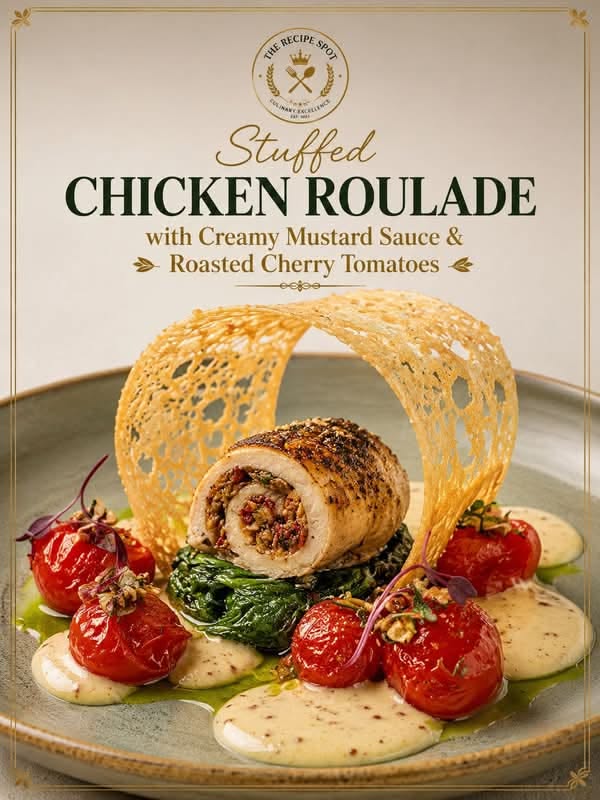
A chicken roulade sounds like restaurant food, but it is really just a chicken breast pounded thin, rolled around a savory filling, seared, and finished in the oven. The magic happens when those golden spirals meet a silky mustard cream sauce and a burst of sweet, blistered cherry tomatoes.
This version keeps the filling simple: a lemony herb and parmesan mixture that stays moist inside the roll and seasons the meat from within. The sauce comes together in the same skillet the chicken seared in, so every browned bit of flavor ends up on your plate.
Serve it with crusty bread, mashed potatoes, or buttered orzo to catch the sauce. It looks like a weekend project but lands on the table in about 50 minutes, most of which is hands-off oven time.
Why You'll Love This Recipe
About the Ingredients
6 boneless, skinless chicken breasts (about 6 oz / 170 g each)
Look for evenly sized breasts so they cook at the same rate; if yours are huge, buy 4 and slice them horizontally into 8 thin cutlets. You can swap in boneless chicken thighs pounded to 1/4-inch thickness, though they need about 5 extra minutes in the oven.
1 cup (100 g) panko breadcrumbs
Panko stays light and airy inside the roll; regular dry breadcrumbs work but make a denser filling. For a gluten-free version, use crushed gluten-free crackers or gluten-free panko.
3/4 cup (60 g) finely grated Parmesan cheese
Freshly grated Parmesan melts smoothly; pre-shredded bagged cheese can be gritty. Pecorino Romano is a sharper, saltier substitute, so reduce the added salt by half.
2 tablespoons chopped fresh parsley, plus more for garnish
Flat-leaf parsley brings a clean, grassy note; basil or tarragon can stand in for a different herb profile. Skip dried parsley here, as it turns dusty in the filling.
2 teaspoons lemon zest (from 1 lemon)
Zest only the yellow layer, avoiding the bitter white pith. A microplane gives the finest, most aromatic zest; an orange works if you want a sweeter citrus note.
1 1/2 teaspoons kosher salt, divided, plus more to taste
Kosher salt is less dense than table salt, so use only 1 teaspoon if substituting fine table salt. Season the filling and the outside of the chicken separately for even flavor.
3 tablespoons olive oil, divided
Use regular (not extra-virgin) olive oil for the high-heat sear; reserve extra-virgin for finishing. Avocado oil is a neutral, high-smoke-point swap.
12 oz (340 g) cherry or grape tomatoes
Leave them whole; they burst and caramelize as they roast. Mixed-color heirloom cherry tomatoes make the prettiest pan, and halved Roma tomatoes work in a pinch.
1 cup (240 ml) heavy cream
Heavy cream thickens the sauce without flour; half-and-half will be thinner, so simmer it 2 to 3 minutes longer. For a lighter sauce, use 3/4 cup cream plus 1/4 cup chicken broth.
2 tablespoons Dijon mustard
Dijon gives the classic tangy backbone; whole-grain mustard adds texture and a milder heat. Do not use yellow ballpark mustard, which turns the sauce too sweet.
1/2 cup (120 ml) low-sodium chicken broth
Broth deglazes the pan and loosens the sauce; white wine can replace half of it for acidity. Use vegetable broth for a fully poultry-free version.
2 tablespoons cold unsalted butter, cubed
Cold butter whisked in at the end gives the sauce a glossy finish. If using salted butter, taste the sauce before adding more salt.
Tips & Tricks
Pound Evenly
Pound the chicken to a uniform 1/4-inch thickness so the rolls cook through without drying at the edges.
Chill Before Searing
Refrigerate the rolled roulades for 10 minutes so they hold their shape and the filling stays put while searing.
Do Not Overcrowd
Sear in batches if needed; a crowded pan steams the chicken instead of browning it.
Rest Before Slicing
Let the roulades rest 5 minutes so the juices redistribute and do not run out onto the board.
Pro Tips
Step-by-Step Instructions
1. Prep the Oven and Filling
Heat the oven to 400F (200C). In a bowl, mix the panko, Parmesan, parsley, lemon zest, and 1/2 teaspoon of the salt until evenly combined.
2. Pound the Chicken
Place each chicken breast between two sheets of plastic wrap and pound with a rolling pin or mallet to an even 1/4-inch (6 mm) thickness. Pat dry and season both sides with the remaining 1 teaspoon salt.
3. Fill and Roll
Spread about 3 tablespoons of the filling over each breast, leaving a 1/2-inch border. Roll up tightly from the short end and tie with kitchen twine at both ends and the middle, or secure with toothpicks.
4. Sear Until Golden
Heat 2 tablespoons of the olive oil in a large oven-safe skillet over medium-high heat until shimmering. Add the roulades and sear 2 to 3 minutes per side until deep golden brown, about 6 minutes total; work in batches if the pan looks crowded.
5. Roast to Temperature
Transfer the skillet to the oven and roast 15 to 18 minutes, until the chicken reaches 165F (74C) on an instant-read thermometer and the juices run clear. Move the roulades to a board and tent with foil.
6. Roast the Tomatoes
Toss the cherry tomatoes with the remaining 1 tablespoon olive oil on a rimmed sheet pan and roast at 400F (200C) for 12 to 15 minutes, until the skins split and the edges are blistered and jammy.
7. Build the Mustard Sauce
Pour off excess fat from the skillet, set it over medium heat, and add the broth, scraping up the browned bits. Stir in the cream and Dijon and simmer 3 to 4 minutes until slightly thickened and bubbling at the edges.
8. Finish and Serve
Off the heat, whisk in the cold butter until glossy, then taste and adjust salt. Remove the twine, slice each roulade into 1-inch rounds, and spoon the sauce over with the roasted tomatoes and extra parsley.
Delicious Variations
Spinach and Feta Roulade
Swap the Parmesan filling for 1 cup chopped spinach and 1/2 cup crumbled feta for a briny, Greek-inspired twist.
Prosciutto-Wrapped Roulade
Wrap each roll in 2 slices of prosciutto before searing for a crisp, salty exterior and skip the added salt.
Honey-Mustard Glazed Roulade
Stir 1 tablespoon honey into the finished sauce for a sweeter, glaze-like version that pairs well with roasted carrots.
How to Store Chicken Roulade with Creamy Mustard Sauce and Roasted Cherry Tomatoes
Refrigerator
Store cooled roulades and sauce in separate airtight containers in the refrigerator for up to 3 days; keep the roasted tomatoes in their own container for up to 4 days.
Freezer
Freeze cooked, unsliced roulades wrapped tightly in foil for up to 2 months; freeze the sauce separately in a sealed container, but do not freeze the roasted tomatoes, which turn mushy.
Reheating
Reheat roulades covered in a 325F (165C) oven for 12 to 15 minutes, then warm the sauce gently on the stovetop with a splash of broth, whisking until smooth.
Frequently Asked Questions
Q: How do I keep chicken roulade from falling apart?
Tie the roll at both ends and the middle with kitchen twine or pin it with toothpicks, and chill it for 10 minutes before searing. Searing seam-side down first seals the roll so it holds together through roasting.
Q: What internal temperature should chicken roulade reach?
Pull the roulade from the oven at 165F (74C) measured in the thickest part of the meat. If you stuff it thickly, check near the center of the filling too, and let it rest 5 minutes before slicing.
Q: Can I make chicken roulade ahead of time?
Yes, assemble and roll the roulades up to 24 hours ahead, wrap them tightly, and refrigerate until ready to sear. You can also roast them fully a day ahead and reheat gently in the sauce, though the crust will soften.
Q: Can I use chicken thighs instead of breasts?
Yes, boneless skinless thighs work well and stay extra juicy, though they need about 5 more minutes in the oven. Pound them to the same 1/4-inch thickness so they roll and cook evenly.
Q: Why did my mustard sauce turn grainy?
The sauce likely got too hot or the cream was added to a screaming pan, causing the dairy to break. Keep the heat at medium, add the cream gradually, and whisk in cold butter off the heat to bring it back together.
Give this chicken roulade with creamy mustard sauce and roasted cherry tomatoes a try this week and watch a simple chicken breast become the star of the table. Snap a photo of those golden spirals and tag me so I can see your version.
Chicken Roulade with Creamy Mustard Sauce and Roasted Cherry Tomatoes
Chicken roulade with creamy mustard sauce and roasted cherry tomatoes turns humble chicken breasts into a juicy, impressive dinner in under an hour.
🧂 Ingredients
- 6 boneless, skinless chicken breasts (about 6 oz / 170 g each)
- 1 cup (100 g) panko breadcrumbs
- 3/4 cup (60 g) finely grated Parmesan cheese
- 2 tablespoons chopped fresh parsley, plus more for garnish
- 2 teaspoons lemon zest (from 1 lemon)
- 1 1/2 teaspoons kosher salt, divided, plus more to taste
- 3 tablespoons olive oil, divided
- 12 oz (340 g) cherry or grape tomatoes
- 1 cup (240 ml) heavy cream
- 2 tablespoons Dijon mustard
- 1/2 cup (120 ml) low-sodium chicken broth
- 2 tablespoons cold unsalted butter, cubed
📋 Instructions
- 1Prep the Oven and Filling — Heat the oven to 400F (200C). In a bowl, mix the panko, Parmesan, parsley, lemon zest, and 1/2 teaspoon of the salt until evenly combined.
- 2Pound the Chicken — Place each chicken breast between two sheets of plastic wrap and pound with a rolling pin or mallet to an even 1/4-inch (6 mm) thickness. Pat dry and season both sides with the remaining 1 teaspoon salt.
- 3Fill and Roll — Spread about 3 tablespoons of the filling over each breast, leaving a 1/2-inch border. Roll up tightly from the short end and tie with kitchen twine at both ends and the middle, or secure with toothpicks.
- 4Sear Until Golden — Heat 2 tablespoons of the olive oil in a large oven-safe skillet over medium-high heat until shimmering. Add the roulades and sear 2 to 3 minutes per side until deep golden brown, about 6 minutes total; work in batches if the pan looks crowded.
- 5Roast to Temperature — Transfer the skillet to the oven and roast 15 to 18 minutes, until the chicken reaches 165F (74C) on an instant-read thermometer and the juices run clear. Move the roulades to a board and tent with foil.
- 6Roast the Tomatoes — Toss the cherry tomatoes with the remaining 1 tablespoon olive oil on a rimmed sheet pan and roast at 400F (200C) for 12 to 15 minutes, until the skins split and the edges are blistered and jammy.
- 7Build the Mustard Sauce — Pour off excess fat from the skillet, set it over medium heat, and add the broth, scraping up the browned bits. Stir in the cream and Dijon and simmer 3 to 4 minutes until slightly thickened and bubbling at the edges.
- 8Finish and Serve — Off the heat, whisk in the cold butter until glossy, then taste and adjust salt. Remove the twine, slice each roulade into 1-inch rounds, and spoon the sauce over with the roasted tomatoes and extra parsley.