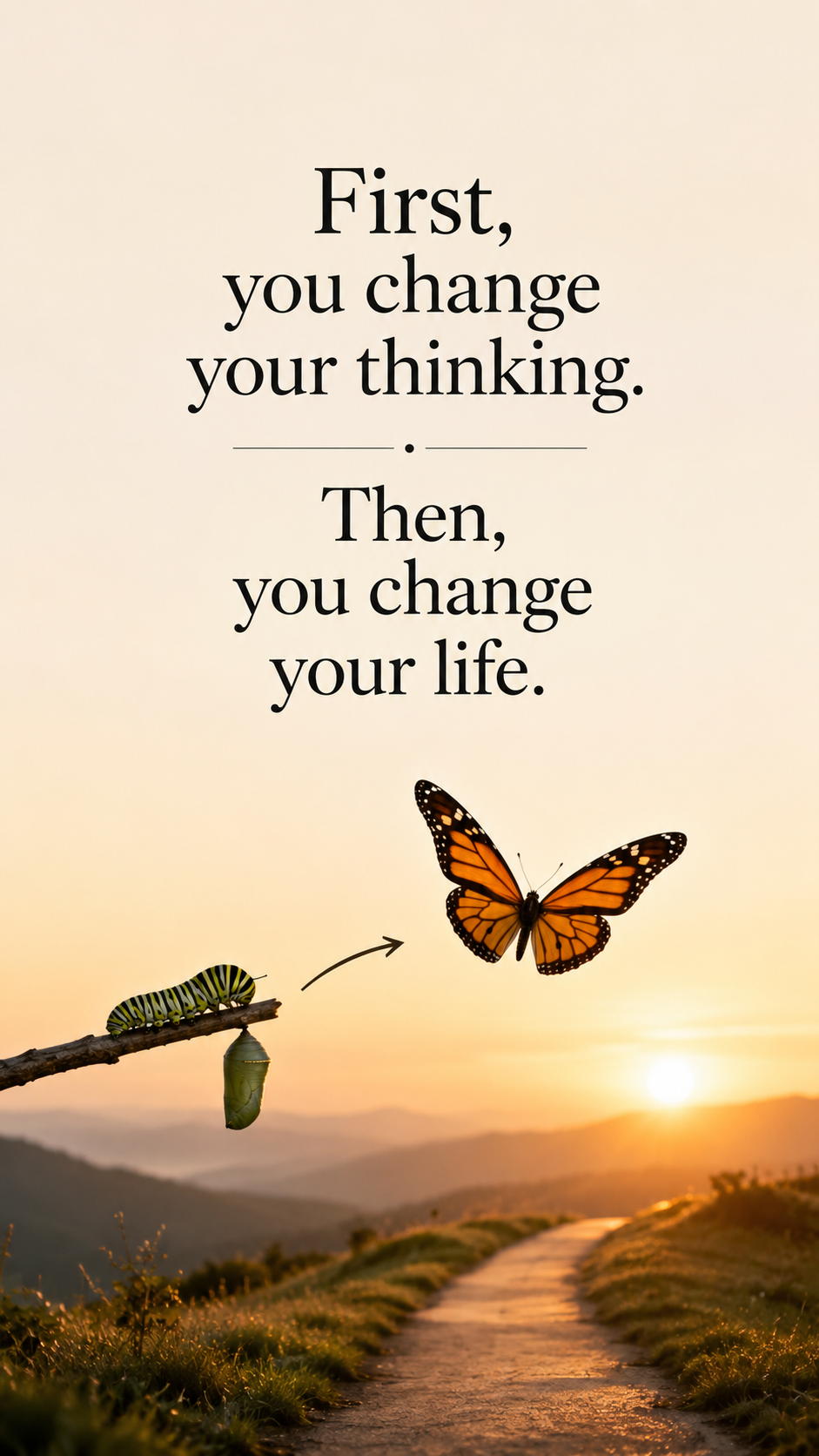
There is a moment, usually quiet, when a single sentence rearranges how you see everything: first you change your thinking, then you change your life. The hard part is not believing that idea; it is finding the daily scaffolding that keeps your thinking pointed in the right direction. Below are 16 genuinely useful websites, apps, and self-improvement tools — many of them low-exposure gems — that turn a motivational quote into a practice you can actually keep. Each one earns its spot with something specific: a real feature, a real use case, and an honest limitation.
Table of Contents(Click to Toggle)
Why Small Thinking Tools Beat Big Resolutions
Resolutions fail because they demand a new identity overnight. Tools work differently: they nudge a thought, then a habit, then a default reaction. Behavioral research on implementation intentions suggests that attaching a specific cue to a specific action dramatically raises follow-through — and that is exactly what a good app or website does for your mindset. The tools below are grouped by what they actually change: how you record thoughts, how you interrupt spirals, how you reinforce gratitude, and how you make progress visible. None of them require a subscription you cannot cancel, and most have generous free tiers. Pick two, not sixteen, and let them do their quiet work for a month.
1. Stoic : A daily journal built around calm, deliberate reflection
What it is: A journaling and mood-tracking app inspired by Stoic practice, with morning and evening prompts plus a weekly review.
Category: Reflective journaling
Why it stands out:
- Prompts are short and specific, so you are not staring at a blank page.
- Mood tracking surfaces patterns across weeks, not just days.
- Quote cards rotate in Stoic passages, keeping the philosophy practical.
Best for: Anyone who wants a two-minute evening ritual that turns reflection into data.
2. Notion : Build a personal thinking system that grows with you
What it is: A flexible workspace of pages, databases, and templates where you can assemble a mindset dashboard, goal tracker, or reading log.
Category: All-in-one workspace
Why it stands out:
- Free personal plan covers most individual use.
- Community templates for habit tracking and weekly reviews are plentiful.
- Databases let you tag reflections by theme and spot recurring thought loops.
Best for: Tinkerers who want one home for goals, notes, and reflection — though the blank canvas can overwhelm beginners.
3. Obsidian : Link your thoughts and watch patterns emerge
What it is: A local-first note-taking app that stores plain Markdown files and connects notes through bidirectional links and a visual graph.
Category: Connected note-taking
Why it stands out:
- Your notes live on your device as files you own, not locked in a cloud.
- The graph view reveals clusters of thinking you did not know you had.
- Free for personal use, with a large plugin ecosystem.
Best for: Readers and thinkers who accumulate ideas and want to see them connect over time.
4. Day One : A beautiful daily journal with a memory lane
What it is: A polished journaling app for Mac, iOS, and Android with photos, prompts, and an “On This Day” feature.
Category: Daily journaling
Why it stands out:
- Reminders and daily prompts make consistency easier.
- Past entries resurface automatically, showing how your thinking has shifted.
- End-to-end encryption is available on paid plans.
Best for: Visual journalers who want a clean, private record of their growth.
5. Habitica : Turn self-improvement into a role-playing game
What it is: A habit tracker styled as an RPG where your real-life tasks earn experience, gold, and gear for a pixel avatar.
Category: Gamified habits
Why it stands out:
- Missing a habit costs health, which adds playful accountability.
- Party quests let friends tackle goals together.
- Free to use, with optional subscriptions for gems.
Best for: People who bounce off plain checklists but stay engaged with a game loop.
6. Insight Timer : The largest free library of guided meditations
What it is: A meditation app with tens of thousands of free guided sessions from teachers and practitioners worldwide.
Category: Meditation and mindfulness
Why it stands out:
- The free library is genuinely vast, not a teaser for a paywall.
- Filters by length make a three-minute reset realistic on busy days.
- Live community events add a sense of shared practice.
Best for: Beginners who want to sample many teachers before committing to a style.
7. FutureMe : Write a letter to the person you are becoming
What it is: A simple site that emails a letter to your future self on a date you choose — months or years ahead.
Category: Future-self reflection
Why it stands out:
- Writing to a future self reframes today’s decisions as commitments.
- You can make letters public anonymously for a sense of shared humanity.
- Free with optional paid extras; no app required.
Best for: Anyone at a crossroads who wants a time capsule of their current thinking.
8. 750 Words : Morning pages, minus the notebook
What it is: A private writing site that encourages 750 words of unfiltered stream-of-consciousness each day.
Category: Expressive writing
Why it stands out:
- Streaks and badges gamify a habit that is otherwise invisible.
- Mood and topic analysis shows what your writing keeps circling back to.
- Entries stay private and are easy to export.
Best for: Overthinkers who need to drain mental noise before the day begins.
9. Exist : See how habits and mood actually connect
What it is: A personal analytics dashboard that pulls data from calendars, fitness trackers, and mood logs to find correlations.
Category: Self-tracking analytics
Why it stands out:
- Correlation reports can reveal that your best weeks share a specific habit.
- Connects to many services without manual entry.
- Paid subscription, but a free trial lets you test the value first.
Best for: Data-minded people who want evidence behind a mindset change.
10. Rehabit : A minimalist tracker for one habit at a time
What it is: A stripped-down habit app focused on a single daily check-in rather than a crowded dashboard.
Category: Minimalist habits
Why it stands out:
- The one-habit focus reduces the overwhelm that kills most trackers.
- Visual streak chains make momentum satisfying.
- No social feed, no noise — just the habit.
Best for: People who have abandoned a dozen complicated habit apps.
11. Waking Up : A structured course in attention and perspective
What it is: Sam Harris’s meditation app, built around a progressive 50-day introductory course plus theory conversations.
Category: Structured meditation
Why it stands out:
- The course builds sequentially instead of dropping you into random sessions.
- Talks with philosophers and scientists deepen the practice.
- Scholarship requests make it accessible if cost is a barrier.
Best for: Skeptics who want a rigorous, secular on-ramp to mindfulness.
12. Philosophy Bro : Big ideas translated into plain, funny English
What it is: A long-running site that summarizes philosophers and their arguments in casual, blunt, often hilarious language.
Category: Practical philosophy
Why it stands out:
- Summaries of Stoics, existentialists, and more take minutes to read.
- The humor makes difficult ideas stick.
- Completely free and refreshingly unpolished.
Best for: Curious readers who want a philosophy fix without a textbook.
13. The Five Minute Journal : A gratitude ritual that fits any morning
What it is: A structured journal (paper and app) with morning and evening prompts that take about five minutes total.
Category: Gratitude journaling
Why it stands out:
- Fixed prompts remove decision fatigue.
- The evening section asks what could have gone better, not just what went well.
- The app version adds photo entries and reminders.
Best for: Busy people who want a gratitude practice with zero setup.
14. Loop Habit Tracker : Open-source habit tracking with real charts
What it is: A free, open-source Android app for building habits, with detailed score charts and flexible schedules.
Category: Open-source habits
Why it stands out:
- No ads, no accounts, no data leaving your phone.
- Habit scores and frequency charts show long-term trends.
- Supports habits that are not daily, like three times a week.
Best for: Privacy-conscious Android users who want substance over polish.
15. Mindful Notifier : Turn your phone into a gentle attention cue
What it is: A simple tool that delivers periodic mindfulness reminders to pause and reset during the day.
Category: Attention resets
Why it stands out:
- Interrupts autopilot scrolling with a calm prompt.
- Customizable frequency so it never becomes background noise.
- Lightweight and quick to set up.
Best for: Anyone whose thinking spirals during unstructured screen time.
16. Brain.fm : Functional music for focus and calm
What it is: A subscription service of generated music designed to support focus, relaxation, or sleep states.
Category: Focus and ambient audio
Why it stands out:
- Music is composed with rhythmic modulation rather than being generic lo-fi.
- Short sessions fit a pomodoro-style work block.
- Offline downloads work on mobile.
Best for: Deep workers who need a consistent cue that it is time to concentrate.
Bonus Mentions
Headspace : Polished, beginner-friendly meditation courses
Calm : Sleep stories and breathing exercises in one place
Streaks : A clean iOS habit tracker with Apple Health ties
uThrive : Simple daily reflection prompts for perspective
The Muse : Career and mindset articles with practical exercises
The Internet’s Best-Kept Mindset Secrets (So Far)
The pattern across all sixteen tools is the same: change the input, and the output follows. A two-minute evening review, a letter to your future self, a streak chart that makes progress visible — none of these are dramatic on their own. Together they form the quiet machinery behind the sentence that brought you here. Start with one tool that matches your temperament: gamified if you need fun, minimal if you need calm, analytical if you need proof. Give it thirty days before judging it. The best mindset tool is not the most feature-rich one; it is the one you open tomorrow without thinking about it.
Which of these did you try first — and what hidden gem would you add to the list? Share your own find in the comments; the best discoveries usually come from other readers.