WordPress Blog
High-Protein Sesame Chicken – Easy 30-Minute Dinner
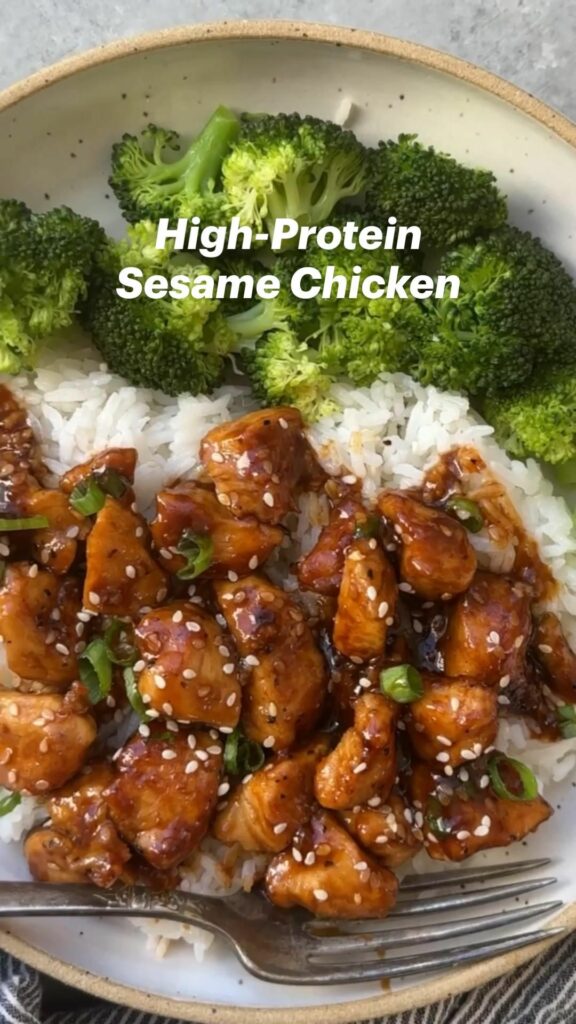
This high-protein sesame chicken is the weeknight answer to the takeout container you keep craving. Instead of a heavy batter and a vat of oil, cubed chicken breast gets a quick cornstarch dusting and a fast sear in a hot skillet, then finishes in a glossy sesame sauce that clings to every piece. Each serving lands at 42 grams of protein, so it actually keeps you full past 9pm.
The sauce is the whole trick: low-sodium soy sauce, honey, a little rice vinegar, toasted sesame oil, garlic, and ginger, thickened just enough to coat the back of a spoon. It comes together in the same pan the chicken cooked in, which means all those browned bits dissolve into the glaze instead of down the drain.
Serve it over jasmine rice with steamed broccoli or snap peas, and dinner is done in about 50 minutes start to finish. It reheats beautifully, so it also works as a meal-prep lunch you will actually look forward to.
Why You'll Love This Recipe
About the Ingredients
2 lb (900g) boneless, skinless chicken breast, cut into 1-inch cubes
Chicken thighs work just as well and stay juicier if you tend to overcook breast meat. Look for breasts that are firm and pink with no gray patches, and pat them very dry before cubing.
3 tbsp cornstarch
Cornstarch is what creates the light crust and thickens the sauce. Arrowroot powder or potato starch can be swapped in at the same amount if you need a corn-free version.
1/2 tsp kosher salt
Use half the amount if you only have fine table salt. Kosher salt crystals are larger, so the same teaspoon measures less salty.
2 tbsp avocado oil or another high-smoke-point oil
Avocado, canola, or peanut oil all handle a hot skillet well. Avoid olive oil here, since it will smoke before the chicken browns.
1/3 cup (80ml) low-sodium soy sauce
Low-sodium matters because the sauce reduces and concentrates. Tamari is a great gluten-free substitute, or use coconut aminos for a soy-free version.
3 tbsp honey
Honey balances the soy sauce and helps the glaze turn sticky. Maple syrup works in a pinch, but the sauce will be slightly thinner.
1 tbsp rice vinegar
Rice vinegar is mild and slightly sweet. Unseasoned rice vinegar is best; if you only have seasoned, cut the honey by a teaspoon.
1 tbsp toasted sesame oil
Toasted, not regular, sesame oil is what gives the dish its signature aroma. Store it in the fridge so it does not go rancid.
3 cloves garlic, minced (about 1 tbsp)
Fresh garlic is worth it here. If you are out, use 1 teaspoon of garlic paste from a tube rather than garlic powder.
1 tbsp freshly grated ginger
Grate it on a microplane so it melts into the sauce. Frozen ginger grates easily and keeps for months.
1 tbsp sesame seeds, plus more for serving
Toast them in a dry pan for 2 minutes until they smell nutty and start popping. Buy raw and toast yourself; pre-toasted seeds go stale faster.
3 scallions, thinly sliced, for garnish
Slice on a bias for the prettiest look. Chives or thinly sliced red onion can stand in if you have no scallions.
Tips & Tricks
Cook in two batches
Piling 2 pounds of chicken into one skillet drops the pan temperature and the chicken releases liquid. Sear in two batches of about 3 minutes per side so each piece gets real browning.
Pull the chicken at 160F (71C)
It will carry over to 165F (74C) while resting. Waiting until it reads 165F in the pan means dry, chalky cubes by the time it reaches your plate.
Add the sauce off the heat
Boil the sauce first, then return the chicken and toss with the burner off. Simmering the chicken in the sauce overcooks it and washes off the crust.
- Dry the chicken thoroughly before it hits the pan: Surface moisture is the number one reason sesame chicken turns out pale and steamed instead of golden. Pat the cubes dry with paper towels, then toss with cornstarch in a bowl so the coating stays put.
Pro Tips
Step-by-Step Instructions
1. Cube and coat the chicken
Pat the chicken cubes very dry with paper towels, then toss them in a bowl with the cornstarch and kosher salt until every piece is evenly dusted. Let them sit for 5 minutes while the coating hydrates.
2. Whisk the sauce
In a small bowl, whisk the soy sauce, honey, rice vinegar, sesame oil, garlic, and ginger with 1/4 cup water until the honey dissolves completely. Set it beside the stove.
3. Heat the skillet
Warm a large nonstick or cast-iron skillet over medium-high heat for 2 minutes, then add 1 tablespoon of the avocado oil. It is ready when the oil shimmers and a drop of water sizzles instantly at 375F (190C).
4. Sear the first batch
Add half the chicken in a single layer and cook undisturbed for 3 minutes, then flip and cook 2 to 3 minutes more until golden brown on both sides and the internal temperature reads 160F (71C). Transfer to a plate and repeat with the remaining oil and chicken.
5. Bloom the aromatics
Lower the heat to medium and pour the sauce into the hot skillet. It should bubble gently at the edges immediately; scrape up the browned bits with a wooden spoon and simmer for 2 minutes until the sauce smells fragrant and has reduced slightly.
6. Thicken the glaze
Stir 1 teaspoon cornstarch into 1 tablespoon cold water and whisk it into the bubbling sauce. Simmer 60 to 90 seconds until it coats the back of a spoon, then turn off the heat.
7. Toss and garnish
Return all the chicken and any resting juices to the pan and toss off the heat until every piece is glossy. Sprinkle with sesame seeds and scallions.
8. Serve
Spoon over jasmine rice with steamed broccoli, and pass extra sesame seeds at the table. Serve hot, within 10 minutes, for the crispest coating.
Delicious Variations
Spicy Sesame Chicken
Add 1 to 2 teaspoons of sriracha or chili crisp to the sauce for a sweet-heat version that is excellent over rice noodles.
Sesame Chicken and Broccoli Bake
Toss the finished chicken with 3 cups of blanched broccoli and bake at 400F (200C) for 8 minutes for a one-dish meal.
Air Fryer Sesame Chicken
Coat the chicken as written and air fry at 400F (200C) for 12 minutes, shaking halfway, then toss with the stovetop sauce.
How to Store High-Protein Sesame Chicken (Healthy Dinner Idea)
Refrigerator
Store in an airtight container in the refrigerator for up to 4 days. Keep the rice separate so it does not soak up all the glaze.
Freezer
Freeze the cooled chicken in a freezer-safe bag for up to 2 months. Thaw overnight in the refrigerator before reheating.
Reheating
Reheat in a skillet over medium heat with a splash of water for 3 to 4 minutes, or microwave covered for 90 seconds. The coating softens but the flavor stays.
Frequently Asked Questions
Q: Is sesame chicken healthy?
Yes, this version is a genuinely healthy dinner because the chicken is seared rather than deep fried and the sauce uses honey instead of corn syrup. Each serving has 42 grams of protein and about 285 calories, which is far lighter than takeout.
Q: Why did my sesame chicken turn out soggy?
The chicken was likely too wet or crowded in the pan. Pat the cubes bone dry, coat them in cornstarch, and sear in two batches so the pan stays hot enough to brown instead of steam.
Q: Can I make sesame chicken ahead of time?
You can make the sauce up to 5 days ahead and refrigerate it in a jar, and you can cube and coat the chicken the night before. Cook the chicken fresh, though, because the coating loses its texture after a day in the fridge.
Q: What do you serve with sesame chicken?
Jasmine rice and steamed broccoli are the classic pairing, but it is also great with cauliflower rice, lo mein noodles, or a crisp cucumber salad. Add a squeeze of lime to cut the sweetness.
Q: Can I use chicken thighs instead of chicken breast?
Yes, boneless skinless thighs work beautifully and are harder to overcook. Cook them to 175F (79C) for the best texture, which takes about 2 minutes longer per batch.
If you make this high-protein sesame chicken, snap a photo and let me know how it turned out. It is the kind of dinner that quietly becomes part of your weekly rotation, and I would love to hear which variation you tried first.
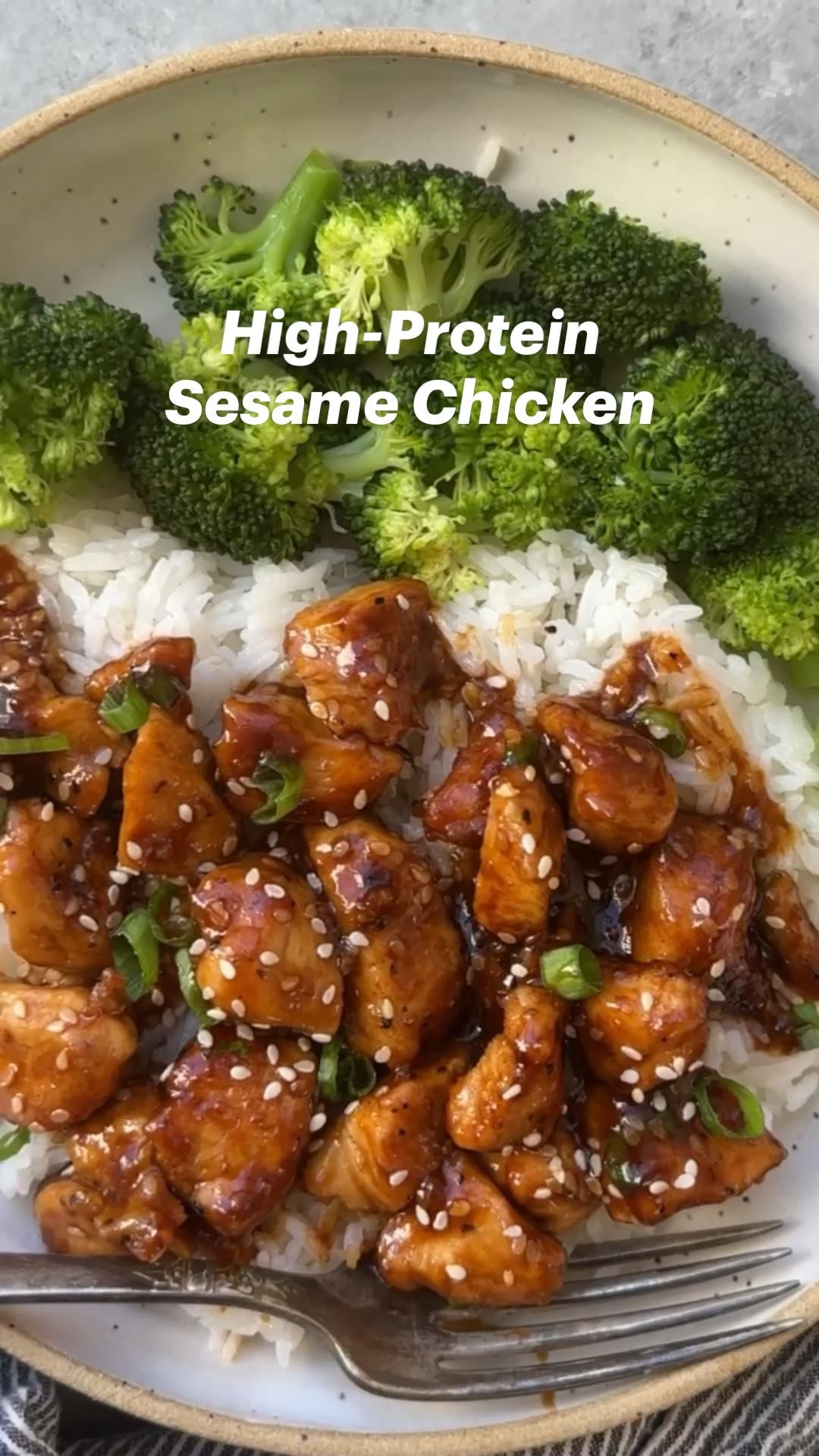
High-Protein Sesame Chicken (Healthy Dinner Idea)
High-Protein Sesame Chicken is a sticky, savory-sweet skillet dinner with 42g of protein per serving and no deep frying, ready in under an hour.
🧂 Ingredients
- 2 lb (900g) boneless, skinless chicken breast, cut into 1-inch cubes
- 3 tbsp cornstarch
- 1/2 tsp kosher salt
- 2 tbsp avocado oil or another high-smoke-point oil
- 1/3 cup (80ml) low-sodium soy sauce
- 3 tbsp honey
- 1 tbsp rice vinegar
- 1 tbsp toasted sesame oil
- 3 cloves garlic, minced (about 1 tbsp)
- 1 tbsp freshly grated ginger
- 1 tbsp sesame seeds, plus more for serving
- 3 scallions, thinly sliced, for garnish
📋 Instructions
- 1Cube and coat the chicken — Pat the chicken cubes very dry with paper towels, then toss them in a bowl with the cornstarch and kosher salt until every piece is evenly dusted. Let them sit for 5 minutes while the coating hydrates.
- 2Whisk the sauce — In a small bowl, whisk the soy sauce, honey, rice vinegar, sesame oil, garlic, and ginger with 1/4 cup water until the honey dissolves completely. Set it beside the stove.
- 3Heat the skillet — Warm a large nonstick or cast-iron skillet over medium-high heat for 2 minutes, then add 1 tablespoon of the avocado oil. It is ready when the oil shimmers and a drop of water sizzles instantly at 375F (190C).
- 4Sear the first batch — Add half the chicken in a single layer and cook undisturbed for 3 minutes, then flip and cook 2 to 3 minutes more until golden brown on both sides and the internal temperature reads 160F (71C). Transfer to a plate and repeat with the remaining oil and chicken.
- 5Bloom the aromatics — Lower the heat to medium and pour the sauce into the hot skillet. It should bubble gently at the edges immediately; scrape up the browned bits with a wooden spoon and simmer for 2 minutes until the sauce smells fragrant and has reduced slightly.
- 6Thicken the glaze — Stir 1 teaspoon cornstarch into 1 tablespoon cold water and whisk it into the bubbling sauce. Simmer 60 to 90 seconds until it coats the back of a spoon, then turn off the heat.
- 7Toss and garnish — Return all the chicken and any resting juices to the pan and toss off the heat until every piece is glossy. Sprinkle with sesame seeds and scallions.
- 8Serve — Spoon over jasmine rice with steamed broccoli, and pass extra sesame seeds at the table. Serve hot, within 10 minutes, for the crispest coating.