WordPress Blog
Easy Korean Fried Chicken – Crispy 40-Minute Dinner
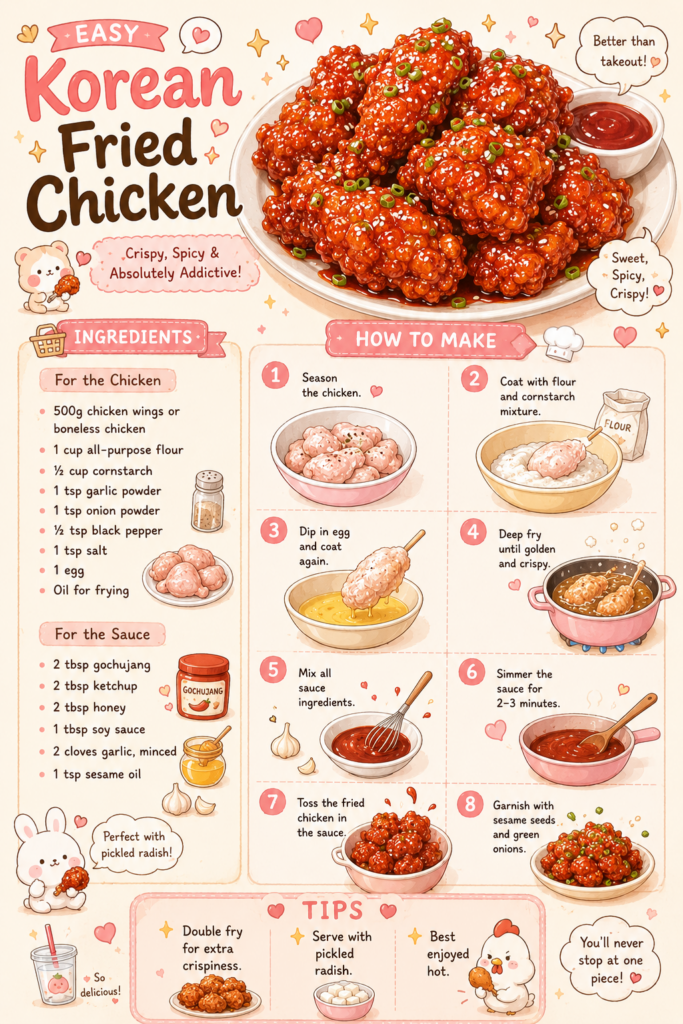
Korean fried chicken is the crispiest fried chicken on the planet, and this easy version gets you there at home with a simple cornstarch coating and a quick double fry. The crust stays crackly for ages, and the glossy gochujang glaze clings to every ridge and crevice.
The secret is not a deep fryer or a long list of exotic ingredients - it's the cornstarch-and-flour dredge, a cold-batter rest, and frying each piece twice. That double fry drives out surface moisture so the coating turns glassy and shatters when you bite it.
The sauce takes five minutes: gochujang, honey, soy, garlic, and a splash of rice vinegar. It's sweet first, then gently spicy, and it thickens into a sticky lacquer the moment it hits the hot chicken. Serve over rice with quick-pickled cucumber and you have a weeknight dinner that tastes like Seoul street food.
Why You'll Love This Recipe
About the Ingredients
2 lb (900g) boneless, skinless chicken thighs, cut into 2-inch pieces
Thighs stay juicy through the double fry; you can swap in boneless breasts but reduce the second fry by 30 seconds. Buy thighs labeled 'air-chilled' for less watery meat.
1/2 cup (65g) cornstarch
Cornstarch is the crunch secret; potato starch works identically if you have it. Avoid substituting all-purpose flour alone, which fries softer.
1/4 cup (30g) all-purpose flour
A little flour helps the coating adhere; a gluten-free 1:1 blend works fine here. Whisk it with the cornstarch so no lumps form.
1 tsp (6g) fine salt, plus more for seasoning
Fine salt dissolves evenly into the dredge; kosher salt works if you crush it slightly. Season the chicken itself too, not just the coating.
1/2 tsp (1g) black pepper
Freshly ground is best; white pepper gives a more authentic Korean flavor if you have it. Skip if serving to spice-averse kids.
1/3 cup (80ml) gochujang (Korean red chili paste)
Gochujang is sweet-fermented and mild-medium; sriracha plus 1 tsp honey is the closest emergency swap. Look for it in the international aisle near the miso.
3 tbsp (63g) honey
Honey gives the glossy lacquer; brown sugar plus 1 tbsp water is a good substitute. Maple syrup works but browns faster, so lower the heat.
2 tbsp (30ml) soy sauce
Use regular soy sauce, not dark, to avoid an overpowering color; tamari is a solid gluten-free swap. Low-sodium soy lets you control the salt.
3 cloves garlic, finely grated
Fresh garlic is essential for the sauce's punch; 1 tsp garlic paste substitutes in a pinch. Grate on a microplane so it melts into the glaze.
1 tbsp (15ml) rice vinegar
Rice vinegar brightens the sticky sauce; apple cider vinegar is the best substitute. Add it off the heat so the acidity stays lively.
6 cups (1.4L) neutral oil, for frying (peanut, canola, or vegetable)
Neutral oil keeps the crust clean-tasting; peanut oil fries hottest and brownest. Reuse the cooled, strained oil once more for another batch.
Tips & Tricks
Pat the chicken bone-dry before dredging
Surface moisture is the number one cause of soggy crust. Blot with paper towels and let the pieces sit uncovered for 10 minutes.
Glaze off the heat
Toss the fried chicken with the sauce in a warm bowl off the burner so the crust doesn't steam. Serve immediately for maximum crunch.
Let the first fry rest 10 minutes
This brief rest lets internal steam escape so the second fry crisps the surface instead of trapping moisture.
- Fry in two batches at a steady 350F (175C): Overcrowding drops the oil temperature and steams the chicken. Keep the oil between 340F and 360F (170C-180C) and fry no more than 6 pieces at a time.
Pro Tips
Step-by-Step Instructions
1. Prep and dry the chicken
Cut the thighs into 2-inch pieces, pat completely dry with paper towels, and season with 1/2 tsp salt and the pepper. Let sit uncovered 10 minutes while you make the dredge.
2. Mix the coating
Whisk the cornstarch, flour, and 1 tsp salt in a wide bowl until uniform. Dredge each piece, pressing so the coating sticks, then shake off the excess and rest on a rack for 5 minutes.
3. Heat the oil
Pour 2 inches of oil into a heavy pot and heat to 350F (175C) over medium-high, about 8 minutes. Test with a pinch of coating - it should sizzle and rise immediately.
4. First fry
Fry the chicken in batches of 6 for 6-7 minutes, turning once, until pale golden and the internal temperature reads 165F (74C). Transfer to a rack, not paper towels, and rest 10 minutes.
5. Make the glaze
While the chicken rests, simmer the gochujang, honey, soy sauce, garlic, and vinegar in a small saucepan over medium-low for 3-4 minutes until glossy and slightly thickened. It should coat a spoon and smell sweet and toasty.
6. Second fry for crunch
Raise the oil to 375F (190C) and fry the rested pieces again for 2 minutes until deep golden brown and audibly crackly. Drain on a rack for 30 seconds.
7. Toss and serve
Tip the hot chicken into a warm bowl, pour over the glaze, and toss quickly to coat every piece. Scatter with sesame seeds and sliced scallions and serve immediately with rice.
Delicious Variations
Soy Garlic (Ganjang)
Swap the gochujang for 3 tbsp soy sauce plus 2 tbsp mirin and a pinch of sugar for a milder, savory glaze.
Honey Butter Crunch
Skip the glaze and dust hot chicken with honey butter powder and crushed toasted peanuts for a sweet-crunchy version.
Air-Fryer Light
Spray dredged pieces with oil and air-fry at 400F (200C) for 14 minutes, flipping halfway, then toss in the same glaze.
How to Store Easy Korean Fried Chicken
Refrigerator
Store fried chicken and glaze separately in airtight containers for up to 3 days; glazed chicken softens faster, so glaze only what you'll eat.
Freezer
Freeze fried, unglazed chicken in a single layer for up to 2 months; reheat from frozen at 400F (200C) for 12-15 minutes.
Reheating
Reheat unglazed chicken in a 400F (200C) oven or air fryer for 5-6 minutes to restore crunch, then toss with freshly warmed glaze.
Frequently Asked Questions
Q: What is the difference between Korean fried chicken and regular fried chicken?
Korean fried chicken uses a starch-heavy coating and a double fry, which produces a thinner, glassier, longer-lasting crunch than buttermilk-battered American fried chicken. It's also typically tossed in a sticky sweet-spicy sauce rather than served plain.
Q: Can I make Korean fried chicken without gochujang?
Yes - mix 3 tbsp sriracha with 1 tbsp honey and 1 tsp miso as a stand-in for gochujang. The flavor will be sharper and less fermented, but the sweet-spicy balance still works.
Q: Why is my Korean fried chicken not crispy?
Wet chicken or oil that's too cool are almost always the culprits. Dry the pieces thoroughly, keep the oil at 350F (175C) for the first fry and 375F (190C) for the second, and don't crowd the pot.
Q: How long does Korean fried chicken stay crispy?
Unglazed double-fried chicken stays crisp for about 30-45 minutes; once glazed, eat it within 20 minutes for the best texture. Beyond that the sauce slowly softens the crust.
Q: Can I use chicken wings instead of thighs?
Absolutely - use 3 lb (1.35kg) of split wings and fry 7 minutes the first time and 2-3 minutes the second. Wings have more skin, so they crisp even faster than thigh pieces.
If you make this crispy, sticky Korean fried chicken, snap a photo of that glossy glaze and tag me - and tell me in the comments whether you went classic gochujang or soy garlic!
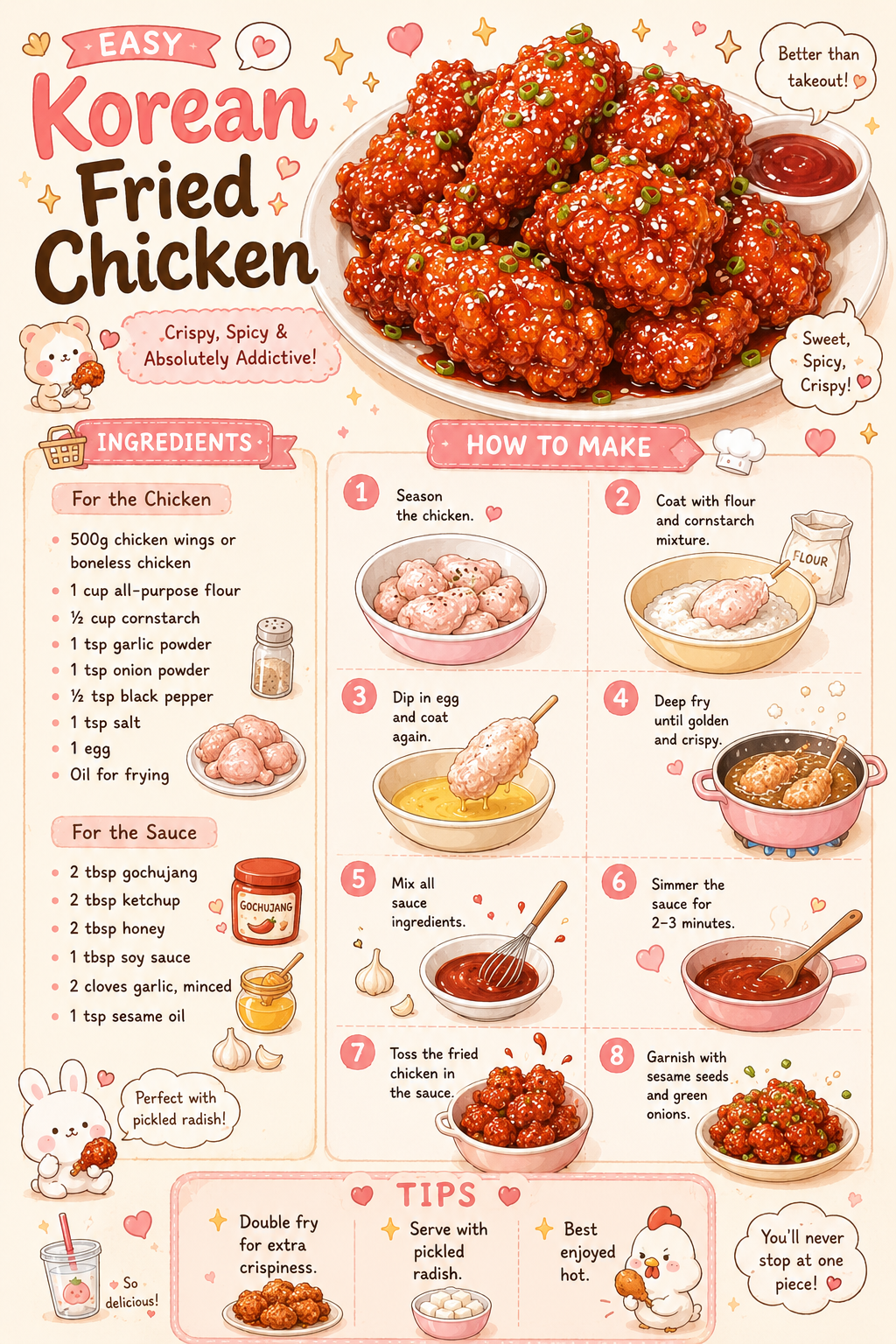
Easy Korean Fried Chicken
Easy Korean fried chicken with a shatteringly crispy double-fried crust glazed in sweet, sticky, spicy gochujang sauce - better than takeout.
🧂 Ingredients
- 2 lb (900g) boneless, skinless chicken thighs, cut into 2-inch pieces
- 1/2 cup (65g) cornstarch
- 1/4 cup (30g) all-purpose flour
- 1 tsp (6g) fine salt, plus more for seasoning
- 1/2 tsp (1g) black pepper
- 1/3 cup (80ml) gochujang (Korean red chili paste)
- 3 tbsp (63g) honey
- 2 tbsp (30ml) soy sauce
- 3 cloves garlic, finely grated
- 1 tbsp (15ml) rice vinegar
- 6 cups (1.4L) neutral oil, for frying (peanut, canola, or vegetable)
📋 Instructions
- 1Prep and dry the chicken — Cut the thighs into 2-inch pieces, pat completely dry with paper towels, and season with 1/2 tsp salt and the pepper. Let sit uncovered 10 minutes while you make the dredge.
- 2Mix the coating — Whisk the cornstarch, flour, and 1 tsp salt in a wide bowl until uniform. Dredge each piece, pressing so the coating sticks, then shake off the excess and rest on a rack for 5 minutes.
- 3Heat the oil — Pour 2 inches of oil into a heavy pot and heat to 350F (175C) over medium-high, about 8 minutes. Test with a pinch of coating - it should sizzle and rise immediately.
- 4First fry — Fry the chicken in batches of 6 for 6-7 minutes, turning once, until pale golden and the internal temperature reads 165F (74C). Transfer to a rack, not paper towels, and rest 10 minutes.
- 5Make the glaze — While the chicken rests, simmer the gochujang, honey, soy sauce, garlic, and vinegar in a small saucepan over medium-low for 3-4 minutes until glossy and slightly thickened. It should coat a spoon and smell sweet and toasty.
- 6Second fry for crunch — Raise the oil to 375F (190C) and fry the rested pieces again for 2 minutes until deep golden brown and audibly crackly. Drain on a rack for 30 seconds.
- 7Toss and serve — Tip the hot chicken into a warm bowl, pour over the glaze, and toss quickly to coat every piece. Scatter with sesame seeds and sliced scallions and serve immediately with rice.