WordPress Blog
Creamy Garlic Chicken with Gravy and Mashed Potatoes
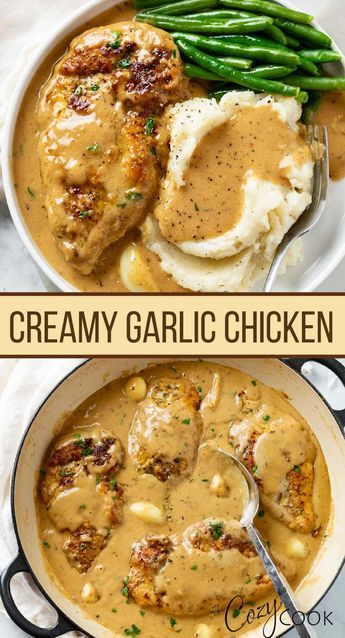
This is the kind of dinner that makes a Tuesday feel like a Sunday supper: pan-seared chicken cutlets smothered in a garlicky cream gravy, piled next to a cloud of butter-whipped mashed potatoes. Everything happens in one skillet plus one pot, so the gravy gets built right on top of the browned bits the chicken leaves behind. That fond is the whole flavor engine here, and scraping it up with a splash of broth is the moment the dish goes from good to great.
The trick to creamy garlic chicken that doesn't turn gluey is simple: whisk the flour into the fat, add the liquid slowly, and keep the heat at a gentle simmer instead of a rolling boil. The gravy thickens to a glossy ribbon that clings to the back of a spoon, and the chicken finishes cooking right in it so it stays tender instead of drying out.
Serve it family-style with the potatoes mounded in bowls and the chicken and gravy spooned over the top, or plate it neatly if you are feeding guests. Either way, put the gravy boat on the table because people will want more.
Why You'll Love This Recipe
About the Ingredients
2 lb (900g) boneless, skinless chicken breasts, sliced horizontally into 6 thin cutlets
Slicing breasts horizontally into cutlets is the single biggest time-saver here; ask the butcher to do it if you like. Boneless thighs work beautifully too and stay juicy even if slightly overcooked.
1 1/2 tsp kosher salt, plus more for the potatoes
Kosher salt dissolves faster and seasons more evenly than table salt. If using fine table salt, cut the amount to 1 tsp.
1 tsp freshly ground black pepper
Fresh-cracked pepper has far more aroma than pre-ground. A coffee grinder or mortar and pestle works if you don't own a pepper mill.
1 tsp smoked paprika
Smoked paprika adds a warm campfire note that plays well with the cream. Sweet paprika is a fine substitute; avoid hot paprika unless you want real heat.
3 tbsp unsalted butter, divided
Butter gives the gravy its flavor backbone. For a dairy-free pan sauce, use olive oil for searing and a plant butter for the roux.
2 tbsp olive oil
A high-smoke-point oil keeps the cutlets from sticking before the butter goes in. Avocado oil is an easy swap.
8 garlic cloves, thinly sliced (about 3 tbsp)
Buy firm, tight heads with no green sprouts, which taste bitter. Jarred minced garlic is convenient but burns faster, so add it later and lower the heat.
2 tbsp all-purpose flour
Flour is the thickener for the gravy. For gluten-free, substitute 1 tbsp cornstarch whisked into 2 tbsp cold water and add it at the very end.
1 1/2 cups (360ml) low-sodium chicken broth
Low-sodium broth lets you control the seasoning. Better Than Bouillon paste diluted in water is a strong upgrade over canned broth.
3/4 cup (180ml) heavy cream
Heavy cream gives the silkiest gravy and resists curdling. Half-and-half works but simmer gently; whole milk needs an extra teaspoon of flour.
3 lb (1.35kg) russet or Yukon Gold potatoes, peeled and cut into 1-inch chunks
Russets whip fluffier, Yukon Golds taste butterier. Don't use waxy red potatoes, which turn gummy when mashed.
1/2 cup (120ml) whole milk, warmed, plus 4 tbsp butter for the potatoes
Warm milk absorbs into the potatoes without cooling them down. For a richer mash, swap in half-and-half or a spoonful of sour cream.
Tips & Tricks
Don't crowd the pan when searing
Cook the cutlets in two batches if needed so they brown instead of steam, and give each piece room to breathe.
Add liquid to the roux gradually
Pour the broth in a slow stream while whisking constantly; dumping it all at once creates lumps that never smooth out.
Season the potato water like the sea
Salt the boiling water generously so the potatoes are seasoned from the inside, then taste before adding more at the mash stage.
Pull the chicken early
Take cutlets off the heat at 160F (71C); they will carry over to 165F (74C) while resting, which keeps them juicy.
Pro Tips
Step-by-Step Instructions
1. Season the cutlets
Pat the chicken dry with paper towels, then season both sides with the kosher salt, black pepper, and smoked paprika. Drying the surface is what lets the chicken sear rather than steam.
2. Boil the potatoes
Cover the potato chunks with cold water by 1 inch, add 1 tbsp salt, and bring to a boil over high heat. Reduce to a steady simmer and cook 15 to 18 minutes, until a knife slides in with no resistance.
3. Sear the chicken
Heat the olive oil in a large skillet over medium-high heat until it shimmers, about 2 minutes. Sear the cutlets 4 to 5 minutes per side until deeply golden brown and the internal temperature reads 160F (71C); work in batches and transfer to a plate.
4. Build the garlic gravy
Lower the heat to medium, melt 2 tbsp butter in the same skillet, and cook the sliced garlic 45 to 60 seconds until fragrant and pale gold, not brown. Sprinkle in the flour and whisk constantly for 60 seconds until the mixture smells nutty.
5. Whisk in the liquid
Pour in the broth in a slow, steady stream while whisking, scraping up every browned bit from the bottom of the pan. Simmer 3 to 4 minutes until the gravy coats the back of a spoon, then stir in the cream and simmer 2 more minutes until the edges bubble gently.
6. Finish the chicken in the gravy
Nestle the seared cutlets back into the skillet, spoon gravy over the tops, and simmer gently 4 to 5 minutes until the chicken reaches 165F (74C). Taste and adjust salt and pepper.
7. Mash the potatoes
Drain the potatoes and let them steam-dry 2 minutes, then mash with the warmed milk and 4 tbsp butter until smooth and fluffy. Season to taste with salt and pepper.
8. Serve
Mound the mashed potatoes in shallow bowls, top with a cutlet, and ladle the garlic gravy over everything. Scatter with chopped parsley if you have it and serve immediately.
Delicious Variations
Mushroom garlic chicken
Add 8 oz sliced cremini mushrooms to the skillet after the chicken and brown them 5 minutes before starting the garlic gravy.
Lemon-herb version
Stir 1 tbsp lemon juice and 1 tsp chopped thyme into the finished gravy for a brighter, springier sauce.
Dairy-free skillet
Use olive oil and a plant butter, swap the cream for full-fat coconut milk, and mash the potatoes with olive oil and warm oat milk.
How to Store Creamy Garlic Chicken with Gravy and Mashed Potatoes
Refrigerator
Store chicken, gravy, and potatoes in separate airtight containers for up to 3 days; keeping them apart stops the potatoes from soaking up all the sauce.
Freezer
Freeze the chicken and gravy together for up to 2 months in a sealed container; mashed potatoes freeze acceptably but turn slightly grainy, so freeze them separately with a little extra butter.
Reheating
Reheat the chicken and gravy gently on the stovetop over medium-low heat with a splash of broth, and warm the potatoes in the microwave covered with a damp paper towel, stirring halfway.
Frequently Asked Questions
Q: How do I keep the garlic gravy from tasting bitter?
Cook the garlic only until fragrant and pale gold, about 45 to 60 seconds, and never let it brown. Burnt garlic turns acrid and no amount of cream will fix it, so lower the heat and pull the pan off if it starts to darken.
Q: Can I make creamy garlic chicken ahead of time?
Yes, you can sear the chicken and make the gravy up to 2 days ahead and store them separately in the fridge. Reheat gently on the stovetop with a splash of broth, and make the mashed potatoes fresh the day you serve.
Q: Why is my gravy lumpy?
Lumpy gravy usually means the broth was added too fast or the roux wasn't cooked long enough. Whisk the flour into the fat for a full minute, then add the broth in a slow stream while whisking constantly.
Q: What can I use instead of heavy cream?
Half-and-half or whole milk works, but simmer very gently because lower-fat dairy can curdle. For a dairy-free gravy, use full-fat coconut milk and whisk it in off the heat.
Q: Can I use chicken thighs instead of breasts?
Yes, boneless skinless thighs are an excellent swap and stay juicy even if they go a minute or two past temperature. Sear them 5 to 6 minutes per side and cook to 175F (79C) for the most tender texture.
Give this creamy garlic chicken with gravy and mashed potatoes a spot in your weeknight rotation and watch it become the request you get every Sunday. Snap a photo of your gravy boat in action and tell me how your family reacted in the comments.
Creamy Garlic Chicken with Gravy and Mashed Potatoes
Creamy garlic chicken with gravy and mashed potatoes is one skillet dinner that delivers juicy seared cutlets, silky garlic gravy, and buttery spuds in 50 minutes.
🧂 Ingredients
- 2 lb (900g) boneless, skinless chicken breasts, sliced horizontally into 6 thin cutlets
- 1 1/2 tsp kosher salt, plus more for the potatoes
- 1 tsp freshly ground black pepper
- 1 tsp smoked paprika
- 3 tbsp unsalted butter, divided
- 2 tbsp olive oil
- 8 garlic cloves, thinly sliced (about 3 tbsp)
- 2 tbsp all-purpose flour
- 1 1/2 cups (360ml) low-sodium chicken broth
- 3/4 cup (180ml) heavy cream
- 3 lb (1.35kg) russet or Yukon Gold potatoes, peeled and cut into 1-inch chunks
- 1/2 cup (120ml) whole milk, warmed, plus 4 tbsp butter for the potatoes
📋 Instructions
- 1Season the cutlets — Pat the chicken dry with paper towels, then season both sides with the kosher salt, black pepper, and smoked paprika. Drying the surface is what lets the chicken sear rather than steam.
- 2Boil the potatoes — Cover the potato chunks with cold water by 1 inch, add 1 tbsp salt, and bring to a boil over high heat. Reduce to a steady simmer and cook 15 to 18 minutes, until a knife slides in with no resistance.
- 3Sear the chicken — Heat the olive oil in a large skillet over medium-high heat until it shimmers, about 2 minutes. Sear the cutlets 4 to 5 minutes per side until deeply golden brown and the internal temperature reads 160F (71C); work in batches and transfer to a plate.
- 4Build the garlic gravy — Lower the heat to medium, melt 2 tbsp butter in the same skillet, and cook the sliced garlic 45 to 60 seconds until fragrant and pale gold, not brown. Sprinkle in the flour and whisk constantly for 60 seconds until the mixture smells nutty.
- 5Whisk in the liquid — Pour in the broth in a slow, steady stream while whisking, scraping up every browned bit from the bottom of the pan. Simmer 3 to 4 minutes until the gravy coats the back of a spoon, then stir in the cream and simmer 2 more minutes until the edges bubble gently.
- 6Finish the chicken in the gravy — Nestle the seared cutlets back into the skillet, spoon gravy over the tops, and simmer gently 4 to 5 minutes until the chicken reaches 165F (74C). Taste and adjust salt and pepper.
- 7Mash the potatoes — Drain the potatoes and let them steam-dry 2 minutes, then mash with the warmed milk and 4 tbsp butter until smooth and fluffy. Season to taste with salt and pepper.
- 8Serve — Mound the mashed potatoes in shallow bowls, top with a cutlet, and ladle the garlic gravy over everything. Scatter with chopped parsley if you have it and serve immediately.