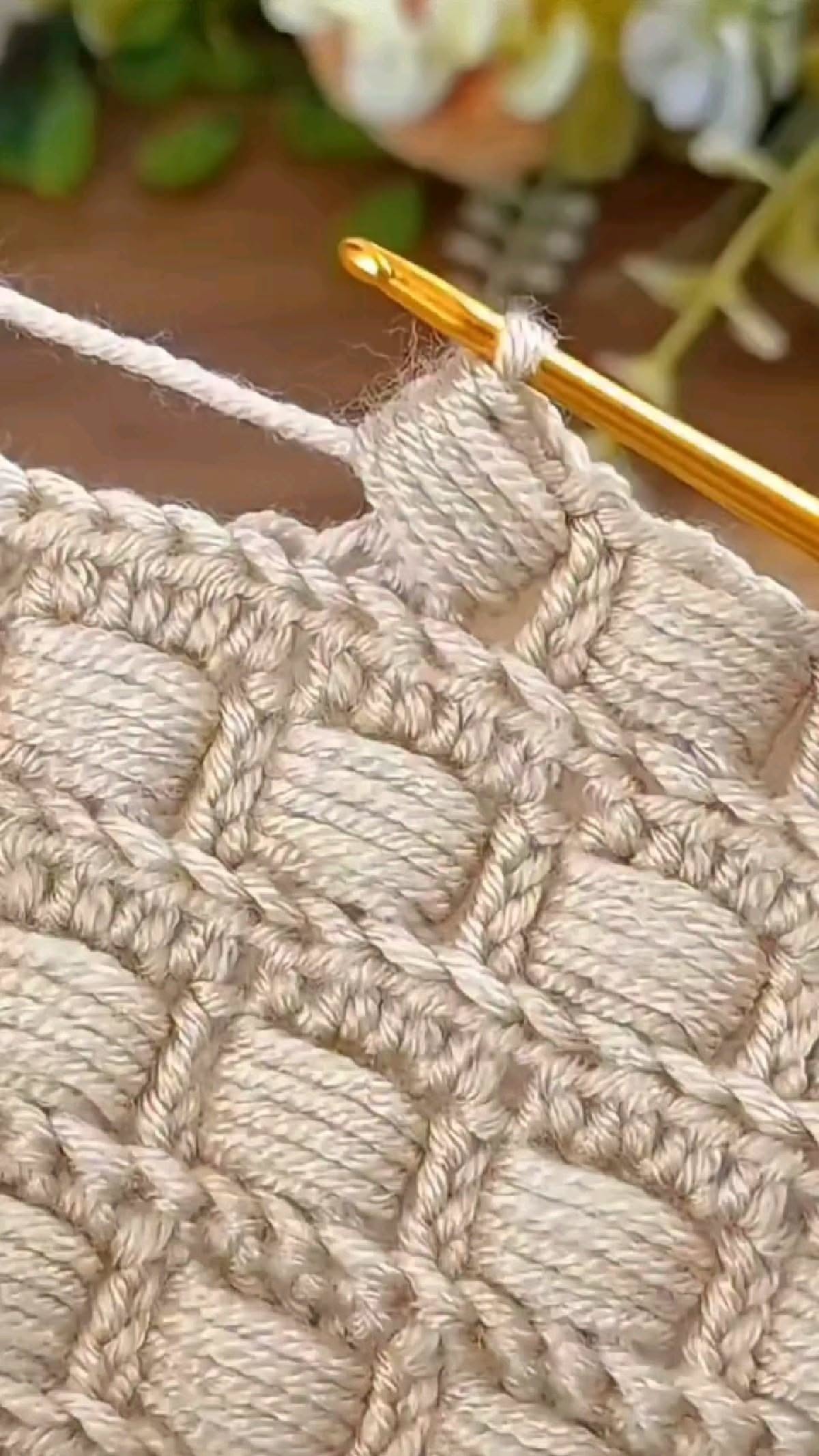
You will crochet a soft, drapey cowl in a repeating shell stitch, worked in joined rounds from the bottom up. It needs only beginner stitches plus one easy shell repeat, and most crocheters finish in about 4 hours.
Simple Shell Stitch Crochet Cowl
Free crochet pattern · US terms
- Yarn
- 4 – Medium (worsted) — suggested
- Hook
- 5.0 mm (H-8) — verify with a swatch
- Gauge
- 12 sts x 8 rounds = 4 in (10 cm) in the shell pattern, unblocked; one shell repeat (2 dc, ch 1, 2 dc) measures about 2 in (5 cm) wide (calculated, not measured)
- Size
- approx. about 26 in (66 cm) around x 9 in (23 cm) tall, relaxed and unblocked
- Level
- Confident beginner
- Time
- about 4 h (estimate)
Written and count-checked on paper, not yet physically tested. Make the gauge swatch and the checkpoint below before you commit all your yarn.
The finished piece is a tube cowl about 26 in (66 cm) around and 9 in (23 cm) tall, with a gentle scalloped texture from stacked shell stitches. It is worked in joined rounds from the bottom edge upward, so you always see the right side and never turn your work.
The first two rounds set the stitch pattern, then rounds 3 and 4 repeat to the top. Because the stitch repeat is only two rounds, this is a good first project for anyone who can make a double crochet and wants practice reading a repeating round. A light worsted or DK yarn gives the best drape for wearing close to the face.
Before You Start
Materials
Suggested materials. Any yarn of the same weight works if you match the gauge.
1 x 100 g skein (about 197 yd / 180 m) worsted weight acrylic or acrylic-wool blend
Acrylic holds the shell texture well and washes easily; a soft wool blend drapes more and feels warmer. Either works at the stated gauge.
5.0 mm (H-8) crochet hook
Matches worsted weight for a soft fabric. If your fabric feels stiff, go up to 5.5 mm (I-9).
Stitch marker or a short scrap of contrasting yarn
Marks the first stitch of each round so you do not lose your place in the joined rounds.
Tapestry needle
Blunt tip, large eye. Used to weave in the two ends.
Tape measure
Needed for the gauge swatch and the early checkpoint.
Yarn needed (estimate): estimated 190-210 yd (175-192 m), about 1 skein of 100 g
Gauge and Size
Gauge: 12 sts x 8 rounds = 4 in (10 cm) in the shell pattern, unblocked; one shell repeat (2 dc, ch 1, 2 dc) measures about 2 in (5 cm) wide. This gauge is calculated from the yarn and hook above, not measured on a finished sample. Make a 4 in (10 cm) swatch first; change the hook size, not your tension, until it matches.
Finished size (approximate): about 26 in (66 cm) around x 9 in (23 cm) tall, relaxed and unblocked. Your size depends on your gauge.
Abbreviations (US terms)
| Abbr. | Meaning |
|---|---|
| ch | chain |
| sl st | slip stitch |
| sc | single crochet |
| dc | double crochet |
| sp | space |
| st | stitch |
| sts | stitches |
| rep | repeat |
| FO | fasten off |
Special Stitches
Shell (sh)
Work 2 dc, ch 1, 2 dc all into the same stitch or space. The ch 1 sits in the middle of the shell and becomes the space you work into on the next round.
Joined round
At the end of the round, work 1 sl st into the top of the first stitch of that round. This closes the round and moves your hook to the start of the next one.
How This Pattern Is Written
- All instructions use US crochet terms.
- The cowl is worked in joined rounds from the bottom up. Do not turn your work; the right side always faces you.
- The ch 3 at the start of a round counts as the first dc of that round. The ch 1 at the start of a round does not count as a stitch.
- Each shell is worked into the ch-1 space at the center of the shell below. Always find that space before starting the shell.
- Place a marker in the first stitch of each round. Move the marker up as you go.
- Gauge and finished size are calculated from the stated assumptions, not measured on a finished sample. Your yarn and tension will change them.
The Pattern
Cowl Body
Finishing and Assembly
Sizes and Variations
Taller cowl
work Rounds 5-26 instead of 5-18 for about 13 in (33 cm) tall, using about 280 yd (256 m) of yarn.
Shorter neck warmer
chain 60 instead of 78 for about 20 in (51 cm) around, then work the same rounds. The shell count drops to 14.
Two-color version
change color after Round 10 for a wide stripe. Carry the old color up the inside and pick it up again at the join.
Troubleshooting
| What you see | Likely cause | Fix |
|---|---|---|
| The ring twists and will not lie flat after Round 4. | The starting chain was twisted before you joined it into a ring. | Undo back to the chain, straighten it so all the bumps face the same way, and join again. Check the flatness again after Round 4. |
| The shell count is not 18 at the end of Round 2. | A shell was worked into the wrong stitch, usually because the skipped stitches were counted wrong. | Count the skipped stitches between shells: always 3 sts. Undo to the last correct shell and rework from there. |
| The fabric curls at the bottom edge. | The first single crochet round is tighter than the rest of the work. | Rework Round 1 with a slightly larger hook, or block the finished cowl by misting it and pinning the bottom edge flat to dry. |
| The cowl is too tight to pull over your head. | Your gauge is tighter than 12 sts per 4 in (10 cm). | Go up one hook size or add 12 chains to the starting ring, which adds 3 shells. |
| The shells look squashed and flat. | The ch 1 in the middle of each shell is missing or too tight. | Make the ch 1 loosely. It is the space you work into on the next round, so it needs to stay open. |
Care
Hand wash in cool water with a little mild detergent, then press the water out in a towel. Lay flat to dry away from direct heat. If the yarn label allows machine washing, use a mesh bag on a gentle cycle and dry flat.
Questions Makers Ask
How much yarn does a crochet cowl need?
For this 26 in (66 cm) by 9 in (23 cm) cowl, plan on about 190-210 yd (175-192 m), which is one 100 g skein of worsted weight. A taller cowl or a looser gauge uses more, so buy a second skein if you are unsure.
Can I make this cowl without joining the rounds?
Yes. Work in continuous rounds instead and place a marker in the first stitch of each round, then move the marker up as you go. The stitch pattern is the same, but you will not join with a slip stitch and the seam line will spiral slightly.
What is the best yarn for a cowl that sits near the face?
Choose a soft yarn that does not prickle, such as an acrylic, cotton-acrylic blend or a fine merino blend. Avoid stiff craft cotton and scratchy rustic wool for a cowl worn close to the skin.
Is this cowl pattern suitable for a total beginner?
It is best for a confident beginner. You need to know single crochet and double crochet, and you must be able to find the ch-1 space in the middle of each shell. If you have never made a double crochet, practice a small swatch first.
Next: Try a matching shell stitch beanie in the round, which uses the same two-round repeat and adds simple crown decreases.