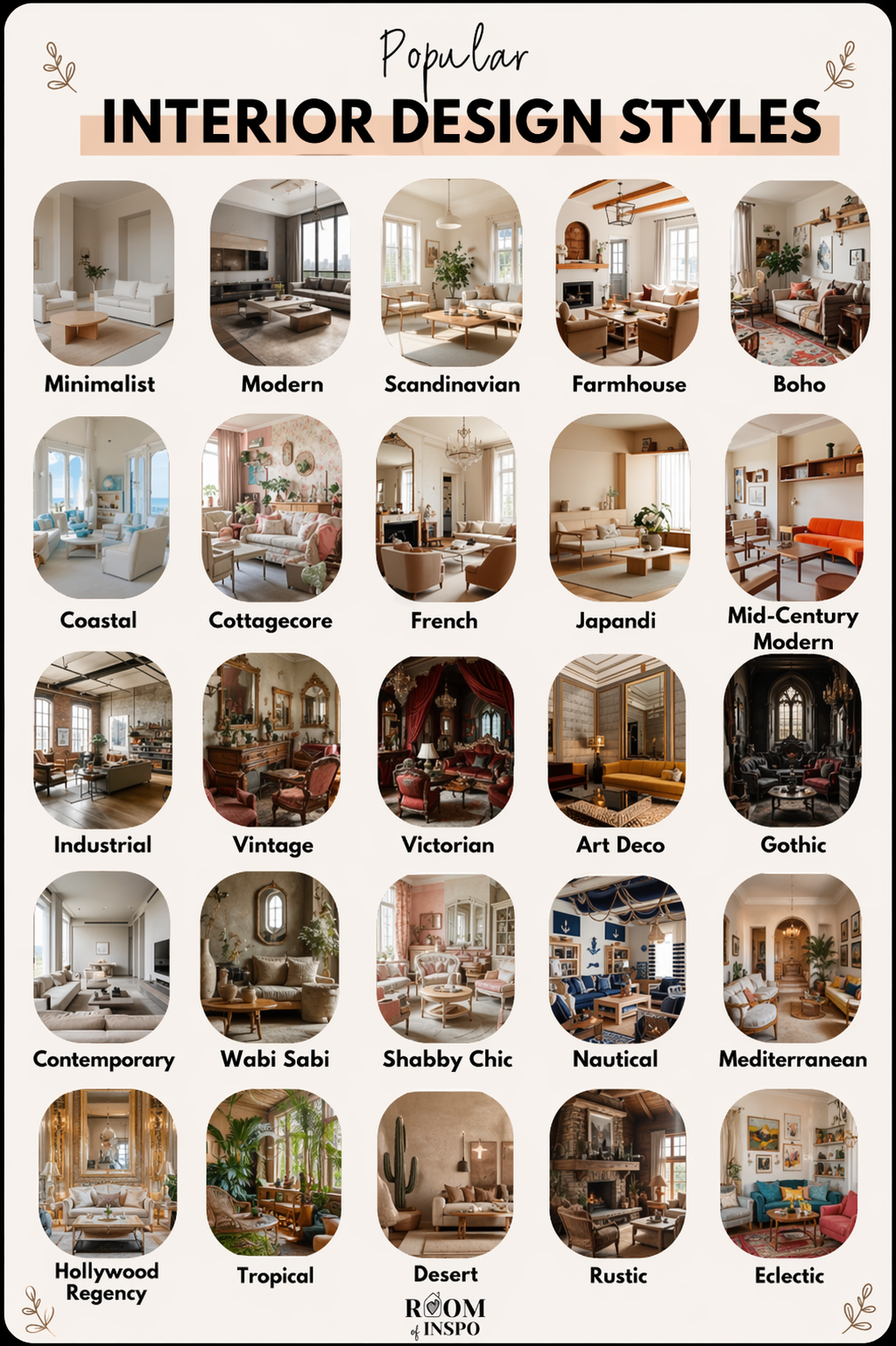
Walk into any home store and you will hear the same handful of words: modern, boho, farmhouse, Scandinavian. But those words hide a much bigger world. There are actually dozens of distinct interior design styles, each with its own palette, materials, and mood. The pin that brought you here promised 20+ interior design styles in one place, and that is exactly what this guide delivers. Below you will find 18 core styles explained in plain language, plus bonus mentions for the looks that sit between categories. Use it as a menu: read the descriptions, find the two or three that feel like home, and start there.
Table of Contents(Click to Toggle)
Why Knowing Your Interior Design Style Changes Everything
Most decorating mistakes are not about taste. They are about drift. You buy a rug you love, then a lamp you love, then a chair you love, and somehow the room feels noisy. That happens because each piece speaks a different design language. Naming your style gives you a filter. It tells you which materials, colors, and shapes belong together, and which ones will fight.
It also saves money. When you know you are building a Japandi room, you stop buying glossy chrome accents that will never fit. You stop replacing things twice. Designers use style references the same way writers use outlines: not to limit creativity, but to keep every decision pointed in one direction. The 18 styles below cover the full spectrum, from bare-bones minimalism to ornate Victorian, so you can locate yourself on the map before you spend another dollar.
18 Interior Design Styles Explained
1. Minimalist : Fewer objects, more breathing room
What it is: A style built on subtraction, where every object must justify its presence.
Category: Modern / pared-back
Why it stands out:
- Neutral base of white, gray, and warm wood
- Clean lines with almost no visible clutter
- Negative space treated as a design feature, not an empty spot
Best for: Small apartments and anyone who feels calmer in uncluttered rooms. The trade-off is storage: without hidden cabinets, minimalist living collapses fast.
2. Modern : Sleek lines with a warm edge
What it is: The mid-20th-century-forward look most people picture when they say “modern design.”
Category: Contemporary classic
Why it stands out:
- Low-profile furniture with geometric silhouettes
- Open floor plans and large windows
- Materials like glass, steel, and polished wood
Best for: Open-plan homes that need furniture to define zones. Avoid overloading it with pattern; modern rooms go flat fast when too many prints compete.
3. Scandinavian : Light, practical, and cozy
What it is: Nordic design focused on daylight, function, and softness.
Category: Minimalist / warm
Why it stands out:
- Pale wood floors and white walls that bounce light
- Textiles like wool throws and linen curtains for warmth
- Simple, stackable furniture that works in small rooms
Best for: Renters and anyone in a dark or compact space. The style is forgiving, but it needs texture to avoid feeling sterile.
4. Farmhouse : Rustic comfort with modern bones
What it is: A rural-inspired look that blends reclaimed materials with clean, updated lines.
Category: Rustic / traditional
Why it stands out:
- Shiplap walls, apron sinks, and open shelving
- Neutral palette anchored by black or oil-rubbed bronze hardware
- Mix of old and new: a vintage table beside a new sofa
Best for: Family kitchens and entryways that take a beating. Real farmhouse style is practical, not precious, so durable finishes matter more than perfect styling.
5. Bohemian : Layered, global, and personal
What it is: A free-spirited style built from travel finds, plants, and layered textiles.
Category: Eclectic / maximalist
Why it stands out:
- Low seating, floor cushions, and hanging chairs
- Rich patterns from Moroccan rugs to block-print pillows
- Abundant houseplants and woven baskets
Best for: Creative people who collect things and want them displayed. The risk is visual overload, so keep one neutral anchor like a plain sofa.
6. Cottagecore : Soft, nostalgic, and garden-led
What it is: A romantic rural aesthetic inspired by gardens, baking, and slow living.
Category: Rustic / romantic
Why it stands out:
- Floral prints, gingham, and vintage china
- Dried flowers, herbs, and open baskets
- Soft pastels and warm cream tones
Best for: Bedrooms, reading nooks, and kitchens. It pairs naturally with thrifted furniture, which keeps the look affordable.
7. French Country : Elegant rusticity from Provence
What it is: A refined rural French style mixing carved wood with soft, faded color.
Category: Traditional / rustic
Why it stands out:
- Toile fabrics and subtle floral upholstery
- Curved, carved furniture in natural wood finishes
- Warm ochre, lavender, and olive accents
Best for: Dining rooms and bedrooms that want warmth without heaviness. Choose one statement piece rather than a full matching set.
8. Mid-Century Modern : Retro geometry that still works
What it is: A 1940s-60s design movement defined by tapered legs and organic curves.
Category: Retro / modern
Why it stands out:
- Walnut and teak furniture with angled legs
- Mustard, teal, and burnt orange accents
- Statement lighting like sputnik chandeliers
Best for: Living rooms where you want personality without clutter. Original pieces can be expensive, but reproductions are widely available.
9. Industrial : Raw materials, honest structure
What it is: A loft-inspired style that exposes metal, brick, and concrete.
Category: Urban / utilitarian
Why it stands out:
- Exposed pipes, brick walls, and steel windows
- Reclaimed wood tables and metal shelving
- Neutral grays and blacks with leather accents
Best for: Lofts, studios, and home offices. It can feel cold, so add wool rugs and leather to soften the hard surfaces.
10. Vintage : Character from another decade
What it is: Furnishing a room primarily with pieces from earlier eras, usually pre-1990.
Category: Eclectic / nostalgic
Why it stands out:
- One-of-a-kind pieces with real patina
- Mix of eras, from 1930s dressers to 1970s lamps
- Sustainable by default, since nothing is newly manufactured
Best for: Slow decorators who enjoy the hunt. Sourcing takes patience, and condition checks matter more than brand names.
11. Victorian : Ornate, layered, and dramatic
What it is: A 19th-century style full of carving, pattern, and rich color.
Category: Traditional / ornate
Why it stands out:
- Heavy drapery, tassels, and patterned wallpaper
- Dark woods like mahogany and walnut
- Decorative fireplaces and gallery walls
Best for: Period homes with high ceilings and original trim. In modern rooms, borrow one element instead of the whole look.
12. Art Deco : Glamour with geometric discipline
What it is: A 1920s-30s style defined by symmetry, shine, and bold geometry.
Category: Glam / vintage
Why it stands out:
- Velvet, lacquer, brass, and mirrored surfaces
- Fan, sunburst, and stepped motifs
- Deep emerald, navy, and gold palettes
Best for: Powder rooms, bars, and bedrooms that want drama. A little goes far, so pick two or three signature pieces.
13. Gothic : Moody, historic, and architectural
What it is: A medieval-inspired style built on arches, dark tones, and texture.
Category: Historic / dramatic
Why it stands out:
- Pointed arches and stone or faux-stone details
- Deep jewel tones and candle-style lighting
- Velvet, tapestry, and wrought iron
Best for: Reading rooms and stairwells. Modern gothic leans cozy rather than spooky: think dark walls plus warm lamplight.
14. Contemporary : What is being designed right now
What it is: A moving target: whatever current designers are producing this season.
Category: Modern / current
Why it stands out:
- Curved sofas, boucle fabric, and sculptural lighting
- Warm neutrals replacing cool grays
- Mix of matte and high-gloss finishes
Best for: Anyone furnishing from scratch who wants a current look. Because it changes, buy the big pieces neutral and update accents.
15. Wabi Sabi : Beauty in imperfection
What it is: A Japanese worldview applied to interiors, valuing age and asymmetry.
Category: Minimalist / natural
Why it stands out:
- Handmade ceramics with visible glaze drips
- Raw plaster, weathered wood, and linen
- Deliberate asymmetry instead of matching sets
Best for: People who dislike perfect showrooms. It is the rare style where a chip or crack adds value rather than subtracting it.
16. Shabby Chic : Soft, faded, and romantic
What it is: A style built on distressed white furniture and gentle florals.
Category: Romantic / vintage
Why it stands out:
- Painted, lightly worn wood in cream and pale gray
- Slipcovers, ruffles, and vintage linens
- Pastel accents and mismatched china
Best for: Bedrooms and guest rooms. It is easy to DIY with chalk paint, which keeps the budget small.
17. Coastal : Breezy, light, and relaxed
What it is: A seaside-inspired look using natural fibers and pale blues.
Category: Casual / natural
Why it stands out:
- Rattan, jute, and weathered driftwood tones
- White slipcovers and striped textiles
- Open shelving with glass and ceramic decor
Best for: Living rooms and bathrooms that need a lighter feel. Keep it modern by limiting nautical motifs to one or two accents.
18. Japandi : Japanese calm meets Nordic warmth
What it is: A hybrid of Japanese minimalism and Scandinavian functionality.
Category: Minimalist / warm
Why it stands out:
- Low furniture and clean horizontal lines
- Warm woods, black accents, and paper lanterns
- Deliberate empty space balanced by texture
Best for: Small homes and anyone who wants calm without coldness. It is one of the fastest-growing styles in 2026 for good reason.
Bonus Mentions
Maximalist : More is more, on purpose
What it is: A curated layering of color, pattern, and collections.
Category: Eclectic
Why it stands out: It rewards bold choices and personal storytelling. Best for: Confident decorators with a clear color thread.
Hollywood Regency : Gloss, gold, and drama
What it is: A mid-century glam style full of mirrors and lacquer.
Category: Glam
Why it stands out: It turns small rooms into jewel boxes. Best for: Entryways and powder rooms.
Rustic Modern : Barn wood with clean edges
What it is: Natural materials shaped into simple, current forms.
Category: Rustic / modern
Why it stands out: It keeps farmhouse warmth without the kitsch. Best for: Cabins and suburban family homes.
Biophilic : Design that puts nature first
What it is: A style organized around plants, daylight, and natural materials.
Category: Natural
Why it stands out: It improves how a room feels, not just how it looks. Best for: Home offices and bedrooms.
Transitional : The safe middle ground
What it is: A blend of traditional and contemporary, with neither dominating.
Category: Classic / modern
Why it stands out: It ages well and suits resale. Best for: Whole-home consistency.
Mixing Styles Without Making a Mess
You do not have to pick one style forever. Most beautiful homes are blends: a Japandi base with one Art Deco mirror, or a Scandinavian room warmed by a Bohemian rug. The trick is proportion. Let one style lead at roughly 70 percent, then let a second style contribute the remaining 30 percent through accents. Keep the palette to three core colors and repeat at least one material in every corner.
Start with the room you use most, name its dominant style from the list above, and remove anything that contradicts it. That single edit often does more than a full redesign. Which of these 18 styles matches your home right now, and which one are you tempted to try next? Share your pick in the comments.