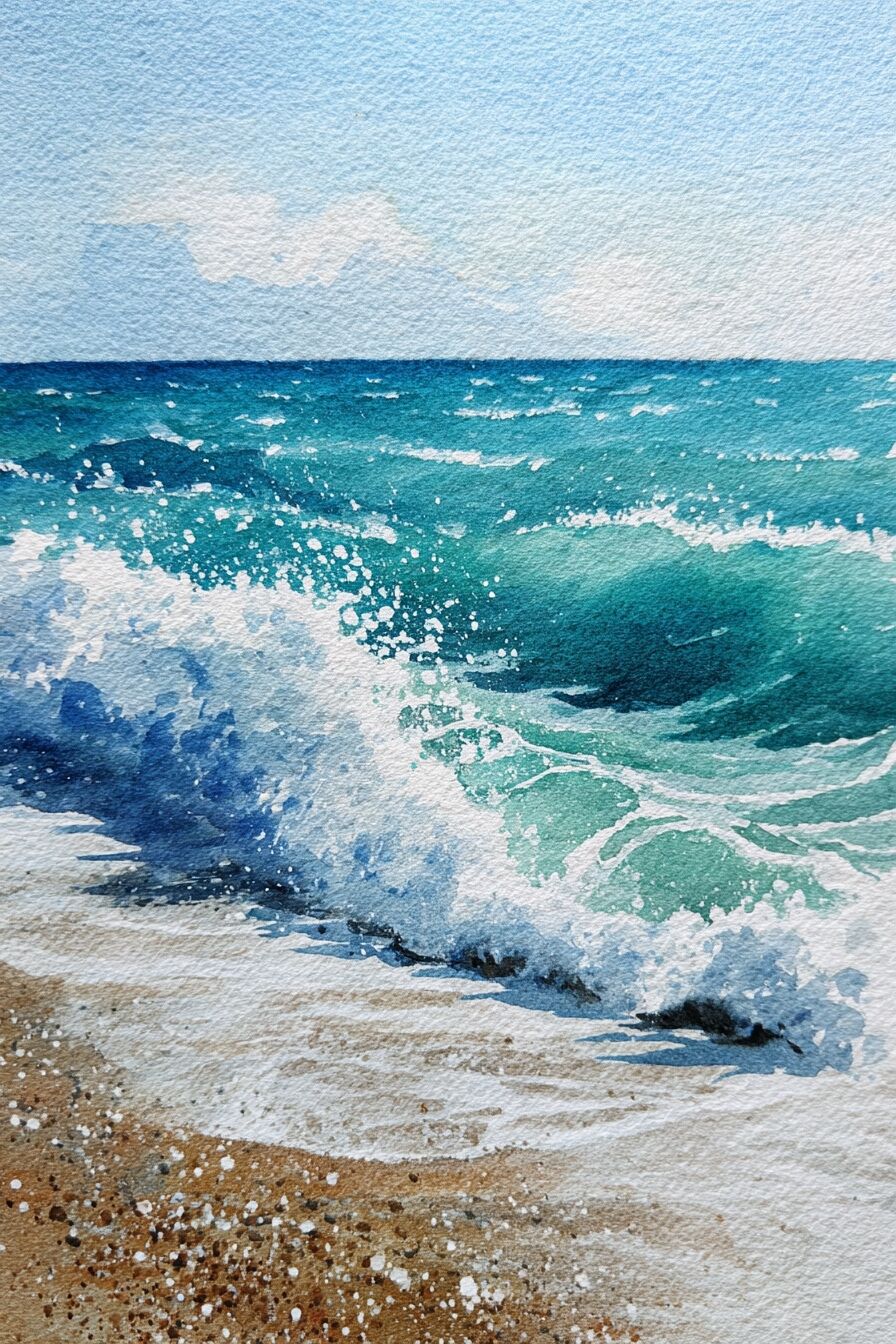
If you’ve just picked up a watercolor set and feel a mix of excitement and intimidation, you’re not alone. The beauty of watercolor is that it’s forgiving, expressive, and perfect for experimentation. This list of 16 easy watercolor ideas is designed to take you from blank page to finished piece with confidence. Each idea focuses on simple shapes, basic techniques, and achievable results, so you can build skills while creating something you’re proud to display or gift. Let’s dive into your next favorite hobby!
Table of Contents(Click to Toggle)
- Why Watercolor is the Perfect Beginner Medium
- 16 Easy Watercolor Ideas for Beginners
- 1. Simple Floral Bouquet
- 2. Misty Mountain Landscape
- 3. Ocean Sunset Silhouette
- 4. Watermelon Slice
- 5. Feather with Splashes
- 6. Abstract Galaxy
- 7. Leaf Study
- 8. Rainy Window Scene
- 9. Cute Cactus
- 10. Lighthouse by the Sea
- 11. Pineapple Pattern
- 12. Butterfly Garden
- 13. Cozy Coffee Cup
- 14. Starry Night Sky
- 15. Simple Fruit Bowl
- 16. Flowing Abstract Lines
- Bonus Mentions
- Your Next Watercolor Adventure
Why Watercolor is the Perfect Beginner Medium
Watercolor is uniquely forgiving—mistakes can become happy accidents, and the learning curve is gentle. Unlike oils or acrylics, you don’t need a lot of supplies or a dedicated studio space. A few brushes, a palette, and paper are enough to start. Plus, the unpredictable blending and flowing pigments teach you to embrace imperfection, which is liberating for new artists. The ideas below are chosen specifically to help you practice essential techniques like wet-on-wet, layering, and dry brushing, all while producing beautiful, frame-worthy art.
16 Easy Watercolor Ideas for Beginners
1. Simple Floral Bouquet : Learn basic brush strokes and layering
What it is: A loose arrangement of flowers and leaves painted with minimal detail, focusing on shapes and colors.
Category: Floral / Practice
Why it stands out: This idea is perfect for practicing the “wet-on-wet” technique—wetting the paper first and dropping in pigment to create soft petals. You can use a simple round brush to make small circles for flower centers and elongated strokes for leaves. It’s forgiving because irregular shapes look natural.
Best for: Building brush control and color mixing confidence.
2. Misty Mountain Landscape : Create depth with simple layering
What it is: A serene landscape with overlapping mountain ridges fading into the distance, often with a soft mist.
Category: Landscape / Technique
Why it stands out: You’ll learn to create atmospheric perspective by painting each layer with increasing water and lighter pigment. Start with a pale wash for the background, then add darker, sharper layers for the foreground. The misty effect is achieved by blotting with a tissue while still wet.
Best for: Understanding value and layering, and creating a calm, meditative painting.
3. Ocean Sunset Silhouette : Master the gradient wash
What it is: A vibrant sunset sky over the ocean, with a simple dark silhouette of a boat or birds.
Category: Scenery / Color blending
Why it stands out: This is a fantastic exercise in creating smooth gradients. You’ll blend warm colors like yellow, orange, and pink horizontally, then add a darker blue or purple for the sea. The silhouette is painted with a single dark color once the background dries, making it a striking piece with minimal effort.
Best for: Practicing smooth washes and color transitions.
4. Watermelon Slice : Fun subject to practice wet-on-wet and details
What it is: A juicy watermelon slice with a red interior, green rind, and black seeds.
Category: Food / Fun
Why it stands out: The high-contrast colors make it visually appealing, and the simple shapes are great for beginners. You can paint the red flesh with a wet-on-wet technique to get a juicy look, then add the green rind and seeds with a fine brush. It’s a quick project that yields satisfying results.
Best for: A short, cheerful painting session.
5. Feather with Splashes : Experiment with texture and negative space
What it is: A delicate feather painted with soft strokes, surrounded by colorful splashes or dots.
Category: Abstract / Texture
Why it stands out: This idea encourages playful experimentation. Paint the feather’s central shaft and barbs with a fine brush, then use a toothbrush or your finger to splatter contrasting colors around it. The splashes add a dynamic, modern touch, and the feather itself can be as loose or detailed as you like.
Best for: Letting go of perfection and embracing spontaneity.
6. Abstract Galaxy : Create a cosmic scene with simple washes
What it is: A colorful, dreamy galaxy painting using wet-on-wet techniques and splatters for stars.
Category: Abstract / Space
Why it stands out: Galaxies are incredibly forgiving—any blend of colors looks cosmic. You’ll wet the paper generously, drop in purples, blues, and pinks, and let them mingle. Once dry, splatter white paint for stars. Add a silhouette of a planet or a person for scale.
Best for: Learning to control water and pigment while being creative.
7. Leaf Study : Observe nature and practice precision
What it is: A single leaf or a small branch painted with realistic or stylized colors.
Category: Botanical / Observational
Why it stands out: This is a great exercise in observation and brush control. You can choose a simple leaf shape and paint it with a base wash, then add veins and shadows with a smaller brush. Try using a limited palette of greens and yellows to keep it easy.
Best for: Improving fine motor skills and color mixing.
8. Rainy Window Scene : Evoke mood with simple shapes
What it is: A view through a rain-speckled window, with blurred city lights or a landscape.
Category: Scenery / Mood
Why it stands out: You’ll practice the “dry brush” technique to create raindrop streaks. Paint a simple background (like a city skyline or trees) in muted colors, then use a dry brush with a little paint to drag down for raindrops. The effect is atmospheric and surprisingly easy.
Best for: Creating a moody, storytelling piece.
9. Cute Cactus : Geometric shapes with a playful twist
What it is: A potted cactus with simple lines, spines, and a flower on top.
Category: Plants / Cute
Why it stands out: Cacti are made of simple shapes—ovals and rectangles—making them perfect for beginners. You can paint the pot in a contrasting color, add a few spines with a fine liner, and top it with a bright flower. It’s a low-pressure subject that allows for lots of color experimentation.
Best for: A quick, cheerful project.
10. Lighthouse by the Sea : Combine simple shapes and atmospheric effects
What it is: A classic lighthouse on a rocky shore, with a dramatic sky and ocean.
Category: Scenery / Iconic
Why it stands out: This painting teaches you to combine simple geometric shapes (the lighthouse) with organic washes (sky and sea). You can practice perspective by placing the lighthouse slightly off-center. Add a few seagulls for life.
Best for: A more structured project that still leaves room for creativity.
11. Pineapple Pattern : Repetitive pattern for mindfulness
What it is: A stylized pineapple with geometric patterns, often in warm colors.
Category: Pattern / Tropical
Why it stands out: This is a fantastic way to practice line work and pattern repetition. Draw or paint the pineapple outline, then fill it with crosshatch or diamond patterns using a fine brush. The result is a bold, graphic piece that looks impressive but is quite doable.
Best for: Improving line control and enjoying a repetitive, relaxing process.
12. Butterfly Garden : Simple butterflies and flowers in a loose composition
What it is: A whimsical scene with a few butterflies hovering over flowers, painted with loose, colorful strokes.
Category: Nature / Whimsical
Why it stands out: Butterflies are symmetrical but forgiving—you can paint one wing, then mirror it roughly. Add a few simple flowers and leaves around them. This project encourages you to paint freely and not worry about exact shapes.
Best for: Practicing symmetry and composition.
13. Cozy Coffee Cup : Everyday object with warm tones
What it is: A steaming mug of coffee, possibly with a saucer and a few beans.
Category: Object / Lifestyle
Why it stands out: This is a simple still-life subject that lets you practice shading and highlights. Paint the mug in a solid color, add a darker shadow on one side, and use a light wash for the steam. Add a heart or a simple design on the mug for a personal touch.
Best for: A comforting, familiar subject.
14. Starry Night Sky : Recreate a classic with simple swirls
What it is: A night sky with swirling stars and a crescent moon, inspired by Van Gogh but simplified.
Category: Abstract / Classic
Why it stands out: You don’t need to copy Van Gogh exactly—just paint a dark blue background, add swirling white and yellow strokes for stars, and a bright moon. Use a round brush to create loose swirls. It’s a great way to practice expressive brushwork.
Best for: Expressive painting and color contrast.
15. Simple Fruit Bowl : Still life with basic shapes
What it is: A bowl with a few pieces of fruit—like an apple, orange, and banana—painted with simple shapes and shading.
Category: Still Life / Basics
Why it stands out: This classic subject teaches you to observe proportions and shading. Start with a light sketch, then paint each fruit with a base color and add shadows. Keep the background simple or omit it entirely.
Best for: Foundational still-life skills.
16. Flowing Abstract Lines : Let the paint guide you
What it is: An abstract composition of curved lines and color blocks that flow across the page.
Category: Abstract / Experimental
Why it stands out: This is the ultimate free-form project. Use a fine brush or a dropper to create lines of pigment, then tilt the paper to make them run and merge. It’s a great way to learn how water and pigment interact without any pressure to create a recognizable image.
Best for: Pure experimentation and understanding watercolor behavior.
Bonus Mentions
Watercolor Tutorials on Instagram : Quick video inspiration
What it is: Follow hashtags like #watercolortutorial or #beginnerwatercolor to find short, step-by-step videos.
Category: Inspiration / Social
Why it stands out: Seeing the process in motion is incredibly helpful. Many artists share real-time clips that show brush strokes and water ratios.
Best for: Visual learners who want to see techniques in action.
YouTube Watercolor Channels : In-depth tutorials
What it is: Channels like “Mind of Watercolor” or “The Mind of Watercolor” offer comprehensive lessons for beginners.
Category: Learning / Video
Why it stands out: You can pause, rewind, and follow along at your own pace, making it easier to master tricky techniques.
Best for: Structured learning and detailed guidance.
Pinterest Watercolor Boards : Endless visual ideas
What it is: Curated boards with thousands of watercolor images and tutorials.
Category: Inspiration / Curation
Why it stands out: You can save your favorite ideas and create a personal gallery of projects to try, which is perfect for when you’re stuck.
Best for: Finding new ideas and organizing your painting plans.
Skillshare Watercolor Classes : Structured courses
What it is: Online classes taught by professional artists, often with downloadable resources.
Category: Learning / Online Course
Why it stands out: Many classes are project-based, so you’ll create a finished piece while learning. The community feedback can be motivating.
Best for: Those who prefer a structured curriculum.
Domestika Watercolor Courses : Creative and affordable
What it is: High-quality courses in various styles, often with subtitles in multiple languages.
Category: Learning / Online Course
Why it stands out: Domestika offers a wide range of watercolor courses, from botanical to urban sketching, so you can find one that matches your interests.
Best for: Exploring specific styles and techniques.
Your Next Watercolor Adventure
These 16 ideas are just the beginning. Each one is a stepping stone to more advanced techniques and your own unique style. The key is to keep painting, keep experimenting, and not be afraid of mistakes—they often lead to the most beautiful surprises. So grab your brushes, pick an idea that excites you, and let the colors flow. Happy painting!
What’s your favorite beginner watercolor subject? Share in the comments below—we’d love to hear your own discoveries!