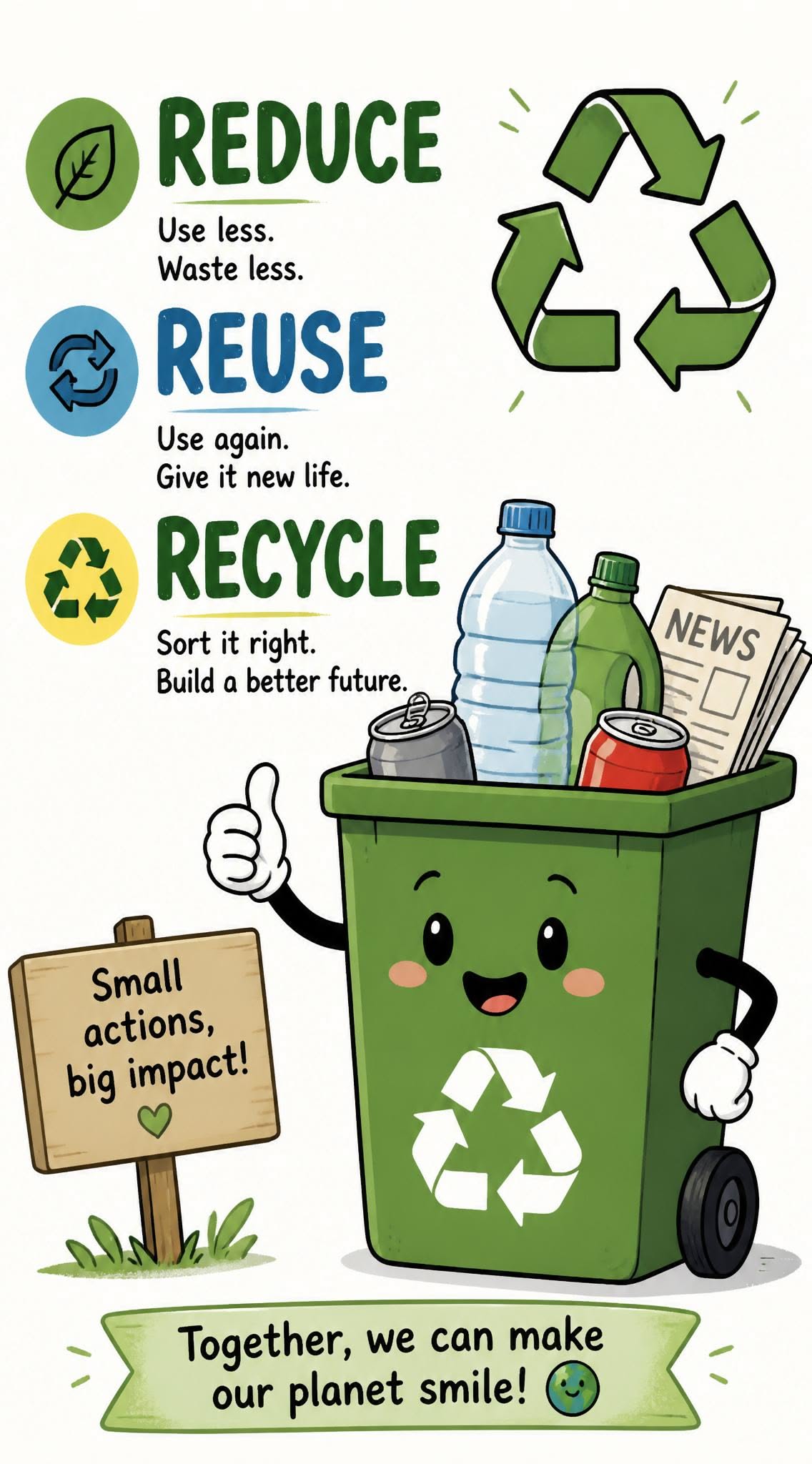
Most of us want to waste less and recycle right, but the practical side gets messy fast. Which bin does a greasy pizza box go in? Where do you take old batteries or a cracked phone charger? What do you do with a perfectly good table that no charity shop will collect? The good news: a quiet corner of the internet is built exactly for these moments. These zero-waste and circular-living websites turn vague good intentions into concrete, doable actions, from sorting your kerbside bin correctly to giving a tired object a genuinely new life.
Table of Contents(Click to Toggle)
Why These Zero-Waste Websites Matter
The phrase “reduce, reuse, recycle” is easy to memorise and surprisingly hard to practise. Recycling rules differ street by street, charity shops turn away bulky items, and half the packaging in your kitchen bin carries no clear instruction at all. Research consistently shows that recycling rates stall not because people don’t care, but because they are confused about what goes where.
That is exactly where these sites earn their place. They replace guesswork with searchable databases, local rules, and neighbour-to-neighbour networks. Some help you sort your bin correctly so whole batches don’t get contaminated. Others help an object avoid the bin entirely by handing it to someone who actually wants it. A few go further and help you repair, refill, or compost. None of them require a lifestyle overhaul. Each one removes a small friction point, and small friction points are what stop most of us from wasting less. Bookmark the handful that match your postcode and habits, and the rest of this list becomes a menu you can return to as needed.
1. Recycle Coach : Sorting your kerbside bin correctly, street by street
What it is: A recycling guidance platform used by hundreds of North American municipalities, available as a website and mobile app.
Category: Local recycling guidance
Why it stands out:
- You enter your address and get your council’s actual collection calendar and accepted-materials list, not a national average.
- The “What Goes Where” search tool answers the greasy-pizza-box question in seconds.
- Collection-day reminders cut down on missed pickups and repeat trips.
Best for: Anyone whose bin rules change when they cross a city boundary.
2. Earth911 : Finding a drop-off point for the awkward stuff
What it is: A long-running recycling directory with a searchable database of local drop-off locations across the US and Canada.
Category: Recycling directory
Why it stands out:
- Handles the items kerbside bins reject: batteries, paint, electronics, light bulbs, motor oil.
- You search by material and postcode, then get addresses and contact details.
- Its editorial guides explain why certain items are hazardous, which helps you store them safely until drop-off day.
Best for: The drawer of dead batteries and old chargers everyone eventually accumulates.
3. How2Recycle : Decoding the label on the package in your hand
What it is: A standardised on-pack labelling system, with a website that explains what each label actually means.
Category: Packaging education
Why it stands out:
- Its labels distinguish “widely recyclable” from “check locally” and “not yet recyclable”, a distinction most packaging hides.
- The site explains which component (lid, sleeve, tray) needs separating before recycling.
- Because the labels appear on real products, learning the system once makes every future shop easier.
Best for: Shoppers who want to make the right call at the supermarket shelf, not at the bin.
4. Recycle Now : The UK’s plain-English recycling rulebook
What it is: The UK’s national recycling campaign site, run by WRAP, with a postcode-based recycling locator.
Category: National recycling guidance
Why it stands out:
- The recycling locator tells you exactly what your local authority accepts and where the nearest drop-off is.
- Short guides cover tricky categories like soft plastics, aerosols, and garden waste.
- Its “recycling symbols explained” page is a genuinely useful reference for confusing on-pack icons.
Best for: UK households who want one trustworthy source instead of forum guesswork.
5. Recycle Nation : A searchable answer for almost any household item
What it is: A recycling search engine and guide site covering thousands of specific products and materials.
Category: Recycling search engine
Why it stands out:
- Type in an odd item, from a ceramic mug to a mattress, and get disposal and recycling options.
- Its articles dig into why some materials are hard to recycle, which builds real intuition over time.
- Coverage leans US-focused, so treat results as a starting point and confirm with your local authority.
Best for: Quick lookups when you are standing over the bin with something unusual.
6. Freecycle : Giving usable things away to neighbours
What it is: One of the oldest give-and-take networks, organised into local groups where members offer and request items for free.
Category: Reuse network
Why it stands out:
- It keeps furniture, garden tools, and building materials out of skips by matching them with someone nearby.
- The rule is simple: everything offered must be free, legal, and appropriate.
- Groups are moderated locally, so pickup logistics stay within a short drive.
Best for: Clearing a garage or flat without hiring a van.
7. Buy Nothing Project : Hyper-local gifting with a community feel
What it is: A worldwide network of local gift-economy groups, mostly hosted on Facebook, plus its own app.
Category: Community gifting
Why it stands out:
- Groups are deliberately small and postcode-based, so a borrowed ladder is usually minutes away.
- Beyond objects, members share skills, surplus garden produce, and borrowed tools.
- The culture leans generous rather than transactional, which makes asking for things feel normal.
Best for: People who want reuse to feel like a neighbourhood habit, not a chore.
8. Olio : Rescuing food and household items before they are binned
What it is: A free sharing app where neighbours list surplus food, toiletries, and household goods.
Category: Food and item sharing
Why it stands out:
- Its food-sharing focus targets a huge slice of household waste: edible surplus.
- Listings include use-by dates and collection windows, so handovers are quick and clear.
- Businesses can join too, which means local bakeries and grocers sometimes list end-of-day stock.
Best for: Anyone who over-buys fresh food or is decluttering a pantry.
9. Trash Nothing : One inbox for several reuse networks
What it is: A free platform that aggregates posts from Freecycle, Freegle, and similar groups into a single feed.
Category: Reuse aggregator
Why it stands out:
- You post once and reach members across multiple networks, saving repeat listings.
- Email alerts let you spot wanted posts, so you can pass on items you were about to bin.
- It is especially handy in areas where individual groups have small memberships.
Best for: Busy people who want maximum reach from minimum effort.
10. Freegle : The UK’s friendly give-and-take network
What it is: A UK-based reuse community with local groups covering most of the country.
Category: Reuse network
Why it stands out:
- Local groups are volunteer-run and well moderated, which keeps listings genuine.
- Its mobile-friendly site makes posting a photo and a short description quick.
- Items range from working appliances to spare paint, so it suits both declutterers and DIYers.
Best for: UK households who want a reliable alternative to the tip.
11. Repair Cafe : Fixing things with volunteer help instead of replacing them
What it is: A global directory of community repair events where volunteers help you mend household items for free.
Category: Repair network
Why it stands out:
- The map lists upcoming events near you, covering electronics, clothing, bikes, and furniture.
- You learn the repair alongside the volunteer, so the skill stays with you.
- It is a genuinely social way to keep a toaster or lamp out of landfill.
Best for: Anyone with a small broken item and an hour to spare.
12. iFixit : Free repair guides for the things you own
What it is: A vast library of step-by-step repair guides and teardowns, plus parts and tools.
Category: Repair guides
Why it stands out:
- Guides are written for specific models, so you get exact screw sizes and disassembly steps.
- Its repairability scores reveal which devices are built to be fixed before you buy.
- Community answers help when a guide hits an unexpected snag.
Best for: Replacing a phone battery or laptop fan instead of the whole device.
13. Fixing Factory : Community repair hubs for small appliances
What it is: A UK initiative running repair hubs where volunteers help fix small electricals and everyday items.
Category: Community repair
Why it stands out:
- It focuses on small electricals, a category with notoriously short lifespans.
- Hubs often pair repairs with advice on spare parts and safe disposal of what cannot be fixed.
- It is a practical complement to repair cafes if you want an appointment-style visit.
Best for: UK residents with a kettle, lamp, or fan that stopped working.
14. TerraCycle : Recycling the things kerbside bins cannot take
What it is: A specialist recycler running free and paid collection programmes for hard-to-recycle waste.
Category: Specialist recycling
Why it stands out:
- Programmes cover crisp packets, coffee capsules, pens, and beauty packaging.
- Its location finder shows drop-off points, often in shops or community venues.
- Some programmes are free to the public; others depend on brand sponsorship, so check before collecting.
Best for: Households with a bag of packaging that no council will accept.
15. Ridwell : A doorstep pickup for tricky waste
What it is: A subscription service that collects hard-to-recycle items from your doorstep in participating US cities.
Category: Waste pickup service
Why it stands out:
- Rotating categories include plastic film, batteries, light bulbs, and textiles.
- It removes the need to store awkward items until a drop-off trip.
- Availability is limited to specific service areas, so check your postcode first.
Best for: City dwellers who want convenience without a car.
16. Loop : Reusable packaging that comes back for a refill
What it is: A reuse platform where everyday products arrive in durable containers that are collected, cleaned, and refilled.
Category: Reusable packaging
Why it stands out:
- It targets packaging waste at the source rather than at the bin.
- Participating brands span groceries, personal care, and household cleaners.
- Availability varies by country and retailer, so it is best explored as a growing option rather than a universal one.
Best for: Shoppers keen to try refill systems without hunting for a physical refill shop.
17. ReFED : Understanding and cutting food waste
What it is: A US nonprofit publishing data, tools, and solutions for reducing food waste.
Category: Food waste research
Why it stands out:
- Its insights library quantifies where food is lost across the supply chain, which makes the issue concrete.
- Free tools help households, businesses, and councils plan practical reductions.
- It is more reference than app, but it is the source many other food-waste guides cite.
Best for: Readers who want evidence behind their kitchen habits.
Bonus Mentions
ShareTribe : Platform for building your own local sharing marketplace
Useful if your area lacks a reuse group and you want to start one, from tool libraries to clothing swaps.
Too Good To Go : Rescuing surplus food from local shops and cafes
A well-known app that pairs hungry customers with end-of-day surplus at a discount, a simple entry point to food-waste action.
Greenredeem : Rewarding everyday green habits
A UK scheme that turns recycling and low-waste habits into points for local causes and rewards.
WRAP : The research backbone behind many recycling campaigns
Publishes practical guidance and industry data, handy when you want the reasoning behind a rule.
Ellen MacArthur Foundation : The big-picture case for circular living
Ideal for readers who want to understand why reuse beats recycling and how designers are rethinking products.
The Internet’s Best-Kept Green Secrets
None of these sites ask you to become a different person. They simply answer the questions that stop most of us mid-bin: where does this go, who could use it, and can it be fixed? Start with the one that matches today’s problem, whether that is a postcode-specific bin rule, a bag of stubborn packaging, or a lamp that flickers and deserves a second chance. Over time, the habit compounds, and “use less, waste less, give it new life” stops being a slogan and becomes the default.
Which of these did you already know, and what is the one local or niche green website you would add to the list? Share your find in the comments, because the best recommendations usually come from neighbours.